Here's a great dashcam video that captures the meteor arcing across its field of vision and lighting up the scene more brightly than the sun like a nuclear blast (first submitted to HN by dennisgorelik). I almost thought it was a hoax, and even tried to examine the video for signs that it was CGI.
The guy doesn't even say anything for a long while, just starts speeding up.
edit: Phil Plait of Bad Astronomy (Slate) think it's unrelated to the 2012DA14 asteroid, because of the timing gap and incorrect direction of travel. http://www.slate.com/blogs/bad_astronomy/2013/02/15/breaking... This could have turned out very badly if the thing had hit the ground...could we have caught this one, and why didn't we?
this was the exact explanation given by a driver with a dashcam to me. in russia, most police do not feel responsible to organize traffic, help solve deadlocks, and give service to citizens. they behave like a mob entitled to rob you in a various ways due to false,confusing interpretation of legal texts.
Terrible roads, terrible cars, terrible drivers, a lot of alcohol, and terrible insurance companies mean that people want dashcams to try to help present their side when there's an accident.
Youtube is full of really scary Russian dashcam videos.
As other people have stated, insurance fraud is a very real risk and dashcams help protect drivers from scammers. Here is an example of what they're dealing with: http://www.youtube.com/watch?v=Kjj-1L6qeOc
People stop right in front of you on the motorway so you would crash into them,and then sue for damages. If you manage to stop in time,they will reverse into your car, and then they will lie about you hitting them. Dashcams prevent all of that,and from what I heard at least half the drivers in Russia now have them.
The part where the meteor gets brighter but isn't moving relative to the sky is pretty scary. When you look up and see a meteor and it just gets brighter instead of moving left or right that means it's headed directly toward you.
Absolutely sublime video. So many things about our world mixing in. I suggest complimenting it with the full tune, that plays in the background: http://www.youtube.com/watch?v=DN87dn1ZPhw
And looking at the flash, and the effects (or not) that it had on the solid state imagers, I think we can rule out a nuclear intercept. My reasoning is that a 10kT nuclear detonation @ 20km would toast any unprotected CCD or CMOS image element looking at it.
There was an interesting (if short) conversation on another list about how the US was able to spot small scale nuclear events (even things like a criticality event in a poorly shielded reactor) The speculation revolved around some unidentified sensors that were on the GPS satellite at the San Diego Air & Space museum, since removed (the sensors not the model)) and the way in which GPS satellites could tell you where things were relative to them, just as easily as your car can figure out where it is relative to the satellite.
There are a number of monitoring systems spelled out in the various disarmament treaties, and the infrasound sensors were part of the test ban treaty, so I don't doubt that if there had been a nuclear component, someone would know about it :-)
   - the size of Russia

   - The range of surface to air missiles

   - the chance of missing an object that does not give off
     a heat signature until it is about to hit.
Any kind of suggestion that we have the tech or the means (financially) to do this for a large chunk of the planet is nonsense, and for a smaller area the odds of hitting something are probably so bad that it isn't worth it.
I have also seen videos of this event dated by January 1970. The explanation is silly: most of the drivers don't care to set the correct date on their dashcams.
Fro cheap cams, it's a slight PITA to set the date. For one I know of, it forgets the date if it loses all power, and the date is set by putting a special text file in the root directory of its storage.
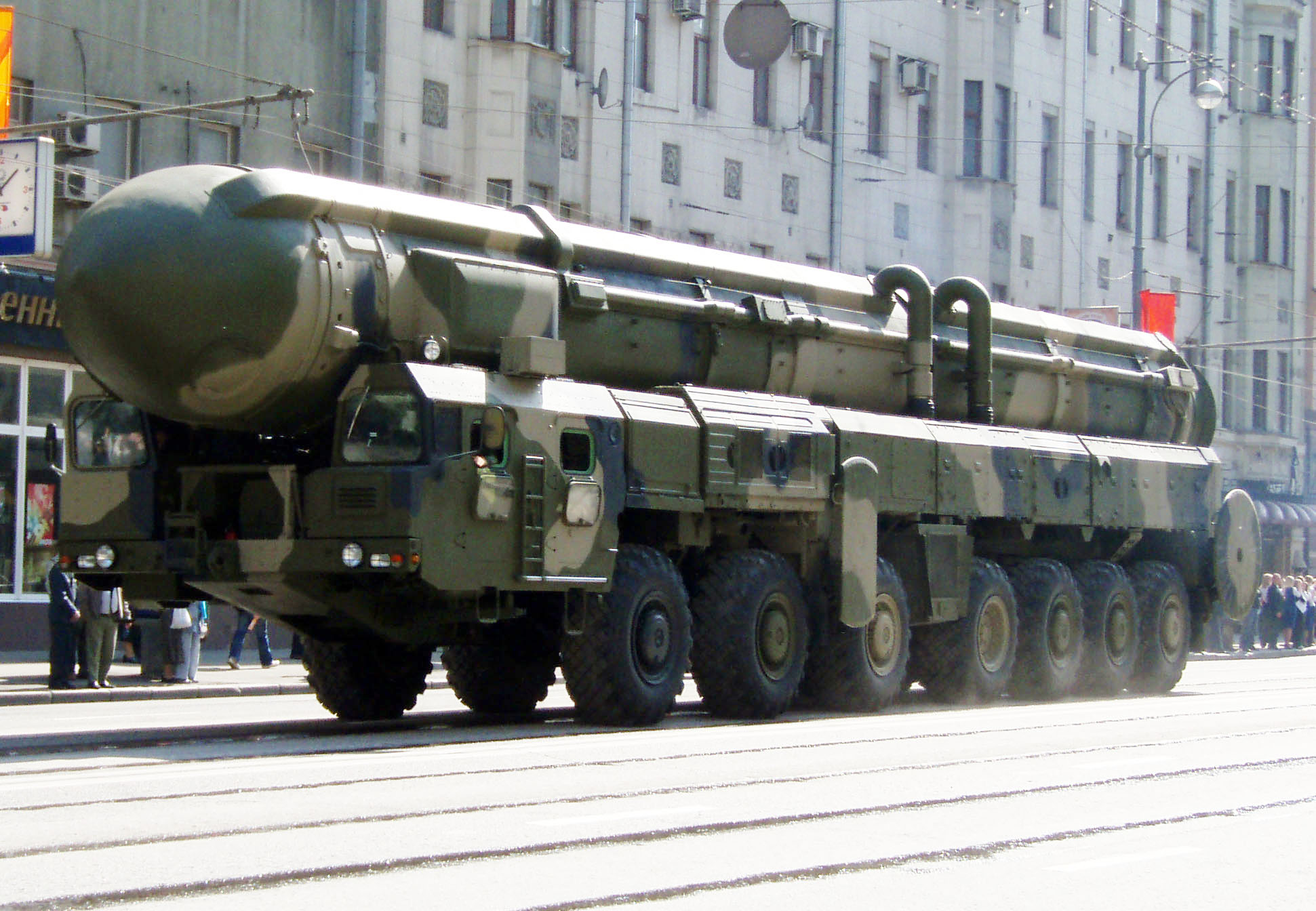
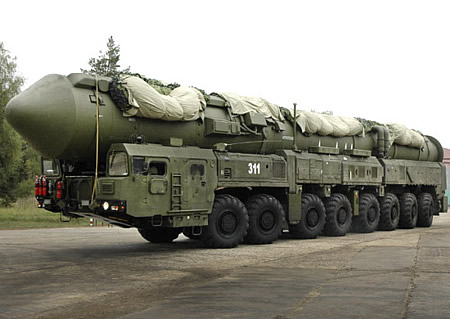
There probably is a nuclear blast in that mix. They stated that anti-missile systems intercepted it - the only thing with a hope in hell of reaching and destroying/breaking a meteor is the 53T6 Gazelle, which has a 10kt warhead.
Can someone please enlighten me, because I was under the impression that there is no ABM system on the planet capable of intercepting, let alone destroying, a large rock moving at 10km/second.
I'm not saying its impossible, but it just seems to me that there is a lot of misinformation as to what actually happened.
I'm with you here. The RIM-161 standard anti-ballistic missile used by the US is quoted by wikipedia as having a speed of 9600km/h or 2.7km/s. Speeds in low-Earth orbit are about 7-8 km/s, objects entering from a solar orbit likely several times that. There is absolutely no way you would have significant success probability of intercepting it with a missile unless you knew the incoming orbit very precisely.
Just look at that dashcam footage: from entering the atmosphere to breakup was just a couple of seconds. On a very tangential orbit, no less.
By the time its left the silo. Russians are dead keen on their one-shot silos packed to the gills with various devices (pneumatic, hydraulic, explosive) to bring a missile up to ludicrous speed very, very quickly.
Spent a very enlightening afternoon down an old bunker near pervomaisk.
Found some stats in the tourist brochure from there. 9.4m high,1.1m dia, 4km/s in 4s, which gives an acceleration if about 102g. 80-100km range. Max speed 7km/s. "directional blast" also, which is interesting.
The US Nike-X Sprint had similar performance (Wikipedia says only 90 gravities, and there's some nonphysical-looking footage of test launches on youtube somewhere). Pretty crazy, and I gather that MIRVs made that whole category of ABM obsolete.
I'm skeptical there exists a system to automatically fire nukes at something and it has never had a false positive. Especially (chauvinistically) under control of the Russians through the fall of the the USSR.
I'm not sure a terrestrial power could do this without being way visible ahead of time.
I predict the ABM interception will turn out not to have occurred. We don't have a surveillance system capable of detecting something that size until it hits atmosphere, which means there would only be seconds of warning. That's not enough time to make the decision to fire an ABM.
Size isn't everything. Tracking objects in Earth orbit is much easier. You can combine multiple radar measurements to tease a signal out of the noise floor, and model the orbital mechanics to achieve better spatial resolution than your instrument can actually resolve.
Almost all the items NASA tracks have orbits inside the solar system. This thing came out of nowhere (if it's orbiting around the Sun, it's so excentric that the orbit period is very long so it's like we saw it for the first time - if it's not orbiting the Sun, we did see it for the first time).
The NASA program in question is actually limited to objects in orbit around the Earth. (Orbital Debris is typically out-of-commission satellites and parts of rockets that are still in orbit around the Earth.) We can track objects as small as 10cm that are in orbit around Earth. (schiffern explains in more detail how.)
To track potentially hazardous astroids (PHAs), scientists use different methods and are not capable of detecting rocks as small as this one. That doesn't mean that it came from outside the solar system or that it has an eccentric orbit. It just means that it was too small to detect with current methods.
They've got them peppered through the Urals. Lots of Cold War silos in that neck of the woods, and definitely active ABMs - saw them being driven just outside of astrakhan in the dead of night last year.
Also, kaz is full of Russian military hardware. Baikonur for instance is definitely covered by ABMs, as to not do so would be an untenable risk as far as Russia is concerned.
That's not news :) The reason these things are extremely off-road capable is so they can move around in the woods and the enemy can't take them out in a first strike attack. The retaliation capability is what creates the (desired) balance between nuclear powers. Same with nuclear submarines. Hide and seek for "grown-ups"...
Don't forget "passenger trains". Neatly dressed up to look like the express service, but chock full o' nuclear goodness. The roof peels back, and you can launch straight from the rails.
Yup, those would be the ones. Nice long convoy of them with APCs and tanks at the head and tail, cruising down the highway.
Seeing this kind of stuff is par for the course out there though. Drove from Rostov na donu to Stalingrad and there were huge (and I mean HUGE) convoys of tanks cruising down to syria's neck of the woods.
This isn't news to the world, it's just known stuff that isn't talked about as it doesn't mesh very well with realpolitik.
Edit: think there was also a satan in the convoy we saw, two massive stages on separate carriers. Proper "oh holy shit what am I seeing pretend I'm not here" stuff.
You haven't lived until you've sat on top of one (on its side!) waving a cowboy hat. Fond memories... Although I now also remember my lunch of various animal tubes on the same day. Damnitall.
According to the article, "Servicemembers from the tank brigade that found the crater have confirmed that background radiation levels at the site are normal", and "Background radiation levels in Chelyabinsk remain unchanged, the Emergency Ministry reported".
I am no physicist. But assuming that we can take these reports at face value, doesn't that rule out the possibility that the meteorite was intercepted by a nuclear device?
Depends on how good their equipment was. The small boosted plutonium warheads used in that kind of missiles are extremely clean (they are meant to be used over their own territory, after all...), and I think that after the kind of wide dispersion you get when the surface of the object ablates away as it falls there might not be much more than a small blib over the background left.
However, based on my very limited knowledge, I think that the Russians are supposed to only have operational Gazelles in a ring protecting Moscow, and those shouldn't have the range to hit anywhere near Chelyabinsk.
They experimented with it, publicly declared it a success, but said they weren't going to do it, and proceeded to use the tech on the far side of the country. Pechora-Kama I think was the original project. Maybe they did, maybe they didn't, but the locals I've met (Kazakhstan) insist that they did.
It wouldn't surprise me if the Russians were looking at the same thing, but it should leave some fairly telling clues behind. At the very least you can see plowshare craters littering Nevada on google maps (in a nice grid pattern in some areas, just search for "Sedan crater" and zoom out a little), I would expect similar to be somewhere in Russia if they were doing the same.
A 10kt yield at altitude wouldn't leave a crater, either...
Unless it was used to blow up a large chunk of rock which then proceeded to fall to the ground. In that case, you'd get a crater, but you'd also get the radioactive material.
[Edit] Some translation from the first video:
A lot of dirty language.
Just after thunder: "What the f..k?! What is going on? Bombing! Preliminary bombardment!" "Don't worry for now. Nothing is clear yet. It's a preliminary bombardment. Wow, what a film I shot! Go for our jackets! Run!"
When running:
"It's something serious, run!""Don't worry men! The most interesting is only beginning!"
At the entrance of student dormitory: "We can't go inside for our jackets?" "You can't enter!"
Then "Guys, warm up, I feel cold! I have filmed everything: explosion, falling, everything!" - "Show what you filmed." - "Later-later! No idea what to do now!" "Something flied by and there was flash" "Later, we don't know if something else will explode" "It was flash and then it flied to the forest, then we ran out I started to film and then thunder" "What an adventure! Cool!" "You see it entered the atmosphere and started to burn and then the pieces fell to the ground" "F..k I thought it's war!" "No worries" "I didn't understand what exploded. It's a small comet but what exploded?" "Mirrors broke"."I like it! The mirrors are broken in the building" "OK, bye, stop for now"
I'm not sure the meteor hit the zinc plant. Considering how loud the sonic booms were it's possible that they caused enough structural damage to an old brick building to result in a partial collapse.
I wish we had more information.
Edit: on second thought, it could easily be a fragment, we'll see.
Their is a continuum between dance music and mainstream pop music in Europe in the same way their is for hip hop in the states. So it's not unusual for it to be played on standard pop radio stations.
yebat (ебать), loosely translated and depending on form, it could mean either 'oh fuck' or an explicit description of a strong impact ;) we slavs have infinite possibilities of cursing.
Sonic boom followed in 2 minutes, so the altitude was in 30-40km range. That's damn impressive, with all the sharp shadows from the buildings ... damn.
"It appears to split, so I’m guessing the main mass split there. That’s not surprising; it’s happened with previous falls (like Sikhote-Alin). That means they could have disintegrated at different times, so there may be multiple places where pieces could fall."
By definition, they aren't "contrails". A "condensation trail" can only happen when something like an internal combustion engine injects water (or another compound that will condense) into the air.
A fast object compress the air in front of it reducing the amount of water that can be solved into it, so the excess of water condenses.
It's very visible in planes about to break the sound barrier. Look for Youtube videos. The cones are spectacular, but also notice how a trail is sometimes visible originating from the tips of the wings.
So you don't need to inject the water, but to extract it from the air compressing it. Anyway, I'd bet the meteor trails consist of vaporized matter from the meteor itself.
It's true you can get water condensation features from local pressure minima like in wingtip vortices. However, they are transient, because as soon as the air returns to ambient pressure the condensation goes away.
Well. If the meteorite was partially composed of water, which was then vaporised off during the atmospheric ablation, then it might indeed be partially contrail!
A pure water meteorite hitting the atmosphere would be contrails all the way; just not in the way we're used to.
Not much to translate: "WTF??? What happened? It is f*cking WAR!", "Did you see that? Did they launch a rocket? Looks like they did... WTF!", "Shiiii... was it bomb?"
I just found this by using the "last hour" filter mmastrac suggested.
EDIT: It doesn't seem to be a crater caused by a meteorite. By looking at the youtube video "cfn" (comment below) looks like it's a gas explosion in 2007. Still, amazing.
Yeah, an impact crater wouldn't look like that. It would look like one of the craters on the moon with large amounts of ejecta thrown out radially around it.
> Can anyone translate what they are saying in the first one?
You probably don't want to know. Lots of cussing :)
He actually has no idea what's going on. At one point he jokes about artillery strikes and then starts calming down his friends ("Don't be afraid, nothing's happened yet.")
Then he urges his friends to go grab their jackets (apparently they ran out to the street without them). While running, he exclaims "now, that's some serious shit!" and then urges his friends to be calm once more.
"The most interesting stuff is about to begin."
The guard at the entrance tells them they can't come in to take their jackets.
"That thing flew by, there was a flash and it crashed in the woods."
"What an adventure!"
"It entered the atmosphere and started burning. The remaining stuff then crashed."
"I thought a war's underway."
"Don't cower. But I didn't get what the explosions were about."
"The windows are all smashed."
"I love it!!!"
....
It must be some kind of college. The kids must be students.
I was thinking it might be the actual sound of the disintegration. It doesn't sound like echoes to me. And, obviously, it is only just arriving, straight after the shockwave.
The number 1 most important factor in dealing with emergencies is recognizing that an emergency is happening in the first place.
It's easy to get mislead by movies and tv and the way things happen and the way people react. In reality things don't work that way. It can sometimes be difficult to tell when an emergency is happening, and a lot of people won't pay enough attention. How often do people ignore fire alarms, for example?
Do you know what the symptoms of a stroke look like? Most people don't. I certainly didn't when the elderly lady sitting one table over from me at a fast food restaurant had a stroke. She dropped her food tray on the floor and I was sitting the other way and just wrote it off as random clumsiness. But other people were paying closer attention. Some of the staff helped her clean up her mess and other people came to help sensing that something was a bit off, after asking a few leading questions and making a few observations they decided she was having a stroke and called 911. Today I have a lot more training and am far better able to spot things like symptoms of a stroke or a heart attack and so forth, but that's not true for everyone. A lot of people don't know how to spot a heart attack, even in themselves, and they waste a lot of time before going to the hospital.
But this extends to everything. If you look at the 9/11 WTC attacks there were a lot of people who could have gotten out of those buildings who instead stayed in their offices because they were lulled into a false sense of security. The fact is that when things are burning down, smoke is everywhere, you can see the flames, etc. it's often too late, the time to take action was minutes or hours ago when you still had a chance. The time to evacuate a flood zone is when the water is at your ankles or knees, not when it's up to your armpits.
But most people are so conditioned by the norms of ordinary society they find it difficult to break out of them. It takes a surprising amount of effort to make a conscious choice to break those norms and switch to emergency mode, which is why most people are forced to rely on some even more dramatic event triggering a panic/fear/fight-or-flight response to jump into that mode.
This in spades. Emergencies aren't announced as they are in Hollywood movies with dramatic music and leading actors. The most striking thing about many disasters is how mundane they are, and how slow people, even those aware of the situation and its gravity, are to respond. Spend some time watching videos of the 2011 Tōhoku earthquake and tsunami and what I'm most struck with is how long people act as if things are normal. Granted it took several tens of minutes for the tsunami waves to reach shore after the earthquake, and even then several minutes for the tsunami to reach full strength.
Technological, fiscal, and other crises are similar. Often your first real sign of trouble isn't a sense of impending doom as just a very strong sense that things are wrong -- your perception of the world isn't adding up. I've trained myself (or tried) to recognize such situations and respond more quickly to them, but it's still easy to miss things. Especially as it's not clear until later (and often much, much later) just what has gone wrong and what's the best way to address it. In military it's called "fog of war", but a similar condition pervades most complex situations.
What the hell are you guys talking about? The people on the ground thought a nuclear war was beginning. People in their cars probably thought a plane was crashing--no need for the driver to react.
People trust authority. IIRC, the WTC building occupants were told to stay put initially. Many folks listened to that.
For better or for worse, I assume that incident management folks are full of shit when they say things like that, so I boogey asap. I've been in office buildings where the fire alarms didn't sound properly and announcements came over the PA saying something like: "The roof is on fire, do not be alarmed and do not evacuate at this time."
There's also the cry-wolf effect. Occupants of any building rapidly become used to ignoring the constant announcements of emergency drills and false alarms and real but meaningless incidents like burnt smoking popcorn. It's very difficult for a real crisis to pierce that armor of complacency.
If you want people to respond and evacuate faster to a real disaster, improve your incident reporting so it doesn't train folks into the habit of ignoring it.
Indeed. Also, when driving, what are your options? Unless you think you need to stop the car and seek shelter immediately the best option might just be to head home as soon as possible.
This was painfully obvious in the fire at The Station nightclub. The band kept playing for 30 seconds after the fire started right behind them and many people didn't start to try and get out before it was too late.
Part of it is what's called "commitment." People payed good money for a show and they're going to see one. It takes a long time to accept that the show is over.
This is so true. In fact, there's an excellent book by a journalist named Amanda Ripley that describes this phenomenon called The Unthinkable: Who Survives When Disaster Strikes[0].
It's more likely that it happened so suddenly that they didn't have time to turn the radio off and they're in such shock that they've totally blanked the background noise out.
He first said it is preperation. Something to prepare for. He is saying take your jackets and lets run. The best is yet to come.
When he runs into the group he describes that it was flying overhead. Then he points to the smoke saying it was in the atmosphere. People said that could be war starting. They were not sure of the reason for the explosion. He almost got hit by the broken glass.
It takes events like this to highlight how awesome it is to have a large number of people constantly recording video. Integrated dashcams with a circular buffer should become ubiquitous standard equipment IMO.
Does everyone in Russia have a dashcam or something? It seems like every other video I see on YouTube was recorded on one, and yet I don't know of anyone in Japan or the US with one installed (parking cams don't count). It's a great idea– I would probably get one if I still had a car, but it's amazing to me just how prevalent they seem in Russia. (Elsewhere too? I don't know. I'd love it if someone could enlighten me.)
It's a byproduct of Russians using them to combat corruption and scammers on the road. It's a fad that caught on based upon the underlying need. In the US most citizens don't have that underlying need. The cops, on the other hand, do have burden of proof and liability concerns, so police cars do have them. If the average citizen could be extorted on the highway they'd start to catch on here too :)
> If the average citizen could be extorted on the highway they'd start to catch on here too :)
Actually, after having driven tens of thousands of miles on the interstates a number of years ago I think they would be a tremendous improvement on rest stop safety at the very least. That may be better served by an omnidirectional parking cam (and it would have to be running all the time, or you would need to flip it on), but I don't think it's a bad trend. It's certainly more appropriate than asking the state to manage/install even more surveillance nodes...
Edit: by 'it' I meant recording devices in vehicles, put there by the vehicle owner.
Possibly. From a privacy pov, I suppose I'd also prefer a decentralized option like this, where everybody just gets their own small slice of all the data instead of one government collecting all of it in a centralized location. It might be slightly less efficient, but in general it's a better way of roughly getting the data just where it needs to be, as long as it needs to be.
Also note that the thing that caught on = something with a rather direct very personal advantage to the adopter, while your suggestion (that hasn't caught on) = something that personally helps against very rare events and sort of increase ambient security for everyone. Some lesson about human nature, here :)
From a privacy pov, decentralized is worse, is it not? If no one can enforce a no-recording rule, there will eventually be available video of essentially everything.
I think that's exactly the world we're heading for, and I prefer it to a world in which some entity has the power to compel the absence of recording, but Schmidt is very likely to be right: privacy is dead.
It's to capture the car to car accidents and the road rage incidents. Too many people have bought their driving licenses and drive as if they are the only people on the road. Too many of these come from the criminal background and won't shy away from expressing their dissatisfaction with your driving ethics and what not. Now there's a dashcam for that.
"Corruption is rampant in the Russian Federation, and that’s led most motorists to take matters into their own hands. It’s not uncommon for a driver to be pulled over by the notorious Russian Highway Patrol (GAI) and harassed into paying a bribe. Dash cams afford at least a little protection from baseless accusations." [1]
Police corruption, scams of all kinds including from organised crime and even pedestrians, auto-insurance extremely expensive without dash cams due to high claim history, poor road maintenance especially in winter conditions leading to higher volume of accidents, courts intolerant of any evidence other than video due to unreliability, etc.
I've heard the explanation that Russian insurance companies are much less likely to pay out if you don't have a dashcam. I'm not sure how true that is but it sounds likely to me.
Maybe I've lived a sheltered life, but I've been watching that video over and over again.. It's like nothing I've ever seen before and I'm having a hard time believing it is real.
That is an amazing event. I am not sure I buy the meteorite story. Has anyone checked on 2012-DA14 [1] the asteroid that was supposed to cross between the earth and geosync orbit this evening? One conjecture would be it knocked something out of orbit.
The air defense stuff is somewhat hard to believe, we don't intercept de-orbiting space junk, much less less hypersonic meteors. Further every missile interceptor that is publicly disclosed (which includes the US attempts at an exo-atmospheric interceptor) have boost stages that generate a lot of vapor, there is no rising vapor trail in any of the videos of a ground based interceptor.
Finally there is the magnitude of the flash. Given the lack of sparkles on the video I don't believe what ever exploded was nuclear but on the videos with timers watching the flash and timing the 'boom' correlates with the 20 - 25 km (80,000') in altitude. One hopes it wasn't a surveillance aircraft that was destroyed. I'm sure if it was we'll hear about that in the morning.
An asteroid the size of 2012-DA14 would hit with a force of nearly 3 megatons. This meteor, and it is enormously consistent with a meteor and nothing else, would likely only be around the size of a car or so, over a hundred times smaller in each dimension (and over 10,000x dimmer and harder to detect via telescope) than 2012-DA14.
Not to be a pill if you read closely I said "something it knocked out of orbit" not it. Because yes, if it had decided to hit the planet we'd be glued to CNN or something right now.
One of the interesting things to me is the 'herd' phenomena that comes about because of gravity creating clumps of things which, when they collide with something else become a sort of herd moving in a similar direction. Comet tails, and wandering asteroids, rarely do things fly through space it seems without some sort of companion material flying along with them.
Not the case here according to sources who say it had a different orbit than 2014-DA14 but it was something I was wondering about. Has anyone found a USAF Space Command radar track yet?
I don't think we have anything in orbit that would burn that bright, certainly not for that long.
In orbit satellites are relatively slow (10 km/s-ish) and light (10 tons is a lot. The ISS is way heavier, but too flimsy to make it down in one piece)
Speed, in particular, counts, as kinetic energy goes with the square of speed. At 70km/s (IIRC, the top speed a meteorite is expected to have relative to earth), a kg of meteorite has as much kinetic energy as 50-ish kg of in orbit mass.
I think it's a really bad idea to start using Twitter followers as a credential. That being said Phil Plait is a legit astronomer and has a Ph.D in Astronomy and worked on the Hubble Telescope and has done a TED talk on defending Earth from asteroids. With real credentials like those you're doing a disservice to first mention the number of Twitter followers to validate his expertise.
I'm pretty sure mentioning the amount of twitter followers he has as credentials was a joke, but I agree with your point. I don't think anyone would contend the fact that Ashton Kutcher had the final say in all matters.
The general idea being that the Earth moves ~100,000km/hr around the sun, and with the asteroid fly-by many hours away, that would mean a pretty wide orbital gap.
In the various videos, there are a few noteworthy artefacts.
1) After the bright white flash, we see debris flying in the opposite direction to the meteor's path, in a parabolic trajectory - i.e. falling.
2) Your AMM system doesn't need to be hypersonic to intercept a hypersonic target. The key here is "intercept". You launch a missile to be where the target is going to be, in a direction >90deg away from the target's path.
3) The Russian AMM system that would be used in these circumstances would be the 53T6 Gazelle, which is equipped with a 10kt warhead.
I'm inclined to give the air defence line credence.
I've never witnessed a nuclear explosion first-hand, but that seems like a mighty small flash for a nuclear explosion.
Edit: Also, why don't we hear any EMP effects on the radio signal in http://www.youtube.com/watch?v=tJOJ6B2XOyA ? If anything, the audio gets clearer right at the point you seem to be claiming is a nuclear detonation.
* It only shows when the meteor is close to the center of the lens.
* You can see reflections of two lens elements, one is smaller and brighter than the other. The smaller one is the element closer to the imaging sensor, and moves in parallax to the other one.
Actually, in that video, you're right, that's lens flare. Still, the superheated trail suggests that something very intense happened at that moment. It could have been the meteor breaking up, but that kind of "burning air" phenomenon is also associated with nuclear detonations.
>According to unconfirmed reports, the meteorite was intercepted by an air defense unit
Anyone else catch this? Is this just a bad translation and they mean to say that an air defense unit tracked the meteorite on radar?
I wouldn't think any air defense system would be capable of actually intercepting a meteorite, but perhaps I'm wrong. Still doesn't seem like anything intercepted it from the videos.
A meteorite would be hypersonic when first entering the atomsphere and then supersonic the rest of the way until maybe a few hundred meters before impact. Besides that, if it's not a solid iron-nickle meteorite, it may even breakup or explode well above the surface instead of staying intact.
It's not quite like taking out a satellite in low Earth orbit in that there's plenty of information on its orbit, trajectory, tumbling characteristics, approximate mass etc... It would be very, very, very hard to intercept a meteorite without a lot of information before it even got close to Earth.
The report of a missile salvo taking it out is very suspect IMO. Without more information, it's hard to tell.
I don't know about "taking it out" per se but an air defense system designed to hit ballistic missiles in the terminal phase could also hit an inbound meteorite. It is within the performance envelope of those types of systems. That said, against a meteorite it won't do much good since it is an inert mass.
It is plausible that the Russians launched an interceptor just to be safe. If it is a meteor, it neither hurts nor helps. If it is a man-made structure, it will do some real damage to it. Either way they can always argue "better safe than sorry".
Russians have scientists working on the meteorite problem, but I doubt the military would do a hail Mary launch on this. If anything, they would much rather let it fall intact than risk having it break up and spread damage to a much larger area. But that still assumes they can respond quickly enough or had missiles on standby with weapons that can affect a meteorite (not specifically ballistic reentry capsules, but actual meteorites). There's a worrying thought.
It may be hot enough for infrared seekers, but it's no jet. Jets are fragile by comparison so, unless they had purely kinetic weapons... but that's still speculation at this point. We still don't know what the Russians did or if they did anything at all.
I doubt they even knew this specific meteor would enter the atmosphere. It's already hard enough detecting much bigger rocks in Earth-crossing orbits.
It does seem silly to intercept. The computers could ascertain that the trajectory was unlikely to have originated on Earth in milliseconds.
Modern terminal guidance systems are all imaging based. Or at least the US ones have been for a couple decades; I imagine the Russians are using something at least vaguely similar.
Basically, the missiles latch onto the target visually and are capable of recognizing their target from the details of its appearance (in an air defense context, not just "an airplane" but "that specific airplane"). It is why, contra Hollywood, modern terminal guidance systems are nigh impossible to spoof. The missile knows what the airplane looks like and can read the tail number off your craft, so as long as it can locate it (even if it temporarily loses sight), it is likely to hit unless the motor runs out of gas. Heat has little to do with it, though the imagers often work in broad spectrum infrared.
Lots of smaller, impacters with kiloton-class impact energies are never discovered or discovered at the very last minute. This looks like a pretty small rock in terms of damage done so it could easily have been missed by sky surveys.
If they had the time to go through the chain of command and reach a measured, rational decision, perhaps; but it's quite possible that a crew manning a missile defence platform had only a few seconds to decide on a course of action, and went with "better safe than sorry" without considering whether it even was something that could break up.
>It is within the performance envelope of those types of systems.
Is this true? Reentry speed of an ICBM is something like 5 km/s. Entry speed of a meteor is a minimum of 11 km/s, and more like 25 km/s if this object wasn't in an Earth-like orbit to begin with. Missile interceptors travel much slower than either, and they have a tough time hitting ICBMs from what I understand.
Also, Russian missile interceptors are outfitted with nuclear warheads, to address the precision problem. And virtually all Russian missile defense is concentrated around Moscow.
So it's safe to conclude the military was not involved here.
Looking at these videos it doesn't look like there has been a defense missile: http://www.youtube.com/watch?v=1wUqmS35REY. Such missiles would leave a visible trail in the atmosphere, wouldn't they?
If you're referring to the beginning, that actually looks like it was the trail left behind by an aircraft much earlier. I live near an airport, so I see these quite often after jets go by. Usually that type of contrail appears after 2-5 minutes after a jet flies by. Far too late to intercept a meteorite which can reach the surface in minutes-seconds.
If you mean the middle, that's most definitely the aftermath of the meteorite itself. You can see this in the other videos.
Just so we're all on the same general reality, that part of the report is a profound and total lie, promulgated by a broken media system for uninteresting but undoubtedly unsavory reasons.
It's not impossible, but incredibly implausible. First off there isn't any evidence of an interception in any of the videos. Second, intercepting a hypersonic object with ordinary SAM sites is pretty much not going to happen. The amount of time it would take just to get a radar lock let alone to launch missiles would not leave much time for interception.
Interestingly, Russia does have an active ABM system. The old ABM-treaty allowed both the US and the USSR to have one ABM site active for each country, the US shut theirs down fairly quickly but the Soviets maintained and later upgraded theirs, protecting Moscow, and Russia has kept it. It's a nuclear warhead based system, it would be interesting to see what the hell would have happened if the same event happened over Moscow instead of Chelyabinsk.
The short range missile in the S-400 can reach mach 12 and at least one source [1] seems to indicate that a meteorite at 15-20km altitude would be traveling 4500-9000mph (roughly mach 6-12) and of course they wouldn't be likely to be in a complete 'chasing' orientation.
I also wouldn't think a meteorite would be that hard to track with radar once you have an initial direction on it, depending on its composition.
From the videos, this was almost certainly a metallic meteorite (stony meteorites rarely survive their flight through the atmosphere). And it's very likely that part of it got to the ground intact. Get ready for stories about recovering a lot of meteorite material in the next few days.
The contrails, and the videos, show that the meteorite (or pair of meteorites) grew very hot, but survived at least in part and probably fell to the surface. I would love to see the recovery effort.
Notice the long delay between recording the image of the contrail and the sonic boom. This reveals how high the meteorite's path was at the location of the recording.
Maybe this will help people appreciate that space is not some other world on TV, instead we are in space right now. Yes, it can reach out and touch us.
Just to be pedantic for the hell of it, we're really in space-time, and it's that "time" dimension that makes "space" capable of reaching out and touching us :D
That's not being pedantic. That's mixing up "space" as in "the region of space above the heaven, for most part consisting of vast emptiness and occasional celestial bodies" and "space" as the "A continuous area or expanse that is free, available, or unoccupied" and of course it's technical usage in physics.
And this is being pedantic for the hell of it :-)
Is it really just a coincidence that this happened the same day as the 2012DA14 asteroid? Some news articles are saying this came from the other direction and that these kinds of smaller asteroids hit 5-10 times a year, and while I put a low trust in my memory I don't recall seeing this stuff all over the news (and at the top of HN!) every couple of months... Or is that true but normally they land in the ocean or unpopulated areas and this one just happened to hit an area with lots of dashboard cams and just happened to occur on the same day as the 2012DA14 flyby? I'm sure less probabilistic things have happened in the history of the universe, but I'm still very curious. Or is it soon to do much but speculate?
Yeah, it is a coincidence. It was debunked pretty early on, mainley because the direction it is flying in exactly the opposite direction the 2012DA14 will be flying in.
It is believed that the incident may be connected to asteroid 2012 DA14, which measures 45 to 95 meters in diameter and will be passing by Earth tonight at around 19:25 GMT at the record close range of 27,000 kilometers.
apparently there was a risk that asteroid would intercept a satellite orbit. Too early to say, but it seems more likely than mere coincidence.
Great video except for the Vertical Video Syndrome [1]. Is that glass breaking right after the shockwave? I wonder what kind of overpressure it generated.
I'm almost certain that's a sonic boom. The upper atmosphere is several miles high and it would take the better part of a minute for the sound from a sonic boom to reach the ground from the stratosphere.
I'm going to change my mind on this. The more I watch videos the more I'm convinced that the loud bangs are actually the sound of the meteor exploding in an air burst, although I think there are some sonic booms mixed in.
Edit: OK, I'm going back to it being a sonic boom. The sounds are too sharp and too similar to other sonic booms. That's what I get for not trusting my gut the first time.
I'm sticking with a sonic boom. Even the explosion of the meteorite is going to be a series of booms (one video from inside a building clearly includes numerous loud reports).
Remember: each meteorite fragment will produce its own boom. And a meteorite explosion doesn't result from interior forces fracturing the body, but the body fracturing under aerodynamic stress. For a rocky bolide, what you've got is basically a flying rockpile, its internal bonding forces are relatively low, and the whole thing's going to have a pretty strong tendency to fly to pieces particularly in a hypersonic jetstream (a nickle-iron meteorite much less so, though Phil Plait links to the Sikhote-Alin meteorite Wikipedia page, which did just that: http://en.wikipedia.org/wiki/Sikhote-Alin_meteorite). So it's less an explosion (internally generated forces) and more a shattering (smashing into air) resulting in multiple fragments.
I think your original impression was correct. The first big bang is most likely a sonic boom that occurred shortly after entering the atmosphere. There are several smaller bangs and some crackling noise after that. Some of these I suspect are echoes, but party it would also be the sound of the thing passing through the air, and then possibly breaking up. I doubt the burst from the breakup was that loud (it looked more like a relatively gentle split), especially compared to the massive energy that the entry interface boom must have released.
Damn that thing was fast! Tore through the whole atmosphere in just a few seconds...
That's what I mainly meant by "fast", the angle of attack appeared to be relatively steep. I suppose you could be right about the idea that the breakup sound should have been heard before the entry sonic boom, but wouldn't you expect there to be two distinct bangs in that case? I still think the breakup was not that energetic, but it's hard to tell from the footage. It's all just guesswork, but still exciting :)
I suspect the meteorite and earthquake are not related. The only recent earthquake that fits your description was M6.6 at 67.580°N 142.593°E [1], that's about ~2630 miles away from the reported meteorite impact in Chelyabinsk, Russia [2].
> I suspect the meteorite and earthquake are not related.
It wasn't an earthquake -- it was a very powerful sonic boom, and yes, it was caused by the meteorite's passing. A similar sonic boom flattened hundreds of square miles in Tunguska in 1908, after a much larger space object fell there:
Wow, do you know how lucky we all are? Silly little shit like this could easily start WW3.
We need complete ICBM disarmament. They can keep their bombs and we can keep ours (for now), but we should restrict delivery systems such that there is a built in lag (bombers taking many minutes or hours to reach their targets), and can be recalled. ICBM's can be launched in a moment, and it is impossible to recall them or disable them once they are underway.
No sane military would introduce such a lag. Furthermore I think your concerns are overblown. After all, something far more "potentially disastrous" happened in 1983 at a high point in Soviet/US tensions, and fortunately the guy in charge of retaliation launching had the common sense to reason a war wouldn't be started with one (or in his case, 5) missiles. http://lesswrong.com/lw/jq/926_is_petrov_day/
Another problem with a "long fuse" approach: It offers either antagonist a (seemingly) low-cost path of escalation (say, "just" deploying the ICBMs to their silos) during a crisis. This not only necessitates a comparable response, it is subject to being interpreted as more belligerent than intended. After you've gone a few rounds of this, you're right back where we are now, launch keys always ready to turn, except this time you're riding the momentum of mounting brinksmanship.
When you look at a commercial jet flying at 10k meters from the ground, it takes a long while until it disappears from the skyline. This meteorite crossed the entire skyline in a matter of seconds. That's just mind bogging. Also, the sound blast arrived waaay after the main explosion, and since it's been traveling at ~360 meters per second. I wonder if anyone here could estimate the speed of that rock in the atmosphere.
Nowhere on the linked page is there any reference to a 6.9 quake. There wasn't an earthquake of any kind, although, "Witnesses said the explosion was so loud that it resembled an earthquake and thunder at the same time..."
I'm not sure what I'm supposed to believe anyway. Wasn't the rule that RT is considered accurate on any stories not involving Russia?
Yeah, 6.9 is not mentioned in the story and USGS does not show any recorded event there. Russian media was saying nothing hit the ground -- there was just an explosion in air which is seen in the video. I'm sure something hit the ground, though.
I can't get over how long it takes for the sonic boom to hit. This video has the meteorite trail on camera for 27 seconds before you hear the boom: http://www.youtube.com/watch?v=Np_mpGYSBSA
How fast does something have to be travelling to build up a delay like that?
While it's moving at great speed, it's really about distance that determines the gap with sonic booms. Speed of sound is ~340m/s at sea level, so using that value with a gap of 27 seconds we can assume the boom originated ~9.1km away from the camera(thus it took 27 seconds for the sound to reach the camera). The distance is probably wrong given the speed of sound is different depending on the altitude.
The speed had more to do with the magnitude of the boom itself.
And to be clear, there isn't any one "boom" event with a sonic boom. It is an ongoing event for stationary observers, a pressure front that follows the object and is heard when it passes by you.
Very true. That effect is very pronounced with this one in particular. Would have been truly awesome to experience in person, if not for the possible hearing loss.
I was thinking of terms of the pressure front lagging further behind the meteorite in proportion to the length of time that the meteorite is traveling at a speed greater than the speed of sound.
I don't get why everyone seems to be running out of (what appear to be) fairly sturdy concrete buildings and into the street. Sure, a building won't protect you from an incoming meteorite of any size, but being indoors might protect from fragments if an incoming meteor hits something else.
Frankly even in hindsight I would be running out of buildings, not into them. That was one hell of a sonic boom, and do you really want to take the chance of seismic activity following shortly? I would be more concerned about the building falling onto me than the meteorite.
In uncertain circumstances, I think I would almost always prefer not being under concrete.
I guess I assume loud boom = bomb, which makes me want to be behind concrete. But maybe earthquake is more likely -- it's still arguably better to be in a sturdy building than on the street near non-sturdy buildings, though.
> I don't get why everyone seems to be running out of (what appear to be) fairly sturdy concrete buildings and into the street.
Well, since one brick structure collapsed, and since one's immediate impression was that it was an earthquake, running out into the street seem perfectly reasonable. The fact that it was a powerful sonic boom, not an earthquake, would be something I might figure out at my leisure only after running outside.
In these circumstances, running outside of an apartment block is not bad because of debris from an impactor crator, it's bad because the sonic boom will shatter glass windows with ease, raining down lethal shards on the people below.
This holds for a nuclear strike as well as a bolide.
They wouldn't know what it was if they were inside. Few months ago in Tucson an F16 broke the sound barrier, some pilot did it while practicing for an air show. I was outside walking back towards my office and saw the jet fly overhead. Then "BOOM" and I knew what the boom came from. People indoors thought a truck crashed in to the office since the building shook and ceiling panels fell.
It's hard to know what caused the boom if they didn't see something first.
Even more so if it's incoming explosives, which by their nature generate a lot of fragments (more than solid impacts). Generally, if I hear explosions, running out into the street is the last thing I want to do...
Why not run outside? I haven't heard anyone killed by meteorites, so I wouldn't consider them very threatening. If it's not threatening then why not go out and enjoy the show?
Quote: "The most infamous reported fatality from a meteorite impact is that of an Egyptian dog that was killed in 1911, although this report is highly disputed."
Another quote: "The first known modern case of a human hit by a space rock occurred on 30 November 1954 in Sylacauga, Alabama.[41] There a 4 kilograms (8.8 lb) stone chondrite[42] crashed through a roof and hit Ann Hodges in her living room after it bounced off her radio. She was badly bruised."
She was also extremely fat, and the meteorite grazed her ample side. I'll bet it motivated a soul-searching consideration of a weight-loss program:
>I haven't heard anyone killed by meteorites, so I wouldn't consider them very threatening. If it's not threatening then why not go out and enjoy the show?
The only reason you haven't heard of anyone killed by meteorites is chance, not some inherent impossibility of it happening.
If the fall was a few miles to the side, you would have heard of tens of thousands of people being killed by meteorite, seeing that a few cities were nearby.
In any case, I don't think it's wise to just "enjoy the show". How do you know at that point that it's not a cluster of meteorites, with more to fall soon nearby?
Has someone running, after the boom, comes across crowds being directed out of buildings. You can almost sense that they really have no idea what's going on.
Side issue: Anyone know what a Google Driverless car would make of a fireball heading towards it out of the sky? Is there a default action in case of uncertainty? Brake? Swerve? Any of those by these drivers could have been worse than the "yebat"
Car Voice: Yebat! There's a freaking asteroid heading down the road. On the wrong side! Bloody Thrun never had a test case for this. Sod it. You drive ....
Having now caught up on the actual damage done (500 injured, thousands without windows in a Russian winter) I regret this light-hearted take - please consider it deleted until I can find some way to actually delete it.
I was wondering why there are so many dashboard cams. Answer: from the NYTimes
"Some of the numerous videos that quickly emerged of the incident highlighted a distinctly Russian phenomenon: the dashboard cam. As Business Insider recently pointed out, they are commonplace in Russia partly because of the dangerous driving conditions that lead to so many accidents, and with an unreliable police force such cameras can provide valuable evidence following a crash."
Did NASA have this on their list of objects they were tracking, and did they see it going down as it did? (I'm not suggesting that they should have been able to predict it.)
It's amazing that we have so much coverage of this.
I really hope someone somewhere is making a life size mockup of this object, and then showing on a map what damage would be done by bigger objects.
"This is what something the size of a car would do"
"This is what something the size of a house would do"
"This is the average size of the biggest 5% of the objects that we track in Earth orbit, and here's the damage that'd do".
A couple of years ago a smaller meteor blazed over the western United States, lighting up large parts of Utah (http://www.ksl.com/?nid=148&sid=8714738), but lacking the sonic boom. I did see the Utah meteor directly, and I imagine that today's was significantly more awesome and more terrifying.
We are compiling coverage, videos, etc. in a single place on Referly (obviously there are NO product links) - including many links found here. Would appreciate any contributions, suggestions, translations and feedback:
Do meteorites really do this? I've never heard of another like this event before, and I always hear reports about meteors 'almost' hitting earth well in advance of the possible collision date.
I didn't think the sky could simply open up and rain down hellfire without anybody spotting it beforehand.
Yup, they do, one just did. Based on some guesses I'd estimate that this particular meteor is a rock that might be a few hundred kg or so and maybe a meter or less in diameter. Rocks this size are very hard to spot, they are about 10,000x dimmer than the 2012 DA14 asteroid, and that much more difficult to detect. Also, the meteor struck during the day, which may be an indication that it originated as an object orbiting the Sun just inside the Earth's orbit, a class of objects that are the most difficult to detect with our current equipment.
Sure. There was one like this in the US in the early 1990s - the Peekskill fireball. There was also the Great Daylight 1972 Fireball, where the meteor entered and then exited the atmosphere.
The Peekskill meteorite was estimated to be 26 pounds and 1 ft across before it entered the atmosphere. Spotting something like that in space is hard.
"Preliminary indications are that it was a meteorite rain," an emergency official told RIA-Novosti. "We have information about a blast at 10,000-meter (32,800-foot) altitude. It is being verified." http://www.reuters.com/article/2013/02/15/us-russia-meteorit...
  8:10 GMT: Oleg Malkov, an aerospace scientist at
  Moscow State University, told Komsomolskaya Pravda
  newspaper   that the meteorite went undetected by
  space scanners,   likely because it was coming from
  the direction of the Sun.
  "We can only register stones coming from the
  direction of the night sky," he explained. Malkov
  confirmed that   the meteor shower in the Urals
  was not connected to the 2012DA14 asteroid that
  will approach Earth in a few hours.

  7:46 GMT: Ekaterinburg’s observatory has officially
  deemed the incident a fireball meteor shower. No
  evacuations were called for, and radiation levels
  were determined to be normal.

  Source:
  http://rt.com/news/russia-meteor-meteorite-asteroid
  -chelyabinsk-291/
  9:36 GMT: There is a high chance that another
  meteorite could enter the Earth’s atmosphere in
  the next few hours, Sergey Smirnov from Pulkovo
  Observatory told Vesti news channel.

  9:07 GMT: "The object could be about a meter
  in diameter and weigh a few tons,” Valeriy Shuvalov
  of the Institute of Geosphere Dynamics told
  RIA-Novosti.
  “As it entered the atmosphere, it broke into a
  cloud of pieces that flew on, creating a blast wave
  and emitting light. That's where the flashes came
  from, as well as broken windows. Most of the
  object’s material evaporated, the remaining pieces
  slowed down and fell. It was most likely of iron
  nature as it penetrated so far through the
  atmosphere.
  However, we still don't have the exact data on
  the debris."
*For the person who downvoted me, there is supposed to be a near earth flyby tomorrow of an asteroid called 2012 DA14 which will be livestreamed with commentary by NASA here: http://www.ustream.tv/nasajpl2. A reasonable explanation would be that the event today was a chuck or asteroid as part of that expected fly by. The astroid is expected to be 17,000 miles away from Earth.





http://www.youtube.com/watch?v=XIAm5hq8WWc http://www.youtube.com/watch?v=b0cRHsApzt8 http://www.youtube.com/watch?v=Np_mpGYSBSA
Can anyone translate what they are saying in the first one?
You can get a good idea of the new videos being posted using YouTube's "last hour" filter:
http://www.youtube.com/results?search_query=%D0%BC%D0%B5%D1%...