I am 58, on a (mostly) strict ketogenic diet since 2013. It has worked wonders for me and I expect to eat this way the rest of my life. I eat a lot of meat and eggs as I have found that combination (1) is something I enjoy very much, and (2) makes me feel the best.
I didn’t have much weight to lose but I went from 175 to 160 (high school weight) and under 15% body fat. My energy level is consistently very good.
Diet is a subjective thing, of course, but at a minimum getting rid of sugars and processed food might be a good starting point for anyone.
Anecdote: my brother-in-law reversed his T2 diabetes and lost quite a bit of weight doing keto. His doctor had advised meds to “manage” the disease.
> reversed his T2 diabetes and lost quite a bit of weight doing keto. His doctor had advised meds to “manage” the disease.
My assumption there is that compliance for meds is probably better than compliance for huge lifestyle changes (such as diet). And that most people that the doctor sees in your BILs situation wouldn't stick to a ketogenic diet, and would need to go onto meds at some point in the future anyway.
Aside from that, im glad that it worked out for him. My anecdote about T2, is that a guy who works with my SO was told to control his diabetes with diet and is now insulin dependant, he hasnt been doing his insulin properly and has developed a swathe of health problems because of it.
You've also got to look at how doctors are being incentivized. Medicine funnels more money into the medical system- and kickbacks or 'rewards' programs from pharmaceutical companies are common.
Outside of that- people like their doctors to do things. Everybody knows that they could use a better diet and more exercise- a doctor who says that and nothing else may not make people feel like they're getting their money's worth.
I am not even sure the incentives matter, compliance rates from patients are horrendous in medicine.
Incentives or not, suggesting a lifestyle change (go from SAD to extreme low carb) might be the best course of action but how many patients will follow through? does medicine even know how to handle this transition? Of course they don't. Advising this lifestyle change might work for 1% but what about the other 99%?
I wouldn't say that they are uninformed, just that they are informed by the literature. And unfortunately the literature surrounding diet is awash with special interest groups, small sample sizes and dodgy statistics. While clinical trials involving pharmaceuticals are often more rigorous. It's near impossible to do randomised double blind controls for diet, and energy levels and feeling great aren't as easy to measure empirically
Of course “diets” don’t work. People consider diets as something you get on for some results or changes and then abandon them or give up later. So what actually works is making it a lifestyle change, which isn’t easy either, but is at least honest in what it means to people when they hear the word. Lifestyle changes are hard. Diets are what people usually see celebrities doing before an awards ceremony.
> My assumption there is that compliance for meds is probably better than compliance for huge lifestyle changes (such as diet).
This is probably true, but I'd like to see statistics. Compliance with med schedules is pretty terrible, too; that's why all of your antibiotics have a label telling you to actually finish your course.
According to the highlights of this 2011 study[0], compliance is around 50% for drugs. I don't know if this is higher or lower than i was expecting to be honest...
I eat quite a lot of red meat, ribeye when I can, ground beef. Also pork, some fish. I prefer beef with a bit of fat.
I am convinced that dietary fat and cholesterol are not the problem as we have been told for decades.
My blood work is excellent. In fact, my doctor is on board with what I am doing but she also doesn’t quite know what to make of it. I think she still has some cognitive dissonance with someone eating the way I do and seeing the results that, per her training, should not be happening.
I also used to take 50mg of Losartan for blood pressure but I no longer need it.
Ah well my concern with eating red meat is related to the cancer risk and the impact on climate change. Are you worried about these issues in relation to your diet?
The health "risks" of red meat have been really overblown, see this meta-review (there are also two others by the same others, looking at slightly different questions): https://www.gwern.net/docs/longevity/2019-zeraatkar.pdf
How do you feel about the climate change impact due to red meat production? I can't really imagine any way to decrease that other than drastically decreasing red meat consumption.
I honestly haven't looked into it. I have heard some people say the idea that it's vastly more polluting than farming (farming what exactly?) is not entirely accurate. So there is at least some amount of controversy.
I know that in my country (Belgium), cattle is often fed the excess and/or unused part of some local productions (beetroot, hay from the farm ...). So that actually sounds useful to prevent waste.
you don't say how much you eat, but are you testing your ketones after eating meat? Protein in moderate to high quantities (especially lean proteins) can pull you out of ketoses quite easily.
Before my last blood test a few months ago I decided to try the “Feldman Protocol” as an experiment — a week before the test I ate nothing but meat and eggs, very high in protein and fat. The results were as Feldman’s work predicts.
My HDL was up (67), triglycerides down (60). When my doctor got the results she called me and the conversation went like this:
Doc: I got your bloodwork results in today.
Me: And?
Doc: I have really good news.
Me: Great!
Doc: What are you doing?
I explained a little about the Feldman Protocol and she went quiet for a while, and finally said, well, keep doing what you’re doing I guess.
Weight loss comes from having a calorie deficit, not from keto. You can gain weight on keto if you eat more calories.
You can achieve the same weight loss by just eating fewer total calories, without cutting carbs as well.
This is well understood by now. The issue is that most people aren't actually going to track their calories- they eat when they're hungry. If you adjust your diet- you can satiate your appetite on a lower number of calories.
The idea is that meats, vegetables, and fats help you meet your nutritional goals on a fewer amount of calories when compared to carbs- because carbs are empty calories.
Agreed that satiation is a major aspect. How satiating a food is, is not simply about carbs/proteins/fats. Most carb rich foods people eat today are high in sugar and low in fiber. That causes people to overeat. You can also overeat with high fat foods because fat is much more energy dense.
You can just as easy have a bad keto diet as you can have a bad high carb diet. Replacing processed carbs with processed meat will not do any good. It's a group 1 carcinogen and will also lead to high cholesterol level causing heart disease.
My point is that carbs aren't the enemy. Neither is fat. Eating unprocessed/low processed food should be the goal.
in my experience- the more I learn about nutrition, the more I realize that we're just talking about everybody's best guess. Hard facts are scarce in this space.
> The idea is that meats, vegetables, and fats help you meet your nutritional goals on a fewer amount of calories when compared to carbs- because carbs are empty calories.
A minor correction: carbs are not necessarily empty calories. If you consider only sugary soda, then yes. There’s no one verb either. There are simple carbs, complex carbs, etc. The best kind of carbs are from whole foods (not refined where fiber and other nutrients are removed).
"Eat less, move more" is the advice professionals have been giving for years. This advice doesn't work though. Yes you have to do those things but telling people to do that in of itself is useless. There are strong biological/environmental factors at play working against that very advice. Having obesity isn't just some decision that people wake up and decide on.
The main advantage of the low-carb diet is that it may cause you to want to eat less. Even without counting calories, overweight people tend to eat fewer calories on low carb. Sugar and starch may increase your hunger, while avoiding them may decrease your appetite to a more manageable level. If your body wants to have an appropriate number of calories, you don’t need to bother counting them. Thus, calories count, but you don’t need to count them.
It does work in the vast majority of cases. "biological/environmental factors" that may make this harder are the exception, not the norm
> The main advantage of the low-carb diet is that it may cause you to want to eat less
But this isn't unique to low-carb diets. You can also swap out a portion of your food for vegetables and get similar satiety while eating less calories. Eating slower can also help you eat less. The point is, an extremely restrictive diet is not necessary to achieve the same results.
> If it worked, why do we still have an obesity epidemic
not everyone follows the advice? It takes a LOT of effort and discipline? Food is a powerful vice and coping mechanism. Addiction of any kind is not an easy thing to overcome especially when that addiction is so normalized.
> Are there still people who haven’t heard this message?
I think in most first-world countries no, but there is a massive difference between hearing something, understanding something and successfully implementing something
Yes, that's the whole point. Advice "Eat less, move more" does not work because people won't follow that advice, so it's ineffective advice and we need something better.
The appropriate measure for effectiveness of public health recommendations is whether the recommendations get results. It doesn't matter if simply eating less and moving more would get results, if advising people "eat less, move more" does not result in them actually eating less and moving more.
It's not useful to compare diet A with diet B, you need to compare the effect of "tell people to follow diet A" versus "tell people to follow diet B", because the likelihood of actually following the advice (influenced by ease, convenience, and compatibility with natural urges) is probably the most important part that determines what results (if any) it will achieve.
If one system or diet is much more difficult to follow than another, if "it takes a LOT of effort and discipline" then that's a serious limitation, a legitimate flaw of that system or diet. It's worthless to evaluate the effect of a process that almost nobody will do.
And this is a key argument in favor of the keto diet - that people who don't manage to achieve a calorie reduction through simply eating less or calorie counting find it easier to get a calorie reduction through this system, because it better aligns with our normal satiety mechanism.
Another problem with the advice of eat less move more is that you are putting blame on the person. If they only tried harder they wouldn't be fat. No matter if they have tried really hard only to get told they aren't good enough. When really the whole game is stacked against them. Companies creating highly desired, but low in nutrition and satiety food. Cereals full of sugar being marketed as heart healthy. It's all stacked against them and the message needs to change.
you can certainly cite the multitudes of factors working against staying healthy in todays modern environment, and those are super valid and should be considered. However, ULTIMATELY nobody can force you to be healthy and bar getting rid of any possibility of anyone obtaining "unhealthy" food, the responsibility in the end lies with the individual in most cases.
How does it take less effort? I lost around 30 kg from being obese without doing low, high or abstain anything. Also no calorie counting except in the very beginning.
After going down the rabit whole of trying to understand all the details of nutrition. What eventually worked is the simple and stupid advice: eat less, move more.
The problem is that there are no easy 30 day hacks, which is what people often expect.
From my perspective, whichever diet, it will take time and you need to make lasting lifestyle changes. The rest are implementation details.
The claim (which the above comments are seemingly ignoring, and I kind of believe myself but am not asserting) is that low-carb diet decreases hunger, making it naturally less effort to eat less (or at least requiring less willpower)
From what I heard the hunger problem is mostly coming from refined carbs, not carbs in general. I have nowhere near the expertise to make a claim one way or the other.
But even if true, if you don't go for a drastic weight reduction schedule you can snack on fruits, vegetables, nuts, etc. trough the day while still staying well within approximate calorie goals. I don't quite see why you should limit yourself to 3 fixed meals.
While at some point we might be able to say with certainty diet x is better for situation y, from my experience with myself and people in my circles, in practice, the by far hardest, but most important part of losing weight is switching and staying from an unhealthy lifestyle to a reasonably healthy one, whichever philosophy that might be.
I think for a lot of people Keto offers a fairly smooth transition. Just the images of the dishes alone look 10x more appealing than what is usually associated with diet meals. But in my case, you would have to pry that European bread from my dead hands before I remove it from my diet. I would not stick with Keto for a single week. On the extreme change side, I also saw someone going straight from living off of instant ramen, burgers and energy drinks to full on vegan buying only on farmers market or make/grow it at home.
"less effort and discipline" than what? depends on the comparison
Also, I'm sure a lot of people who have had trouble staying on the diet would disagree. Regardless of the specific regime, if a diet is restrictive (especially of things people are used to consuming) it can require a lot of discipline.
It's usually a lot harder to eat too many calories on Keto, though. I know I was struggling to get enough calories for my meals from restaurants when I was eating keto. I was getting double meat and a side salad everywhere I went just to get my meal up to like 700 calories, and paying a lot more than I did off the diet.
Like at Panda Express for example, I'd have to get a 3-entree instead of a 2-entree, get greens instead of rice for 45 calories, grilled teriyaki chicken for 300 calories, mushroom chicken for 220 calories, and broccoli beef for 150 calories, for a total of 715 calories, and even that was just enough carbs it could knock me out of keto, at 36 grams of carbs, so I usually tried to do some form of exercise after that meal.
Meanwhile at Panda Express just getting chow mein, before you even start with entrees, is 510 calories, and fried rice is 520 calories. Then they'd probably get Orange Chicken, at 480 calories, and Beijing Beef at 470 calories, and the 2-entree meal is 1,460 calories, or 2x the calories that I consumed with my 3-entree. (Those 3 things are in the top 4 most popular dishes at Panda Express according to fan rankings: https://www.ranker.com/list/best-panda-express-menu-items/ra..., if they got #3, Honey Walnut Shrimp, it'd be 100 calories less)
The amount of carbs included with just about every possible meal at most places is a substantial source of calories, and you don't get a discount for telling them to leave it off (not that I expect them to do so, but a few more keto friendly options that I don't have to substitute would be nice).
Sorry, but your statement is as true as it's pointless.
Consider: healthy people who are injected a small dose of insulin experience tiredness (reduced energy use) and increased hunger.
Contrary to eating fats, eating carbs triggers the release of insulin. Young, healthy people who have a properly working endocrine system handle eating carbs fine. But for those who don't, it's a different story. Just like those test subjects, their body limits energy consumption and experiences constant hunger.
So yeah, they don't burn enough calories and eat too much of them, but the saying so is pointless if not insulting; the question that needs addressing is why.
I'm not trying to say keto isn't helpful. If it works for you that's great, go for it. It may even be better than other diets in certain scenarios as you have mentioned.
However prescribing it as the default solution isn't right. If you're gaining weight the default solution is to reduce total calorie intake. Most of the benefits people see on keto can just as easily be had by simply avoiding processed junk foods. Demonizing carbs is counterproductive as it causes people to needlessly exclude nutritious foods like fruits from their diet. Yes, you will feel hungry on a low calorie diet initially. Keto will also give you the "keto flu" in the first week. Later on your body adapts to it (in both diets). The insulin release and hunger is your body's primary mechanism developed over hundreds of thousands of years. If you're advocating bypassing that in favour of something else, you better have a very good reason to do so.
I think the keto part is operative. You can lose weight on calorie restricted diets but a) to do so is pure suffering and b) the hormonal explanation of body fat accumulation (ie insulin/glucagon cycle) seems to have a lot more predictive power than the calorie accounting theory, which just seems total bunk to me.
The only thing I can say about calories is that after seven years on keto and feeling great, I have never given any thought to my calorie intake.
My weight remains stable as do my energy levels, so I can only assume that (1) I am getting exactly the right amount of calories from my diet, or (2) calories are an irrelevant metric.
> You can achieve the same weight loss by just eating fewer total calories, without cutting carbs as well.
Achieve weight loss - yes, achieve the same weight loss - no. If you primarily want to lose fat rather than muscle, your insulin metabolism becomes an important variable.
This is a popular myth. There is simply no evidence to back to this claim. On the other hand there is a lot of evidence that preserving/increasing lean mass (non fat mass) depends only on protein and not fats/carbs. Check this article which summarizes multiple studies in this area - https://www.menshealth.com/health/a25924744/keto-diet-carbs-...
Yes yes calorie in calorie out blah blah. Most people can't maintain a caloric deficit for an extended duration. Countless studies have shown that.
The point is people who are overweight tend to lose weight when eating ad libitum on a ketogenic diet, whereas people on a standard diet generally gain weight (see western populations).
If you cut out cookies, cake, pretzels, chips, and virtually all other junk food of course you will lose weight. IMHO, the keto folks are missing the actual cause here. You're not losing weight because you eat your burger without a bun. It's because you don't eat a pile of fries.
1. People on western diets. This isn't some hidden mystery.. it's in plain view. Plenty of studies done, or just ask _any_ doctor that sees patients, or any of your friends/family who have tried diets. Or search pubmed for diet adherence.
2. Because their base metabolic rate reduces over time to match their new reduced caloric intake.
The benefit of low carb is the reduction in your body's production of Insulin.
Insulin resistance after decades of high carb diets, regardless of the # of calories consumed, is the source of all metabolic disease.
Low carb is going to reverse this, a simple reduction in calories won't.
The low carb diet also has access to your entirety of fat stores.
Insulin resistance will result in a huge amount of insulin in your blood stream. Insulin prevents fat from being removed from your fat storage so a reduction in calories, while it does show a short term (i.e.6 week) reduction in body weight, it also reduces your BMR which is why people regain the weight lost.
Once the alpha cells in your pancrease are insulin resistant, they will be producing glucagon causing elevated blood sugar compounding the problem.
tl/dr; - Insulin resistance is the source of all metabolic disease. Reduce it via a low carb/fasting lifestyle.
Before the advent of anti-seizure drugs, the ketogenic diet [1] was an effective and widespread intervention used to treat epilepsy. The downside is the discipline required to keep intake of carbohydrates below 15 grams per day, especially in children.
Your point? the OP ended his sentence with "especially in children" so I thought I'd share that which was relevant to children. If you are looking for information on adults, here are some possible clues:
It makes sense considering the increase in uric acid, but might only be a problem in children and those susceptible to kidney stones (although when it presents in children, that is some pretty important information in terms of holistic, long-term diet considerations). Still definitely worth mentioning and I'm sure we will get more information as more studies are done on adults (most are on children due to it being used as an epilepsy treatment)
The NHS prescribe the ketogenic diet for some forms of epilepsy. That is, the UKs national health service prescribes keto as a treatment. And so the answer to the question posed by the OP "Can an extreme low carb diet be used as medicine?" is clearly Yes.
You get a diet plan, support, specialist foods and ingredients, ketone testing kits, etc, all on prescription.
And still used in cases where drugs are not well tolerated: https://www.bbc.co.uk/programmes/m0002bnz This was for a child, and the parents talk about the difficulties in maintaining that diet that you mention.
I'm going to go with a corollary to Murphy's law. Since anything that can go wrong will, every activity or substance is going to be the problem for somebody.
As far as I can tell, the only thing that dieticians are consistently against is sugar in large doses.
They are also for 7-8 bite sized 250 calorie meals every other waking hour. A feat that can only be feasibly achieved via living off ready-made readily-purchasable health snacks™.
There is no money in fasting, intermittent or otherwise.
> They are also for 7-8 bite sized 250 calorie meals every other waking hour.
No, I wouldn’t say this is modern consistent dietary advice. So many people that make it there business to talk about diet are hyping intermittent fasting now.
I've been on keto for probably a full year of my life at this point, broken up every few months. I usually can't maintain it for longer than 2-3 months at a time because it really is a strict diet - but it's always been worth it once I get into the "mode".
I absolutely love it because it turns the daily roller coaster of hunger pains for me caused by carbs into a steadier, more predictable climb. I basically feel no hunger at all during the day, and it's fantastic.
The big downside, obviously: little to no carbs. As a home baker I miss making bread when on keto, but I get that energy out by making different keto treats (usually almond/coconut flour based) instead.
Same here. Love me some homemade bread, gotten really good at ciabatta.
It makes it hard to do anything more than 2-3 months on keto. I found that it works as advertised -- skin gets better, weight drops, generally more energy -- but it's very hard to get away from carbs. Like, you need to be DILIGENT, and even if you stay on top of it it ends up limiting your life in many ways. I could live without a lot of carbs but giving up on pizza was hard...
It's been used to treat diabetes and seizure victims for a while so, yes. Personally I lost over 70 pounds (from 295 to 225 -- I'm 6'5") at one point using keto. My main concern is whether one who is on the diet for weight loss will become overly sensitive to carbs if/when they start eating them again causing the body to immediately store them away as far instead of burning them (and if so, how long would it take to "return to status quo ante" with regard to carbohydrate metabolism).
Yes, in my personal experience. However, I suspect my body is just desperate to hold on to carbs and pack those bastards around my liver anyway, regardless of previous Keto periods or not. When I stick to Keto, I feel better, think better, poop better, I don't get headaches and I don't have acne. Is it magic? I dunno. The chemistry seems to support it.
Years ago we called it Atkins (yes, I am older) and it worked great for me, but chips and salsa are my kryptonite. Unfortunately, as I age, I must rely more and more on my diet for control
I am not but a humble nerd who now sits behind a glowing screen toiling away as a PHB, but I can offer this: Keto works for me and I would recommend it to anyone.
(Dietary) Ketosis is only partially about low carbs, the other major part of the equation is high fat. With Atkins (like paleo diets) you might get the right amount of fat intake to enter into Ketosis, but it’s more likely you will be consuming to much lean protein and you will continue using glucose as your primary fuel source.
It did indeed induce ketogenesis, in fact regular testing of urine for presence of ketone bodies was how one monitored whether their carb intake was appropriate
An anecdotal story, so YMMV. I was 280lbs and dropped to 240lbs using fasting + low carb + keto (at times). During the time my stomach would always bloat when I ate carbs. The harmony lasted for about a year and then all the benefits stopped for me at least. I stopped losing weight, lost a lot of strength even though I was eating 1800-2000 calories a day (two meals one protein + oats the other fish/meat + veggies and if really hungry I'd do the same meal one more time) with occasional one meal a week cheat day.
It took me about a solid year of eating 100-150gr a day from oats/rice/pasta/bread to be able to start utilizing carbs as fuel completely and not until I doubled it to 200gr (250-300 at times) did I start noticing weight loss + increase in strength. I was able to drop my weight to 225lbs in span of 4 months. My macros are around 220gr of protein, 200gr carbs, 60gr of fat.
When I was doing my research I found that most body builders / athletes were talking about reverse dieting as a must after a long diet. They were slowly reintroducing carbs I think an increment of 20-30gr per week for their daily intake (I dont recall the exact numbers).
Lost about the same amount but being less tall years ago without following a named diet.
I did quite a bit of research back then (reading up things as well as talking to people in the field) what to do. But basically the only things I found consensus on for long term effect are the very simplified intake less calories than you use rule and be consistent.
At least from my own experience I reckon the psycological aspect on you getting to enjoy or even prefer eating the new diet outweights details on how exactly they work in the body.
I think this is in part why Keto is so popular at the moment: even just the look of the dishes is much more appealing than what we typically thought of as diet meals.
My wife and I have been on and off keto for long stints (6 months) at a time. We eat what most people would consider low carb--no bread or pasta most of the time. Occasionally we sneak in binges of fruit or have ice cream.
Despite times over a week we have carbs both of us never leave ketosis. We seem to stay 1.0 mmol/L or greater even after having carbs.
I mean, would you rather be overweight and not sensitive to quickly storing even more fat through carbs, or thin/regular and more sensitive to gaining weight quickly through carbs?
The body adapted to storing carbs over a long period of time. Chances are that you need to give it at least as much to "un-adapt" from that.
Yes. And it has been used to cure some things you wouldn't believe. Here is the shortlist of the more serious illness that the PaleoMedicina group in Hungary have shown to effectively treat using their low-carb PKD protocol
I also think the medical aspect of the ketogenic diet is somewhat promising, but I'm very sceptical of the work put out by the PaleoMedicina group.
Mainly for 3 reasons:
1. They have a vested interest in presenting their therapy in an overly positive manner, as they sell it for hundreds of dollars per day at their clinic.
2. I've read a study published by them which contained some hyperbole that I can only attribute to either incompetence or deception [1]. In short, they described a newly diagnosed type 1 diabetes patient which did not need insulin when not consuming carbohydrates (completely normal during the honeymoon phase of T1D) and had an increase of C-peptide shortly after diagnosis (also a common occurrence for many during the honeymoon [2]). From this (and nothing else) they draw the completely unfounded conclusion that "the paleolithic ketogenic diet may halt or reverse autoimmune processes destructing pancreatic beta cell function in T1DM."
3. Their website contains language and phrasing that I would only except from charlatans, and not from serious medial practitioners offering an unproven and unconventional treatment. Such as "Get rid of the inconvenience of visiting doctors: We cure you." and "A final cure for your disease" (above references to cancer on the same page, no less).
While I'm on almost exactly the same diet they're promoting, I have to agree.
I considered going to them, when I was first starting this diet, but their prices are absurd: three times what I'm paying for consultation to an already very expensive private doctor.
It's very sad that there doesn't seem to be a player in this field (nutrition) who's impartial and not motivated by monetary gain, that you can trust.
Zerocarb has healed by IBS and dramatically improved my mental health (with counseling of course). I was never overweight, but lost a lot of weight anyways, have a much more fit look.
I too have healed "incurable" conditions with an (almost) all-meat diet.
I hope the message spreads quickly, and I'm sure it will, there are probably hundreds of thousands of similar cases by now (judging only by the popularity of some subreddits).
Why? Paleolithic area humans may have had a life expectancy of 30-35 but it had nothing to do with diet, it has to do with so many dying as children (obviously not diet related), but once you passed the age of 5 you were generally going to live to your 60’s.
You are making some pretty black and white statements without any evidence to support it but giving you the benefit of the doubt and assuming all that is true, that does not mean that if you eat like them you will live long.
If you really cared to learn about life expectancy of Paleolithic area it’s pretty simple to google, and Where did I claim if you eat like them you will live long like them?
Possibly. On the other hand, it does makes sense to feed animals a diet to which they are evolutionarily adapted. Visit a zoo sometime and ask what each animal eats. They are all feed something intended to be nutritionally similar to their natural diet. Because that’s what works.
I tend to agree that, in many cases, more "natural" is more "healthy" but my main caveats would be:
1. "natural" does not automatically mean better. Depends on the context and many other factors.
2. Determining what is "natural" is also contextual based on what timeline you are talking about and what geographic location. To say "paleolithic ways of eating are healthier" is meaningless unless you think that we a. know exactly what they ate back then and b. every human had access to the same foods regardless of where they lives on the planet
Unfortunately almost no human nutrition studies meet evidence-based medicine standards. And in fairness to the scientists, the constraints imposed by funding and ethics make it impossible to do really meaningful research. All we get are observational studies which show some correlation, often mixed up with multiple uncontrolled confounding factors.
So if you want to try a different diet like extreme low carb or whatever then go ahead. Maybe it will work for you, maybe it won't. In the worst case it probably won't kill you.
> Conclusions: The KD is a safe and efficacious therapy for intractable childhood epilepsy in Chinese children. The influence of age on efficacy is worth further investigation.
> Heck all I want in Nutrition is some objective data. Someone be that scientist.
This makes me very-very sad, but unfortunately that doesn't exists. Not only are studies are mostly observation, where you have to answer questions about what you eat (I can barely recall what I ate 3 days ago, not 3 months), and are usually funded by a corporation.
You can basically find a study for everything and it's complete opposite.
Nutrition studies come in two forms: these results apply to those confined to a hospital bed (or prison cell) and probably do not generalize to the normal population ; and despite our best efforts we were unable to get the subjects to adhere to their assigned diet.
Things aren't quite that bad, but it is close.
It doesn't help that many people have a bias and look for ways to bias their study. Studies that don't control for smoking find vegetarian diets are a lot healthier than those that do.
One thing many overlook with low carb is that you can still enjoy your favorites sauces and similar, you will be amazed how far a tablespoon of one will go. This can apply to mixing in what otherwise are considered carb no nos like bread crumbs. A little goes a long way and the carb impact can be minimized if the base is large.
Plus there is so much variety in the produce department that fits the diet that many overlook. Low carb/keto does not mean having to eat what is on their list but looking on the lists for items you have never tried to see new opportunities.
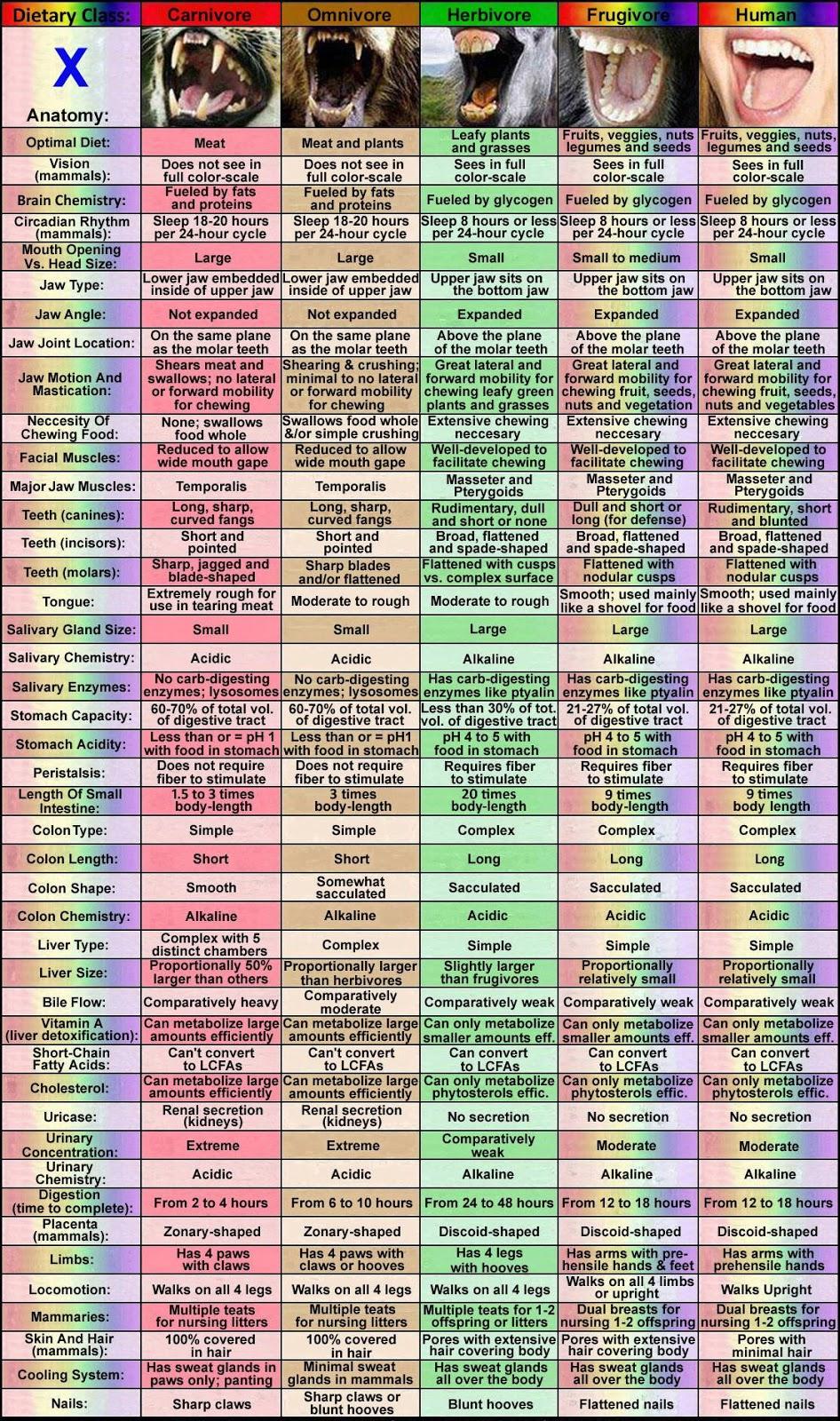
Our bodies are primate bodies. Primates are frugavorian omnivores (get most calories from fruit, and eat very little animal tissue (mostly insects)). Fruit contain mostly carbs: short carbs a.k.a. sugars. We're optimized for eating lots of sugar.
Primates have a hard time producing fat from carbs (a process called lipogenesis), just a few calorie% per day. This, combined with the tiny bits of fat in fruits/insects, we may store as fat tissue.
Here comes ketosis: when we cannot find adequate food supply (starve) we can live off our fat storage, this is what ketosis is for (biologically/evolutionary). It's our starvation mode.
Primates are not made to be in ketosis for long times. We're also not made to eat high fat and/or high protein diets. We're made for a high fruit diet.
Is long term ketosis bad? I believe so, but we still need to do research on this. Many people are trying it on themselves lately, so we will soon know.
Is short term keto dieting bad? Nope. And it may help you to burn that body fat fast. I'd prefer to get into keto by mimicking starvation, a.k.a. (intermittent) fasting, and not by eating lots of fat/protein.
Is eating lots of animal products bad for you? Yes. It's been shown again and again in large studies that humans do better on predominantly whole plant foods.
Not even sure how to respond to that one. American diabetes rates?
> Primates have a hard time producing fat from carbs
??? carbs -> glucose -> insulin -> increased lipogenesis. Carbs are _better_ than protein or fat at producing bodyfat.
> Is eating lots of animal products bad for you? Yes. It's been shown again and again in large studies that humans do better on predominantly whole plant foods.
In large, observational studies with innumerable co-founding factors, including lumping regular meat (a steak) in with highly processed meat (mcdonalds burger).
I agree with the whole food part, and plants can be good, but exclusion of unprocessed meat is not proven to be any more healthy.
You also self describe as vegetarian in your profile, and ketogenic diets often include meat.
I was vegetarian for 10 years and tried a beef only diet for my immune problems.
I was told that I would have trouble digesting meat again but to my surprise, it was much easier than usual, and I felt great the whole day (also actually felt full for like 6-8 hours after a meal).
Then gradually reintroducing foods one by one helped me pinpoint the culprits.
I agree with a lot of what you said - I mean this with the highest degree of respect - but I've noticed a certain strain of assertions here that throws off alarm bells. Do you have some resources on this "frugavorian" thing?
It’s pretty clear that humans haven’t eaten a primarily fruit based diet in a very long time. It’s likely that moving away from that diet predated changes that made us human.
you could certainly make the argument that most humans haven't a primarily fruit based diet for a while (although evolutionarily it really hasn't been that long) but that doesn't change the fact they are our closest ancestors and the way our bodies are built STILL very much mirror those of primates which means they, in many ways, still work as theirs did. It's not like we have evolved entirely different digestive systems or something. Essentially everything is the same (which again makes sense as evolution is a VERY slow process)
Gorillas digestion is based primarily on fermentation of plant fiber, which is why they have a huge gut. Humans have an acidic stomach environment which doesn’t digest fiber at all. A small amount of fermentation happens in the human gut, but it can only produce a few calories a day.
Evolution has changed us considerably in the last couple million years.
We may be closely related genetically to gorillas, but our digestion is probably closer now to a dog’s than a gorilla’s.
Notably if you want an example of a primary ketosis digestion look at cats, who have kidneys overclocked enough they can drink sea water (but shouldn't because they are stressed enough as it is), and may suffer ammonia poisoning if given meals deficent in the right ammino acids to prevent its build up.
We aren't anywhere close to redesigning ourselves to change things around but it is important to realize that "good" and "bad" aren't intrinsic but contextual in medicine, the dose makes the poison and all.
> it is important to realize that "good" and "bad" aren't intrinsic but contextual in medicine, the dose makes the poison and all.
Exactly. And the article is advocating eating mainly animal products. That's a huge "dose", and while not medicine (but nutrition), I'd say this is a very dangerous diet to advocate. Especially since this is very far away from out "roots" (we're not carnivores, and we're not even close).
Yeah, sure, we’re made to primarily eat something you can’t find for 9 out of 12 months. How do you keep believing this crap?
> Yes. It's been shown again and again in large studies that humans do better on predominantly whole plant foods.
No, it really was not. Any research you link to will be riddled with problems like measuring the wrong thing or affected by heathy user bias. Just because it confirms your belief doesn’t make it a good source.
There are a lot of assertions in what you said, some pointers to resources where one can learn more would be useful.
In particular the Homininis have separated from the Gorillinis around 6-8 million years ago. In that time, lots of things could have changed in our physiology.
This is not a very long time in evolution. We may have "adapted" to deal with more animal products (meat/dairy/eggs): those that did not take this food very well have had less offspring and now we're generally more adapted to it (though lactose intolerance is still huge in humans).
But evolving to thrive on diet that's so far off what we started with will take much longer.
Consider when you don’t eat (fasting) your body goes into Ketosis. In other words it’s the default energy system.
You literally have to introduce Specific foods that knock you out of Ketosis...it just so happens now a days those are the primary foods people eat. Foods that spike insulin and knock you out of Ketosis really wouldn’t have been available in a constant supply to keep people running on glucose pre-agriculture.
Also consider the blood brain barrier, ketones are much more efficient at crossing the blood brain barrier to fuel the brain compared to glucose.
Even in the environment of evolutionary adaptedness, prolonged fasting is not the default. If you're going to argue that metabolism under abnormal conditions defines the primary energy system, alcohol must be the primary energy system. It's used at higher priority than either carbs or fats.
Alcohol is an energy source just as much as carbs, fat and protein for sure...but the brain can’t run on alcohol, only ketones and glucose.
Your natural state is ketosis (that makes it the primary fuel source). And we are not talking about “prolonged fasting” or “abnormal conditions”, we are talking about natural states. So if you happen to kick yourself out of ketosis and start running primarily on glucose most people will burn through their glucose stores in just a few hours and their body will crash/shutdown to preserve the remaining glucose for the brain (think of marathon runners “hitting the wall” which doesn’t happen in ketosis, you basically have unlimited fat energy stores and your body will internally produce the limited glucose the brain needs)
It is the primary energy system. When a woman get pregnat, weeks before giving birth, she starts to produce ketones for the baby (it doesn't matter how many sugar the mum takes). And when the baby is born, meanwhile he drinks from mum milk he is in ketosis, because more than 50% of human milk is saturated fats. So yeah, we are in ketosis until we start to eat "food" high in carbs. The body can't burn fats if insuline is in your blood.
The brain doesn’t only run on glucose it certainly runs on ketones and ketones are much more efficient at crossing the blood brain barrier. Now when the brain is running off ketones it still needs some glucose, but the body accounts for that by being able to produce its own glucose and doesn’t need it from outside sources like carbs or sugar).
Ketosis is the default energy System, in that all things being equal when a person doesn’t introduce any food they naturally go into ketosis. People literally need to eat certain foods that spike insulin to get “kicked out” of ketosis.
> ketones are much more efficient at crossing the blood brain barrier
Source?
> Ketosis is the default energy System, in that all things being equal when a person doesn’t introduce any food they naturally go into ketosis. People literally need to eat certain foods that spike insulin to get “kicked out” of ketosis.
That is not a sound argument for it being the "default energy system". It makes much more sense that "default energy system" is that which directly provides the energy source REQUIRED by the brain[1]. Additionally, our closest ancestors (primates) were frugavorian omnivores. Ketosis is a state of starvation and the long term complications from it support that[2] but I guess starvation could be argued to be the "default state" of all living things.
You are ignoring the most important part, humans don’t need outside sources of carbs/sugar (glucose) to power the brain, the body will produce the required glucose internally. So humans can live without carbs/sugar but the same can’t be said without fats.
And no ketosis is not a state of starvation, it’s not clear why you keep saying that, it’s a metabolic state that the body only gets thrown out of when insulin is spiked.
Again it is the default the body only gets knocked out of when introduced to certain foods in certain quantities, which would not have been available pre-ag.
From an evolutionary standpoint it would make sense to evolve the ability to produce all the secondary "fuels" from the most abundant(primary) "fuel". I don't know if things are so in reality, alas.
From the review article “Glucose cannot be replaced as an energy source but it can be supplemented, as during strenuous physical activity when blood lactate levels are elevated [14] or during prolonged starvation [15] when blood levels of ketone bodies are elevated and BBB monocarboxylic acid transporter (MCT) levels are upregulated”
And tbh, I would be more inclined to believe the peer reviewed article on glucose metabolism in the brain by an established neuroscientist tbh.
Point you’re missing is that glucose that is required can be produced by our body, so there is zero need for glucose or simple carbs (and arguably any carbs) in out diet.
So keto is very much the primary system, breaking down carbs is actually a “holy crap look at all this energy in our bloodstream, let’s secrete insulin and shove it all into lipid cells so that it can later be used BY KETO, OUR PRIMARY ENERGY SYSTEM”.
Probably because we can store far more fats than we can carbs. It makes sense to use the carbs first because that avoids the need to convert them to fats so they aren't wasted.
My understanding of this is that the body will always preferentially burn glucose because excess blood sugar is highly problematic, while excess fat can just be stored without the severe health risk.
With carb intake reduced the body will naturally switch to burning fat because it is the only fuel source available.
Because most people in modern society eat way too much carb, which makes glycogen the more bio available fuel and thus being the fuel that majority of humans use in modern times. It has not always been like this. And this state is not optimal, as the various diseases and illnesses caused by metabolic syndrome, that is caused by this overload of carbs, is a major problem for the health and well being of most of these people.
carbs weren't very common: wheat, rice and potatoes literally didn't exist, fruit were nothing like they are today (probably 5% carb content). all those frutarian theories are just crazy.
animals (fat and protein), on the other hand, were everywhere.
I did it before for weight loss, it worked amazingly, but the weight came back on just as easily. It would have to be a permanent lifestyle change, and I'm not convinced that's safe.
> The recommendation to limit dietary saturated fatty acid (SFA) intake has persisted despite mounting evidence to the contrary. Most recent meta-analyses of randomized trials and observational studies found no beneficial effects of reducing SFA intake on cardiovascular disease (CVD) and total mortality, and instead found protective effects against stroke.
This is true for every diet. If you get gain weight on your current lifestyle, start dieting and go back after you lost it, you'll gain that weight back.
There's no magic pill, if your current lifestyle makes you fat, you need a lifestyle change.
So my daughter had epilepsy soon after birth and was hospitalized for 20 days @ 1 month old. By the time we left they had her on 4 different drugs, but the seizures continued. At 4 months old she went to the local children's keto clinic. The seizure frequency slowly tappered off until a month or so later she was seizure free! That lasted for a few months until an ear infection brought the sickness back and then revealed the true cause of the seizure, a brain abnormality.
That was when my eyes were truly opened to how much diet can effect the body.
I have been on keto for three months now, for me it's mostly about the mental clarity, free from the ups and downs you experience when eating a lunch high in carbs.
There is The Autoimmune Protocol diet (AIP), a stricter version of Paleo, and there is keto diet. They both seem to help with autoimmune deceases and inflammations.
Did anyone try them, and can share their experience? Do they both have comparable effects in a long term?
My dog Toby was recently diagnosed with stage 2 splenic hemangiosarcoma and given 30-60 days. Opting against doxorubicin chemo we are working with the Keto Pet Sanctuary to make a new diet and hopefully start HBOT soon.
I love how we're starting to focus on our diets to prevent or cure a huge amount of diseases. You don't need drugs, expensive treatments, nothing, only a good diet. (read the comments below for an clarification for this statement)
I personally can't work on a very low carb diet. Now I'm eating carbs again but NOT refined carbs. I make sure everything I eat is nutrient dense. Well, not everything, I'm not a robot but I always try to eat stuff with a low glycemic index.
And I eat everything in a span of 8 hours. The rest of the day I only drink water.
Y recommend listening to Dr. Rhonda Patrick. She can explain all this way better than me. She's been on the Joe Rogan podcast (she talks about this in her first time there) and she also has a podcast and a lot of very interesting videos.
I realized that that statement can be misinterpreted. I'm not talking about not using drugs or going to a doctor when it's needed. I'm saying a good diet can prevent a lot of bad stuff and sometimes even reverse things like diabetes.
I agree with the responder that your original statement sounds a bit hyperbolized, but I also am an advocate that diet can treat a LOT more conditions than most people think


I didn’t have much weight to lose but I went from 175 to 160 (high school weight) and under 15% body fat. My energy level is consistently very good.
Diet is a subjective thing, of course, but at a minimum getting rid of sugars and processed food might be a good starting point for anyone.
Anecdote: my brother-in-law reversed his T2 diabetes and lost quite a bit of weight doing keto. His doctor had advised meds to “manage” the disease.