> Since fiat in the US, we have the two worst economic crashes (great depression and great recession). Under gold standard, recessions were more common and smaller in impact.
The US -- and most of the world -- was still on the gold standard at the time of the Great Depression, and in fact some economists have blamed the length and depth of the depression on the gold standard.
So you are saying we should judge fiat currency in the US from 1972 and on?
Well, explain how fiat currency is better for the median income family? Standard of living, wages, purchasing power, debt load, etc have all been terrible for the middle and lower class since 1972 (relative to the periods before).
I'd choose instability over a system that transfer wealth from lower to upper class (which debt based inflation does).
Who cares if the economy is more stable if it is not increasing the standard of living for the lower and middle class?
> Well, explain how fiat currency is better for the median income family? Standard of living, wages, purchasing power, debt load, etc have all been terrible for the middle and lower class since 1972 (relative to the periods before).
All as a fairly direct result of fiscal (and, more specifically, tax) policy. But nice post hoc ergo propter hoc there.
> I'd choose instability over a system that transfer wealth from lower to upper class (which debt based inflation does).
Deflationary currency transfers from debtors to creditors, whereas inflation transfers wealth from creditors to debtors. I think you've got which currency system represents an upward transfer of wealth backwards.
> Who cares if the economy is more stable if it is not increasing the standard of living for the lower and middle class?
The problem is that transferring from the current currency system to a deflationary one based on Bitcoin would not only make stability worse, but it would also increase the upward transfer of wealth.
I contend that creating debt money and giving it to tier 1 banks has a much larger wealth transfer effect than deflationary currency. My evidence is the wealth equality gap increasing from 1972 - current.
Inflation does not impact all people in the economy evenly. When new debt money is created it has its full purchasing power. As it works it way through the economy, it loses purchasing power and raises price levels. When the fed creates new money in its accounts, it transfers wealth from all currency holders to the receiver of the new funds.
The other mechanism that fiat credit currency increases inequality is fractional reserve lending. With fiat and a central bank (lender of last resort), fractional reserve banks lend a lot more than without fiat money (lower reserve ratio). Increased debt loads (especially debt for consumption) transfer wealth from debtor to creditor. Also, increased debt levels overall benefit creditors in general.
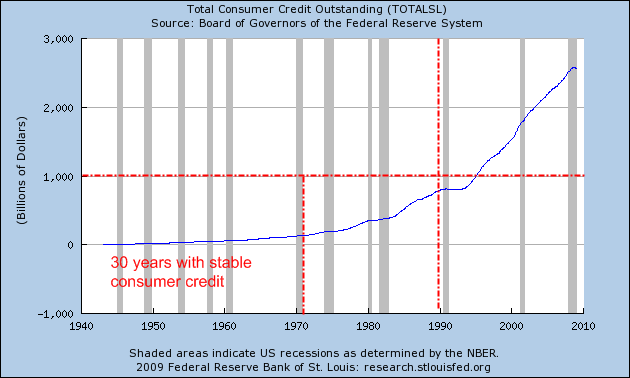
See total consumer debt, it started accelerating after 1972. http://www.mybudget360.com/wp-content/uploads/2009/02/debt.p...
> I contend that creating debt money and giving it to tier 1 banks has a much larger wealth transfer effect than deflationary currency. My evidence is the wealth equality gap increasing from 1972 - current.
I contend that the wealth equality gap increasing from 1972 to current is better explained as the direct result of fiscal policy, particularly tax policy changes which both reduced the (higher with increasing income) income tax and increased the regressive in part and flat in part payroll tax, and has nothing to do with change from the mostly fiat dollar of the late "gold standard" period to the pure fiat dollar of the post "gold standard" period.
> Inflation does not impact all people in the economy evenly.
Right, it transfers wealth from net creditors to net debtors through decrease in the value of assets denominated in the inflationary currency.


The US -- and most of the world -- was still on the gold standard at the time of the Great Depression, and in fact some economists have blamed the length and depth of the depression on the gold standard.