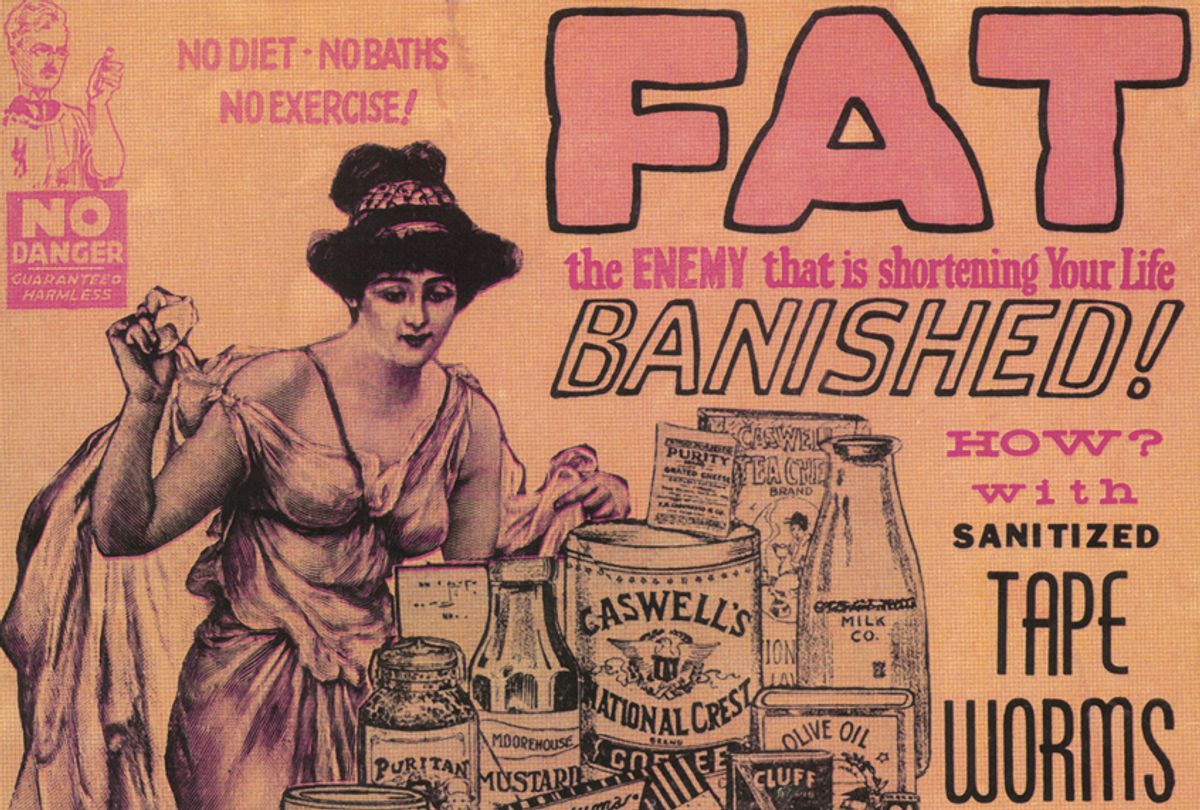
We don’t know long-term effects yet. Interfering with hormones and their receptors can change the amount of the hormone the body produces and the sensitivity of the receptor.
If it’s applied carefully then it shouldn’t be a problem though and the body would re-regulate later itself for the trade of many positive effects immediately.
So I agree with all of this, but will add we do know the long-term effects of obesity, diabetes and a host of the other things it is showing some potential signs of helping with. And because of the serious damage being done by those issues ([0] heart disease is the leading cause of death in the US), it just needs to be good enough to help resolve those issues without introduction anything too major as far as long term side-effects.
This is all to say, because of the current state of health norms (at least in the US), it just has to not do too much damage long term and the pro's can still outweigh the con's of its use.
We kind of do know the long term side effects. Exenatide has been in use since around since 2005. They can include pancreatitis and thyroid cancer in a small percentage of the population. Modern GLP-1 agonists exhibit essentially the same threat profile.
EDIT - Just wanted to note that the cancer thing has only been seen in rats. Not humans. After 20 years we'd probably have seen it by now.
Thyroid cancer sounds more scary than it actually is. It's one of the weakest forms of cancer, and it's extremely easy to treat if caught early enough. Also, living without a thyroid is no big deal.
Somebody very near and dear to me was diagnosed with thyroid cancer ten years ago, and now has no thyroid. She's hardly inconvenienced by it & hasn't even gained any weight since then. Just gotta remember to take those T4 tablets in the morning, is all.
Point is: If you weigh in the balance [lives saved or QALY gained due to GLP agonist administration] vs. [lives lost or QALY lost due to thyroid cancer secondary to GLP agonist administration], it's not even going to be remotely close. "Lives saved" will probably win by an enormous margin, maybe a factor of twenty or so.
People hear the word "cancer" and think "death sentence." (Or, at the very least, an extremely difficult ordeal.) It's a scary word. Yet thyroid cancer is generally a mild disease -- especially mild as cancer goes -- and almost invariably nonfatal if caught early enough.
If GLP-1 inhibitors get people screened for thyroid cancers more frequently, or lead to improved treatments for thyroid cancer, they will almost certainly lead to a reduction in thyroid cancer deaths -- even if, as some surmise, they are responsible for an increase in thyroid cancer cases. Even without this effect, if you balance [QALY lost] versus [QALY gained] GLP-1 agonists should come out so far ahead that it's almost laughable.
In any case, I believe it is wise to talk about these things openly and without fear.
> Also, not all thyroid cancers are created equally (like papillary vs medullary)
Granted, but how is this relevant? I've heard that those drugs may -- this is still, as yet, uncertain -- increase the likelihood of follicular thyroid cancer, which is a very weak type. I have not heard that they increase one's likelihood of coming down with the anaplastic variant. (The only truly deadly one, but quite rare.) If caught early enough, papillary, follicular, and medullary are all easily treatable and indeed curable.
> not every one taking GLP-1 RAs are morbidly obese
Thanks for this. I hadn't seen that it had been verified in humans.
I suppose it helps to emphasize that there are trade offs with all drugs, and that you'll need to work with your doctor to adapt a program suited to your own risk tolerance.
Shouldn’t we have a non-negligible prior on possible cancer risks at all timescales? That doesn’t mean we don’t approve drugs without 80-year clinical trials, but I think it’s a non-negligible risk that has to be accepted.
For instance, my impression is that lung cancer rates only really become strongly pronounced — in the sense of being statistically detectable in the small population sizes you find in clinical studies, rather than the entire US population — after like 15 years of smoking. (Correct me if I’m wrong.)
GLP1s have been on the market for at least a decade, they’re pretty well studied at this point. Their sudden popularity is due to the FDA allowing it to be prescribed for obesity (instead of diabetes), not the discovery of a new drug.
> Their sudden popularity is due to the FDA allowing it to be prescribed for obesity (instead of diabetes), not the discovery of a new drug.
That's not true. I started on liraglutide, which is a previous-gen GLP-1 agonist. It was approved for that purpose in early 2010-s. It worked, but it required daily injections due to its short half-life. It also was unpleasant, as you could feel its effects wax and wane throughout the day.
Ozempic was approved for diabetes in 2018, but became available in sufficient quantities for that purpose in 2019. Doctors started prescribing it off-label for weight loss in 2020 (that's when I also got switched to it), and it was approved by the FDA for weight-loss in mid-2021.
So while we could have moved faster, it's not like there were decades of time lost.
Wait a sec. Something which provides such an unambiguous quality of life upgrade by addressing one of the biggest health problems in the country, is only now available because of regulations?
Seems wild right? Would you believe that there’s a male contraceptive that’s been actively used in other countries successfully for over a decade, is easily and painlessly reversible, and non-hormonal?
It took the FDA four years to pull Thalidomide from the market. Hell, it was OTC in the early days and often prescribed for morning sickness.
They're more cautious now when it comes to pregnancy related drugs. As someone who was not born with flippers instead of hands, I'm pretty happy about that.
> It took the FDA four years to pull Thalidomide from the market.
BZZT! Wrong.
Thalidomide had _never_ been approved in the USA for the morning sickness, thanks to the FDA. The only pregnant people receiving it were getting experimental pre-approval samples (now illegal) and during the clinical trials. See, for example: https://www.reuters.com/article/fact-check/fda-did-not-appro...
You're correct, I was mistaken. Although my mistake may actually help to support my stance.
It was used, and marketed, for morning sickness primarily in other countries (Germany in particular). It's an important distinction, because the US FDA actually stopped it's approval in the US. It seems that "only" about 20,000 American study participants were given the drug at that time. So more than half of the dead/deformed babies came from Germany.
Had the German equivalent of the FDA prevented the drug from going to market many babies might not have been born with deformities.
There are VERY good reasons to be slow in approving drugs that might impact a fetus.
We go through this every 10 years or so, for at least the last 100 years. The market doesn't really have the patience to wait to see the aggregate or long-term effects of new "pop culture" drugs and formulations so we just charge ahead and then let another generation deal with whatever mess. When the pharmaceutical companies really luck out, the cleanup can even come through yet another such wonder drug.
This is exactly right. Let the market decide. If people want to use new experimental drugs, why not let them have at it. They oughta be responsible for their choices
Ozempic was approved for medical use by the FDA in diabetics in 2017, seven years ago. Meaning it passed phase 1, 2, and 3 trials. So it's not exactly an experimental research out of China like a brand new fentanyl analogue.
We can go back to the boom of distilled spirits in the 19th century, but that's kind of cheat because it predates modern drug regulation and aren't seen as medical since people just make and consume them privately.
Or the boom of compounded tinctures at the turn of the century, but again, that's kind of a cheat, because it becomes the impetus for modern regulation and was full of all kinds of wild crap.
But once we have regulation, we get the wartime boom of amphetamines and stimulants for energy and weight-loss; the mid-century boom of early barbiturates, tranquilizers, and sleeping pills; another boom of new stimulants and weight-loss drugs in the eighties, along with a boom of anabolic steroids; another boom of anti-anxiety drugs in the benzodiazepem class, as well as new anti-depressants; then a boom of opioid painkillers with purportedly "abuse preventing" formulations; etc
Each of these booms was absurdly popular during its heyday, generating tremendous amounts of revenue and reaching into countless homes, variously disturbing both physical health and familial/emotional security in significant ways, and then was turned against because of all the secondary effects that they brought with them.
In many cases, these secondary effects were noted early on but simply held in denial because of how freaking much people wanted to feel more energized or calmer or more rested or thinner or whatever in a world that seemed to be putting impossible demands on them. In other cases, people just didn't know where to look for the secondary effects and so they weren't anticipated.
In either case, the drugs always looked really rosy to the public and generally delivered on their prima facie promises.
Socially, these drugs are fitting an almost identical profile. Medically, maybe they'll finally prove to be the exception. We'll have to see.
Oh you just done a heckin double badspeak. Not only are you not trusting my science, but you're slandering my big pharma. Big mistake. Thats a downvote.
Compared to the long-term effects of obesity, Alzheimers, and addiction? Everything treatable by Ozempic, et al. has immediate short-term effects, and long term effect that significantly effect longevity.
The fearmongering around Ozempic not knowing the long-term effects would have to be is unnessicary. Yes, it sucks to have to be stuck taking a medication for the rest of your life, but would you rather be stuck with a delibitating disease and die 10 years early, or have to take a medication for the rest of your life?
> would you rather be stuck with a delibitating disease and die 10 years early, or have to take a medication for the rest of your life?
I'd rather have a cure for that disease instead of lifelong medication. While not nearly as profitable it is far preferable over a lifelong dependency.
Nor do the therapeutic preparations, these are developed just like curative treatments are. There is far more profit to be had from therapeutic treatments in the absence of curative treatments so there is a perverse incentive to develop the former in lieu of the latter.
But we know the long-term effects of obesity, alcoholism, and every other form of spiritual weakness this thing apparently allows people to escape. The long-term effects would have to be comically atrocious for it not to be worth it. Put ozempic in the water supply.