Woah, that looks really interesting. I've long thought that the old fashioned hexadecimal columner way of entering effects on tracks is a mess. It looks like this lets you see envelopes, effects and more visually?
I might want to give it a spin to see if it's as intuitive as I think it might be?
Only tangentially related, but I love this note at the bottom of the Radium download page:
> Information to warez groups
> Since the source is open, it should be simple to turn the demo into a fully featured version. Please let me know of any problems. (Just compiling the source is cheating!)
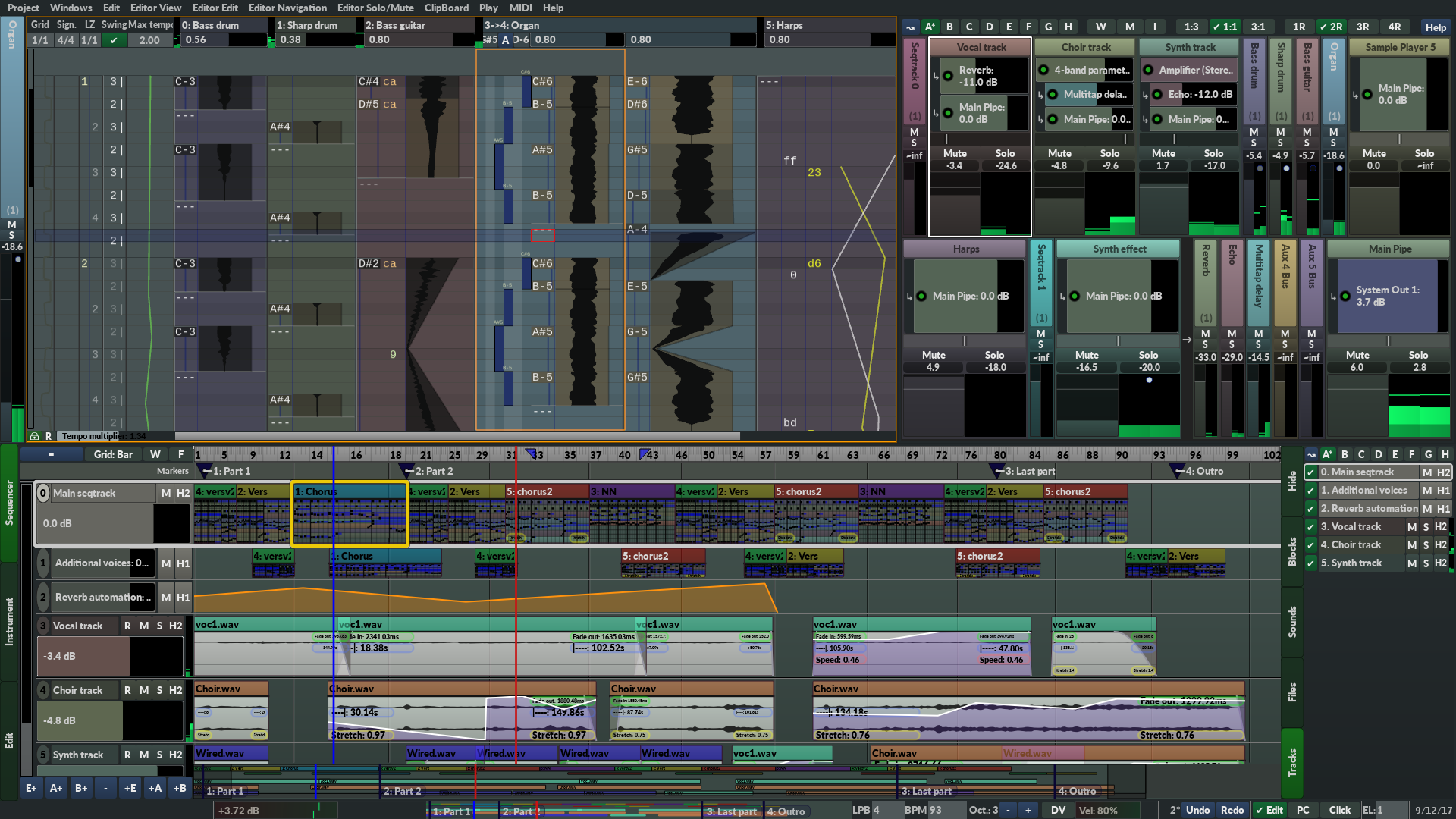
I'm intrigued by radium and I tried it once, didn't get too far. The feature set looks amazing, but doesn't seem exactly easy to use. I think this screen shot from the front page says it all.
https://users.notam02.no/~kjetism/radium/pictures/radium_6_0...
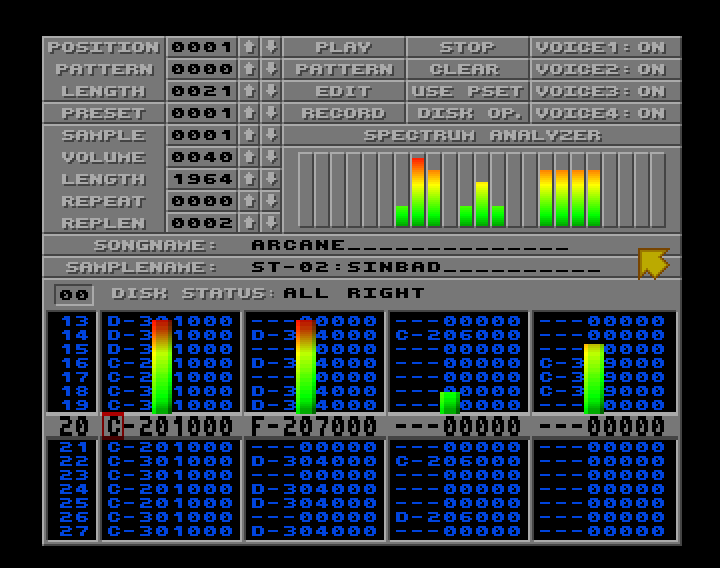
I am not a musician by any stretch of the imagination, but I fooled around with Soundtracker on my Amiga back in the late eighties, and most of that screenshot makes sense to me: upper left is a pattern being edited, with some graphical display of the waveforms added in along with some lines showing the envelope of volume/effects/etc (instead of having to type in hex numbers), upper right is some effects, and most of the bottom is a sequence of patterns, with extra tracks layered on top of that, which is a pretty neat addition to the traditional tracker way of working - make a sequence of patterns as usual, then add in other stuff in a horizontal format based on timeline-based DAWs.
I think familiarity has something to do with it, but your own screenshot is definitely way less cluttered than the radium one, which is showing A LOT. It's not just the waveforms, which I get, but also what seem to be multiple layers-within-layers of sequences or something like that. To be fair, I've seen other screenshots of radium that look a lot more sane. This one might just be arranged to show off all the things that radium has going on.
Oh yeah, your Radium screenshot is hella complicated - but the surprising thing to me is how much it makes sense for me, even though the last time I touched a tracker was back around 1998.
I'll explain the in-joke: Radium was the name of the premier, and to my knowledge only successful, "audiowarez" group. So if you were a teenager and you wanted to switch from Fast tracker II to "professional" tools such as Logic or Sound Forge, you'd likely find a pirated copy somewhere and if you did, it'd likely include an info file that said it was provided by Radium.
I have no clue who they were and how they managed to crack and spread just about every piece of super expensive audio software out there, but they did. I bet the vendors hated it but it was a life saver for us teenagers.


https://users.notam02.no/~kjetism/radium
* https://www.youtube.com/watch?v=rp0wDH-OQlA - Radium 3.6.6 playing the demo song
* https://www.youtube.com/watch?v=FhwmT0G5EwM Radium Tracker - Quick 2Bars Only Demo (Renoise "maYbe"- Style, Piano Roll inlcuded..)
* https://www.youtube.com/watch?v=_7-hJx7Lir4 RADIUM - Tree of bugs song
* https://www.youtube.com/watch?v=jYGDUpr1uYs Radium: Esau - Massaker (2015, 4 voice polyphony, 8-bit, 0-29kHz)
https://www.youtube.com/user/KjetilMatheussen/videos