You don't need to use any polymorphism (generics or traits) in Rust. You can use it as a pure structs and functions language like C (especially if you're not using the standard library).
The argument in favour of at least some polymorphism is that it helps to minimise highly repetitive code that would be avoided in C through aliasing, type punning or other pointer conversion.
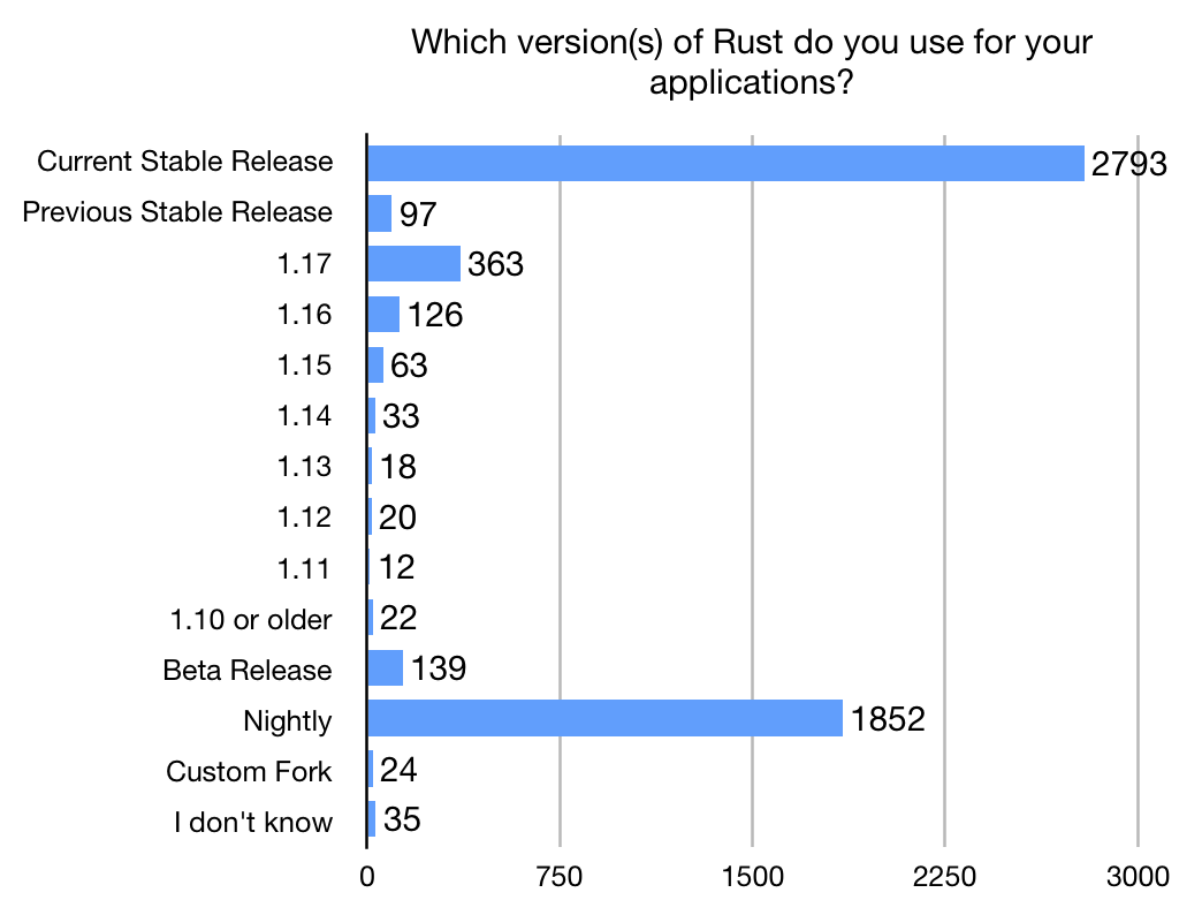
I love Rust, but I don't think that using a subset of Rust is a real option at this point. You'd have to stop using other libraries and even the standard library for this - and while it's possible, it definetly won't make your life easier. Rust has a wonderful community, but it's mostly filled with enthusiasts who're actively using nightly, so if you try to do things in a more limited way, you'll be on your own very often - much more often than for example I, personally, would be comfortable.
This is true, but doesn't refute my point. If you want not only to write something in Rust, but also to participate in the community and get help from it, it's much easier to do it if you're using nightly.
I consider myself an experienced developer, but unlike other new technologies, which I almost always learn just from documentation, with Rust I often turn to community for help. I understand that this complexity is neccessary and I wouldn't Rust to be easier, of course. But still, with Rust's complexity and overwhelming amount of information that's already out of date with the best practices - it sometimes seems that over a half of google results on stack overflow are still about pre-1.0 Rust. And when we (people who learn Rust) turn to the community, it usually tells us (in the most helpful and nice way, of course) "just use nightly".
Yes, it is a bit unfortunate that many suggest nightly. It makes sense, given that they’re enthusiasts, and therefore know all about the latest and greatest. But, these days, it’s becoming rarer and rarer to actually need it. But that’s only generally; it’s true that embedded often still needs nightly, though that should change pretty soon!
I wish Google didn’t customize results so much; I rarely see anything pre-1.0. It really makes it hard to figure out how to best help :/
If a library uses nightly, then you have to use nightly to use it.
At this point, the only major library that requires nightly is Rocket, and Actix-web has been rapidly ascendant due to (rumordly) being used in production by Microsoft, and working on stable.
> You don't need to use any polymorphism (generics or traits) in Rust. You can use it as a pure structs and functions language like C
This just means that the Rust language does not have the feature of being simple. Of course, there are sane subsets of C++ also (e.g., do not use new/delete), but this does not mean that C++ is a sane language. The same goes for Rust, probably.
I've used Rust. It's not simple. For instance, lifetime annotations are ugly and confusing.
What a snarky reply from someone who already knows that Rust is not simple. The person you replied to was right, and yet you cast doubt on what he guessed to be true.
The person that response was directed at was attempting to use a mistaken similarity to C++ to paint Rust as a language that is not "sane". You appear to be injecting your own interpretation as to what this subthread is about. :)
Of cause you can find a sane subset of c++ / rust that most comfortable with. But once your project accept c++ / rust, nothing can stop them using the other "features" of the language.
Trying to enforce code style drain lots of energy from the project. Maybe a good linter can help......
While I'm not a fan of polymorphism and actually avoid OO completely (except for making data structures out of classes of course) I feel like this could be something easily solved with tools, if making tools were easy.
Considering that C doesn't have any good facilities for polymorphism, it's going to continue to be the argument of any language that succeeds C. Unless, that is, that successor language also doesn't have any good facilities for polymorphism, in which case we have Go as a fascinating real-world study in how people will incessantly demand them and deride the language for lacking them (which is saying something, considering that interface{} in Go is already better than pretty much anything one would hack up in C via void pointers or macros).
Wasn't it originally a much bigger deal to be able to have the facilities for more generic programming before templates? These days people's threshold for bloat seems much higher, while the penalty for allocation and jumping around in memory are much higher as well.
It was just recently that C++ got some underpowered kind of generics (beyond templates). So, no, I don't think anybody advocated that in the 90's.
Late 90's advocacy was much more on the lines of "OOP lets you reuse code" and "widget libraries are great, and they all but require OOP". One of those is blatantly correct.


The argument in favour of at least some polymorphism is that it helps to minimise highly repetitive code that would be avoided in C through aliasing, type punning or other pointer conversion.