Bitcoin is within 0.4% of its all-time high (http://www.coindesk.com/price/ - peaked at $1165.89 in 2013). ATH breakout could and probably is going to happen any minute now... In fact many exchanges have already reached their ATH in the previous hours.
This attack is applicable to SSL certs. Not most CAs as they have deployed counter-measures (such as using a long, random serial number) after the publication of the colliding MD5 rogue CA (https://www.win.tue.nl/hashclash/rogue-ca/) but I'm sure there are tons of companies with IT department and internal CAs who don't follow best practices and could be attacked with SHA1 collisions.
Even root CAs have been known to not comply with the randomized serial number requirement occasionally, see [1] for a recent example, with the most recent (SHA-1) certificate being issued in August of last year.
It's increasing but still really low and definitely possible it's increased use within the population instead of increased adoption. That's also like 2.5/second at its peak and even lower when you drop chain transactions.
I am not sure there is any utility in differentiating between these 2 types of increased use. Either way it's increased use, and either way it's good for Bitcoin.
If we were seeing real growth surely we'd see at least some signals outside of transaction rate. We also have an ongoing block size debate at the moment and I wouldn't put it past some of the proponents(Ver) to be willing to spend money to artificially inflate block sizes.
There are plenty of signals. Price is rising. Activity on Bitcoin forums is growing (r/Bitcoin users grew from 173,000 to 198,000 in a year, bitcointalk.org activity grew from 5900 posts/day to 6700 posts/day in a year, etc). Bitcoin remittance usage is growing (one example: http://bravenewcoin.com/news/bitcoin-remittances-20-percent-...). Bitcoin trading is increasing (especially in China, look at the volume starting in Q4 2015: https://bitcoinwisdom.com/markets/okcoin/btccny). More wallets are created (not a 100% "vanity" metric, but I agree the number of used or active wallets would be a better measure). More venture capital poured into Bitcoin year after year (https://news.bitcoin.com/venture-capital-all-time-high-new-r...). And more.
If a single metric was increasing this wouldn't be a reliable indicator. However all of the above are growing.
For 2014 again we see about the same numbers as 2015 and about double 2016.
>Bitcoin remittance usage is growing
Again a bunch of bitcoin companies saying they are doing large numbers while avoiding giving actual figures. SCI is famous for this. Godfreee regularly post on /r/bitcoin about how successful they are and how great their business is while also claiming that giving any numbers would put them at a competitive disadvantage but that they would be releasing a report soon(for ~2 years now he has been claiming to be releasing a report soon).
>More wallets are created (not a 100% "vanity" metric, but I agree the number of used or active wallets would be a better measure).
Wallets is a 100% vanity metric because there is no limit to how many wallets a single user to can great. Same with accounts on coinbase.
>More venture capital poured into Bitcoin year after year
At the start of 2015 through to the end of the first quarter it was claimed that 1b in vc would happen in 2015. The year ended with less than half of that with half of that being funds raised by 2 companies.
In 2016 it's dropped back below 2014 levels with 1/3rd of the claimed bitcoin VC going to non-bitcoin companies like Ripple.
Bitcoin users still get excited when they see it discussed anywhere outside of bitcoin specific forums because there is virtually no one that cares about it outside their bubble.
Pretty much every store online that has started accepting bitcoin that has reported results later on has shown it to be a huge failure. Even bitcoin darlings like Overstock reported that after the initial spike sales dropped off to meaningless numbers. Things like the bitcoin blvd in the netherlands reported something like 1.6btc in total sales amongst all retailers in their first 18 months.
The users that are in the bitcoin space now a days largely fit into one category. People who likely need a lottery win to ever be rich and having seen a few early adopters do just that are convinced bitcoin is their sure thing. So they constantly double down on their efforts and purchases.
People are constantly showing growth on things like coindance while ignoring that once you account for inflation the numbers are actually flat or decreasing pretty much across the board.
It's possible there is some random event that drives bitcoin to be a success in the future and I look very silly for my opinions of the years but there is no real evidence that the new users in bitcoin are outpacing the churn. Though I will happily accept I'm wrong once some of the bitcoin companies start reporting real numbers. We may get our wish as part of the Coinbase IRS lawsuit since Coinbase has already started reporting much lower numbers of US users than they have previously claimed.
It didn't count them equally because they weren't allowed to vote. Let's say you had a state with one voter and 9,999,999 people who couldn't vote. Should that guy have the voting power of ten million people?
That guy shouldn't. But do you realize that this flaw exists in today's presidential election system?
If in the entire state of California, only 1 voter casts his ballot and the millions of other don't vote or can't vote, then this single ballot would decide all 55 electoral votes of California.
That's true. The difference is on a percentage basis the people who can't vote today are a tiny percentage of the population. In the antebellum South that wasn't the case.
You can be sure that this vulnerability was probably discovered by some researcher, then sold to grey markets like https://www.zerodium.com or https://www.exodusintel.com/ (they pay up to $1 million for a highprofile iOS exploit), who then resold it to some government who is now trying to exploit this dude's phone...
Because the English-speaking world has roughly agreed on the neoliberal economic consensus that extreme individualism, devil-take-the-hindmost capitalism is the Only Way. It is an absolute dogma, reinforced constantly through the press and the best-funded political parties.
Rich nations like Japan or Norway who are trundling happily along with more equitable societies, rather than a return to Victorian social models, need to be stigmatized lest one start asking questions like "what's the point having a country of billionaires and ditch-diggers?"
Please don't bring Norway into this. I'd rather not see it inspire yet another subthread with a bunch of cocksure foreigners who think they know what this country is like. Their analysis tends to be shallow.
I live in Norway, and I think it's pretty close to an utopia.
Not that there aren't flaws, but people tend to complain for the sake of complaining.
This often makes outsiders think that it's all just a facade and that behind the scenes it's actually terrible, that Norway can't just be a good place to live, there has to be some sort of dirty secret that undoes all the good things about the place.
Are you a native or have you moved there from somewhere else? I think the dual to "the grass is always greener" is that you might not realize that some things are problematic, or that there are better alternatives, unless you've have the chance to look at it from another perspective.
I moved to Norway when I was 5 (from Sweden). While I technically qualify as a foreigner, I would say that I'm a vanilla Norwegian guy.
I can't really comment on being biased or not, that's obviously not the sort of thing I would know myself, but I do have a lot of friends all across the world that I talk with regularly, and find that they have to deal with a lot of small crises and huddles in life I don't have to deal with (saving up for college, paying hospital bills, high insurance costs, etc).
I know that if I suddenly lose both my arms in a car accident, or otherwise get long-term sick, the social safety net is there to get me back on my feet.
When I've interacted with the police, they have been polite gentlemen who genuinely care about their job and their community, I've never come across the power and trigger happy psychopaths that the US unfortunately seems to attract for their police jobs.
And I know by experience that even somebody who has a "low" job like working at McDonalds is pretty well off, able to buy more than just the bare necessities. Stuff like people having two jobs just to survive is unheard of.
As I said, nothing is perfect, but when I do hear people complain about Norway, it's usually from an outsider perspective, getting things like our taxes completely wrong, or from an insider perspective, complaining about dumb politicians or bad weather.
"How dare Japan not fall under our rules, hurr durr"
Whole Asia is rising thanks to one and single fact - they stick to their rules. While whole western world is bending every possible rule to wage wars, shut protesters and buy votes.
As history teaches us east will collapse under its own degeneration of freedom so Asia can flourish. Then Asia will collapse in its self control obsession so the east world will flourish.
I can understand why some people would like more a more quantitative exploration of the issue than the opinion piece that the article is. I hate to say it, but I think the the article is spot on. I lived most of my life in Canada, moved to Japan for 5 years, moved again to the UK for 2 years and have now moved back to Japan (hopefully for good).
Japanese culture is drilled into people at school. This is something heavily criticised by foreigners who pity the lack of freedom that Japanese school children have. It is a double edged sword, but this strong cultural upbringing (enforced by teachers, not parents) does have a lot of advantages.
I think one of the biggest thing I like about Japan is the lack of societal angst that I perceive here. Many, many people here are "poor" (I live in the countryside where jobs are not plentiful, or high paying), but I never hear anyone complaining about their salary. You just make do with what you have. Especially the "American Dream" is practically absent. Hardly anybody tries to strike it rich. They just try to make a nice life within their means.
When I lived in the UK, the sky rocketing housing market split people into 2 camps -- those speculating in order to make it rich, and those who were wondering if how they were going to be able to live on the pittance of a salary they received (and complaining about the injustice of it all).
I'm sure many people prefer the western approach, but I will happily live in "poverty" in Japan instead.
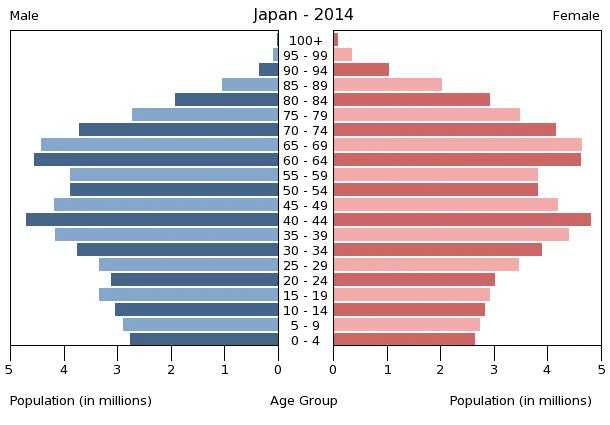
Even during the deepest point of the post-1980s recession, unemployment never exceeded 6%. In fact, the highest level of unemployment Japan has experienced since 1953 was 5.6%: http://www.tradingeconomics.com/japan/unemployment-rate
It is interesting that they managed to preserve low unemployment and increase the standard of living during about 20 years of flat economic growth, but they've done it. Part of it can be explained by the fact that layoffs are rare (companies almost always assign employees to do unnecessary work rather than lay them off), but that is not sufficient to explain how Japan maintained the world's second-highest GDP during the "lost decade."
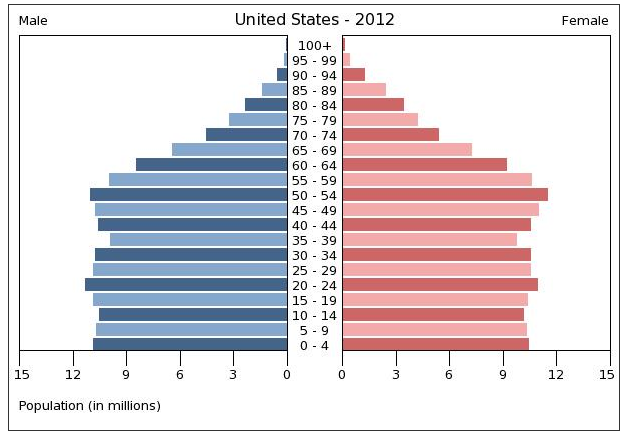
Japanese GDP (PPP) per capita is only about 70% of US GDP per capita. If they have the world's second-highest GDP, that is mostly because they have the developed world's second-highest population.
Some argue that Japan fudged its numbers to hide the drop in GDP following the crisis, and was waiting for reality to catch up whilst reporting stagnation for a few years.
Depends on your definition of credible evidence, and your personal theoretical bias, as with most things in economics (see: China bull vs bear case).
My position on the matter is "I don't know, and I'm unwilling to invest the effort to know"; the extent of my interest in Japan is how the ever lowering JPYSGD makes for good value holidays. But it was an interesting theory worth chucking in.
I've also seen some interesting playing around the components of CPI in Japan and elsewhere, taking them in and out of the index as required to obtain the right result. Can't find a link, unfortunately; it was probably a paid bank research report and I've been out of the field for half a decade.