To kick off our Gear Store, we're auctioning three exclusive Anduril Relics through eBay for Charity with full proceeds benefitting Blue Star Families. These Relics are recovered hardware parts used in Anduril testing.
Today's featured Relic is a recovered crash component // exhaust (1 of 1) // Classification: Rare
https://lnkd.in/gZfPcaaK
As the final auction ends, the full Drop 1 collection will be available for purchase ft. Reyn Spooner Hawaiian shirts, flight jackets, acrylic-framed posters and more one-of-a-kind Relics.
This is generally my goal with Emacs customization. I'm basically just using APIs (Spotify, Outlook Exchange Server, myFittnessPal, Reddit, HN) in a common Emacs interface. The downside, of course, is that it's a lot of work to develop and maintain.
My hypothesis is that fashion has taken a backseat to the numerous other (mainly digital) ways people use to express their individuality. If you're interested in fashion or trends, I always recommend looking at middle and high schoolers--they seem to care more than just about anyone else.
As a child of the 90s, I remember 8th grade being all about fashion: baggy pants/shorts, high white socks, "stuffed" skate shoes, low hanging backpacks with band patches, etc. Our appearance was the primary means by which we performed identity and grouped ourselves and each other into cliques.
However, as the popularity of the internet rose, we were given a new means by which to express ourselves: AIM screen names and profile content, Xanga and LiveJournal custom styles and angsty post, etc. But, even in the 90s, our digital avatars were still small, manageable, and mostly disconnected from our REAL, in-the-flesh, identities--there was a degree of anonymity, particularly for those who wanted it.
At some point, with the rise of MySpace, Gmail, Facebook, Tumblr, and (more recently) Instagram and Snapchat, and the proliferation of smart phones, the barrier between people's real identity and digital identity disappeared. With less anonymity comes MUCH more anxiety. Ridicule for faux pas now are infinitely reproducible, potentially permanent, and move at the speed of light. I imagine if you talked to middle school students today, they'd be much less concerned with the fashion of their peers than the contents of their social media profiles--this seems to be semi-supported by this article[1]:
"In my dozens of conversations with teens, parents, clinicians and school counselors across the country, there was a pervasive sense that being a teenager today is a draining full-time job that includes doing schoolwork, managing a social-media identity and fretting about career, climate change, sexism, racism–you name it. Every fight or slight is documented online for hours or days after the incident. It’s exhausting.
...
It’s hard for many adults to understand how much of teenagers’ emotional life is lived within the small screens on their phones, but a CNN special report in 2015 conducted with researchers at the University of California, Davis, and the University of Texas at Dallas examined the social-media use of more than 200 13-year-olds. Their analysis found that 'there is no firm line between their real and online worlds,' according to the researchers."
Not to mention that equipped with a bike and the coaster [1], you could easily make it between Downtown (either Santa Fe or Old Town), and Sorrento Valley in 40 minutes. Granted, there isn't a super safe way to get to / from the Old Town station.
I grew up in the east bay, went to college on the central coast (Cal Poly), and have lived in San Diego County for the last 6 years--specifically Carlsbad, East Village, Little Italy, and Hillcrest. I'm an aeronautical engineer who specializes in numerical analysis, so I'm not the EXACT demographic mentioned in the article but I still think I can offer some insight.
I can validate a lot of what CalRobert has mentioned. On paper and even during a during a brief visit, San Diego looks like a great city for young tech talent--great weather, cheap Mexican food, delicious beer, affordable housing (at least by SF and NY standards), and (of course) the beaches! Who doesn't want endless summer?
But on further inspection, there are definitely some environmental, structural, and cultural issues:
- _Heat_: With climate change the summers have been getting unbearably hot. Since much of the city (Uptown area) was built between the 20s and 70s, most places (with the exception of new high rise apartments / condominiums) don't have central air. Each subsequent summer I've lived here has been warmer and longer--just look at satellite imagery of the area over time--the Baja sand dunes are moving north. Due to San Diego County's political leanings, climate change is still a "controversial political issue".
- _Transit_: Southern California (and San Diego in particular) has a complete and total aversion to public transit and alternative modes of transportation. The landscape and suburban landscape don't particularly lend themselves to public transit, but it's MORE than that--it's cultural. San Diego was largely developed during the "American Dream" boom [1]--a two car garage and car for every adult. The city was planned around cars and natives like it that way. It's not as much a lack of supply or appropriate legislation as much of a lack of demand. Cars are one of the ways San Degians demonstrate wealth and exercise their "freedom"--public transit is widely reserved for the poor. Even the Regional Bike Project [2] has been met with huge resistance because it will take parking away from University Ave., as mentioned above. The Uptown Community Plan [3], which is attempting to increase population density in the "young, hip, liberal" area is being met with lots of NIMBY-ism [4].
- _Population Flux_: San Diego seems like a revolving door of people. I constantly meet people who "just moved here". What attracts them? The beach and the weather. Who benefits most from those? Attractive people because they can exercise one of their major strengths. Don't get me wrong, people are allowed (and encouraged) to be beautiful and San Diego IS a beautiful city (except when you look at the 40+ age range who have been weathered by solar radiation). Since that's the demographic that's attracted to the area, more substantive attributes that are popular in areas like the bay area--intelligence, creativity, passion, drive, ambition for things other than image or material wealth, etc.--are in shorter supply. Granted, as money REALLY started to flow into the Bay Area in the 90s, much of the hackers, geeks, and political dissidents, were displaced by people looking to make money. But, hey, at least they were doing something rather than just trying to appear beautiful and wealthy. This would be a huge issue it didn't make people so depressed--our largest alternative press paper, the San Diego Reader, seems to be entire funded by teeth whitening, weight loss, and depression treatment advertisements. The population flux issues are compounded by the large military population in San Diego. Since many of them are on one to three year assignments--they don't really invest in the area, and it's hard to blame them. It's a really difficult lifestyle.
- _Wealth_: San Diego is _the worst city_ for long-term wealth building in the United States [5]. I read story after story on Hacker News about the housing problems in SF and NY, and the cost of living IS obnoxious, but so are the salaries. As a single data point, I currently make about 100K in a very specialized discipline with a masters degree and ~6 years of experience. If I moved to the Bay Area, Seattle, or Pasadena, it would be substantially higher. If I moved to Charleston, Wichita, or Huntsville (other aerospace hubs) my salary would decrease but the money would go MUCH further. What really matters is salary divided by cost of living or average real estate prices. According to the study "San Diego [is] a good fit for people with a substantial nest egg because they can purchase a home and build equity", which most people in this crowd looking to move (with the exception of new graduates) could probably afford. HOWEVER, the real estate market in San Diego is also incredibly competitive. I started looking in 2012, constantly fought against all cash developers, and FINALLY got an offer accepted in 2014 after offering 30K over asking price. Rent prices are also skyrocketing right now, which makes moving here as a new graduate increasingly difficult.
- _Politics_: San Diego skews conservative and is semi-corrupt. Our last mayor resigned due to a sex scandal [6] which led to a mayor election, the results of which CLEARLY shows the neighborhood class segregation throughout the county [7]. In the midst of all of this, the Balboa Park Centennial Committee (charged with planning a celebration for the Balboa Park Centennial) squandered 2.6 million in taxpayer funds with little to show for it [8]. More recently, we've had huge problems with the homeless population [9] and the city's response has been to close shelters [10][11] and BLAME the homeless for their "laziness" while completely ignoring material conditions and mental illness. Coronado Island (rich, independent city which includes a huge naval base) regularly rounds up homeless people and drops them off in East Village, a neighborhood I used to live in. There are many homeless encampments around the city, bike theft has increased, and the cops seem to mostly harass them. Our police chief also resigned in 2014 due to sexual harassment and fourth amendment violations [12]. It's safe to say that class and racial tensions are high.
That all sounds pretty bad, but there is a lot that makes San Diego a really great place to lives as well:
- _Beer_: If you're into beer, San Diego is a REALLY great place to be. There are new breweries popping up constantly, a great selection of beers on tap at nearly ever restaurant, and a decent bottle shop on nearly every corner.
- _Dogs_: San Diego is an INCREDIBLY dog friendly city. There are numerous dog parks, restaurants with outdoor patios that cater to dog owners, and even a Dog Beach.
- _Petco Park_: I grew up going to the Oakland Coliseum and (later, when it opened), what was then PacBell Park. For the price of tickets, it's hard to beet a game at Petco Park. The food selection, which features local restaurants, is excellent, beers are semi-affordable, and nearly all the seats are great. The Padres are historically terrible, but since most people seem to be transplants, they all just go to games when "their" team is in town.
- _Balboa Park_: Balboa Park, to me, is the crown jewel of the city and one of the major reasons I moved to Hillcrest--I'm just a few blocks north. It includes some great museums, the botanical building [13], and the Zoo which does some pretty altruistic work, is also a gigantic botanical garden, and has sky buckets you can ride on to get a view of the entire city.
- _Political Mixing_: I didn't realize how myopic the Bay Area was until I left. I still have family and close friends in the area who pride themselves in the political openness of the Bay Area. That only really seems to be true if you agree with the dominant views. Disagreements seem to center around pedantic details or characterizations of the "Political Right" or "Big Business" [14]. San Diego, on the other hand, is really more of a cultural salad [15]. A typically night out at a North Park or Downtown Bar will land you in the company of hipsters, yuppies, hippies, military cadets, punks, gays, Cholos, etc. Some of this depends on venue, but you never really know what you're going to get--it can be very diverse which encourages everyone to be polite and occasionally reconcile or challenge their own political views and preconceptions. A lot of the ska music coming out of Southern California which talked about conflict, tolerance, etc. didn't make sense to me until I moved down here.
- _Food_: San Diego has great Mexican, Vietnamese, Korean, Japanese, and East African food. We're lacking quality Chinese, don't have nearly enough quality Indian, and really only have two or three good Italian places in Little Italy. Greek could also use some work, although there is an old dinner on University in North Park that's tasty and affordable.
- _Trails_: I'm a trail runner and we have a LOT of really well-maintained local trails in the city. If you want something more substantial, you can get to the PCT in about 45 minutes and run north (or south) to your heart's content.
- _Music_: Due to our proximity to LA, a lot of big acts come through San Diego on week nights and play smaller venues for almost nothing. I frequently attend shows at the Casbah for $13. Unfortunately, LA also seems to suck up any of our local talent since the industry is so much larger there.
- _Neighborhoods_: Coming from the Bay Area, there are lots of neighborhoods that, even with their Southern California cultural heritage, offer refuge and tend to share my cultural leanings. Some favorites include Hillcrest, Normal Heights, University Heights, Mission Hills, Golden Hill, North Park, and South Park. Unfortunately, to live in this area, I have to commute every day to Poway for work. Apparently Barrio Logan and Logan heights are also getting better, but I haven't spent any substantial time down there.
Sorry, that was a good bit longer than I anticipated. I'm happy to answer any questions about the area although questions related specifically to the start-up scene, securing VC funding, etc. should probably be directed elsewhere.
That was fantastically thorough. If I still lived in SD I'd ask if you wanted to meet up for a pint. We even share an alma mater (Cal Poly SLO).
I couldn't have put it better myself. And thanks for pointing out that climate change is an issue. I got really, really tired of people saying "gee, this sure is an unusually hot summer. Just like the last one, and the one before that, and the one before that" and yet thinking of climate change as unsettled science. Before weatherspark got rid of their dashboard I could show them that summers in SD ARE definitively hotter than they have been in ages (though there was a hot stretch in the late 70's).
As an aeronautical engineer (structural dynamics, aeroelasticity, stress analysis, etc.), I can definitely validate this claim--at least partially.
At the lowest level, things are definitely a horrific mosaic of "temporary solutions, strung together by proverbial duct tape". The good news is that there's a good bit of oversight. Even if my analysis on a flight-critical component is a complete and total abuse of physics (either due to my own incompetence, rushed schedule, or limited budget), it still has to go through my manager, an internal review (with many other experience engineers), validation testing (limit load testing, vibration characterization, etc.), and a third party review by a regulatory agency ALL before first flight. Does it take a while? Absolutely, because the consequences of an incorrect air-frame structural analysis can be dire. Is it perfect? Not even close, but it's pretty good. When field issues DO arise, we have a failure investigation team that works around the clock to address the issue. And this is for unmanned aircraft--in commercial it's even more rigorous. Spacecraft? An even higher level or rigor.
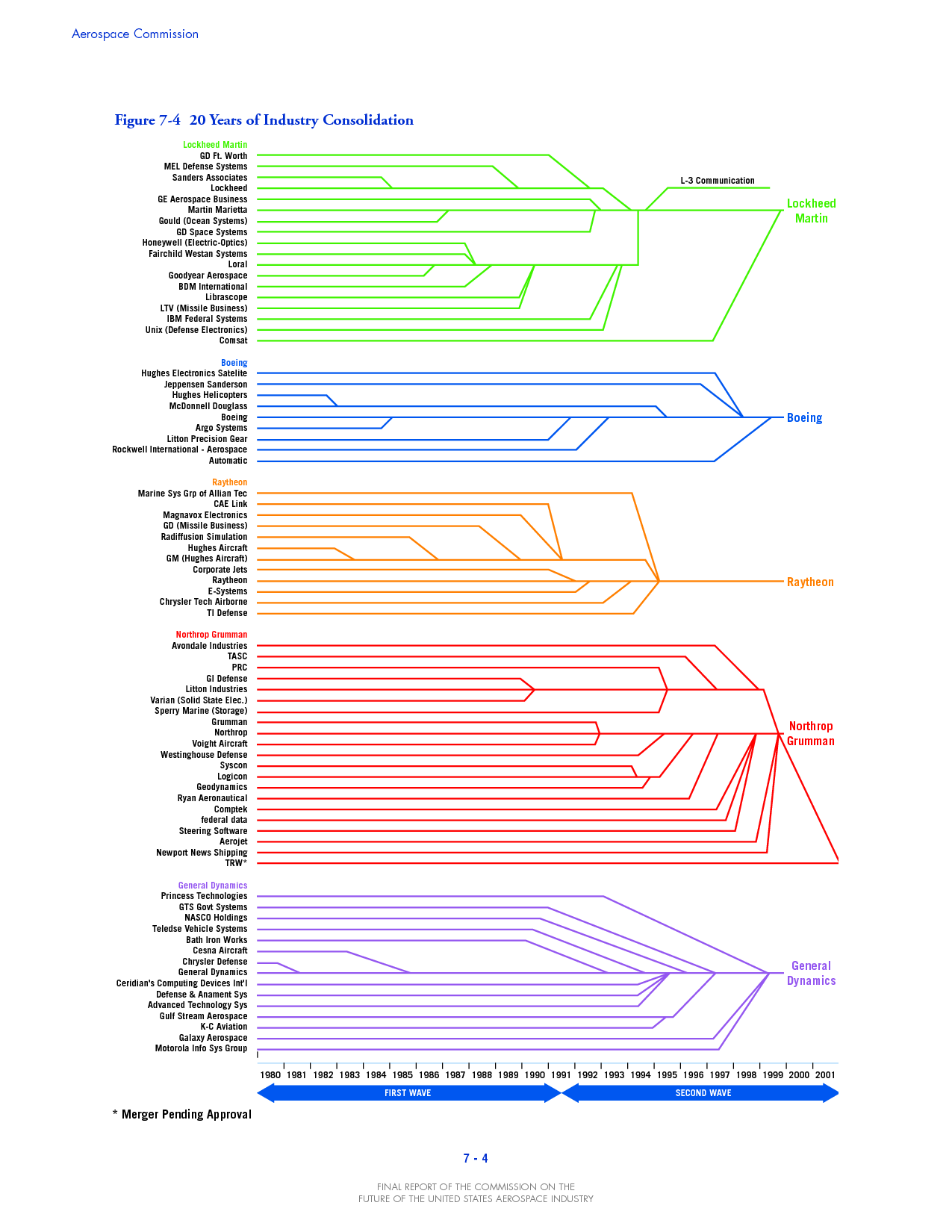
When aeronautical / aerospace engineers DO screw up, you definitely hear about it--usually because lives are lost. A single failure can lead to a company going under and being purchased by a competitor as seen in the consolidation of aerospace companies[0]. In most web programming applications, mistakes are much more forgiving. At worst, a bad commit makes it to production code which usually only manifests as lost revenue (either through security breach, downtime, loss of consumer confidence, etc.). I have to imagine that production code on a medical device (say a pacemaker) is more heavily scrutinized than JavaScript includes in a header file, but I could be wrong. Web is a VERY fast industry because it can afford to be--the reward for using new, bleeding edge technology, is often worth the risk because at the end of the day it's all financial.
I do think "everything is [sort of] a mess, once you get close enough to notice". Some other articles on the phenomenon:
1. Everything is Broken [1]: Since programming technology moves so fast, everything is literally strung together because "if it works, it's good enough".
2. Programming Sucks [2]: Everyone has an opinion and since programming is literally working with pure thought, it's objectively difficult to get people to agree.
3. The Expert [3]: Communication between managers and engineers is (and always has been) terrible--having people who can bridge this gap can really make or break an organization.
4. Apathy [4]: At the end of the day, most people are just collecting their pay check and don't care that much.
5. Bullshit Jobs [5]: Most jobs are not really mission critical.


To kick off our Gear Store, we're auctioning three exclusive Anduril Relics through eBay for Charity with full proceeds benefitting Blue Star Families. These Relics are recovered hardware parts used in Anduril testing.
Today's featured Relic is a recovered crash component // exhaust (1 of 1) // Classification: Rare https://lnkd.in/gZfPcaaK
Tomorrow: Legendary Relic Wed: Palmer Luckey-exclusive Legendary Relic
As the final auction ends, the full Drop 1 collection will be available for purchase ft. Reyn Spooner Hawaiian shirts, flight jackets, acrylic-framed posters and more one-of-a-kind Relics.
Supplies extremely limited. www.andurilexclusives.com
[1] https://www.linkedin.com/posts/andurilindustries_to-kick-off...