That's not possible, because the situation we have today is that proprietary APIs (D3D, Metal, CUDA) are pretty stable, whereas open APIs (OpenGL, Vulkan, OpenCL) are buggy or unsupported.
Because Khronos just outputs piles of paper and expects partners to do the necessary, while proprietary APIs provide full stack solutions with graphical tooling.
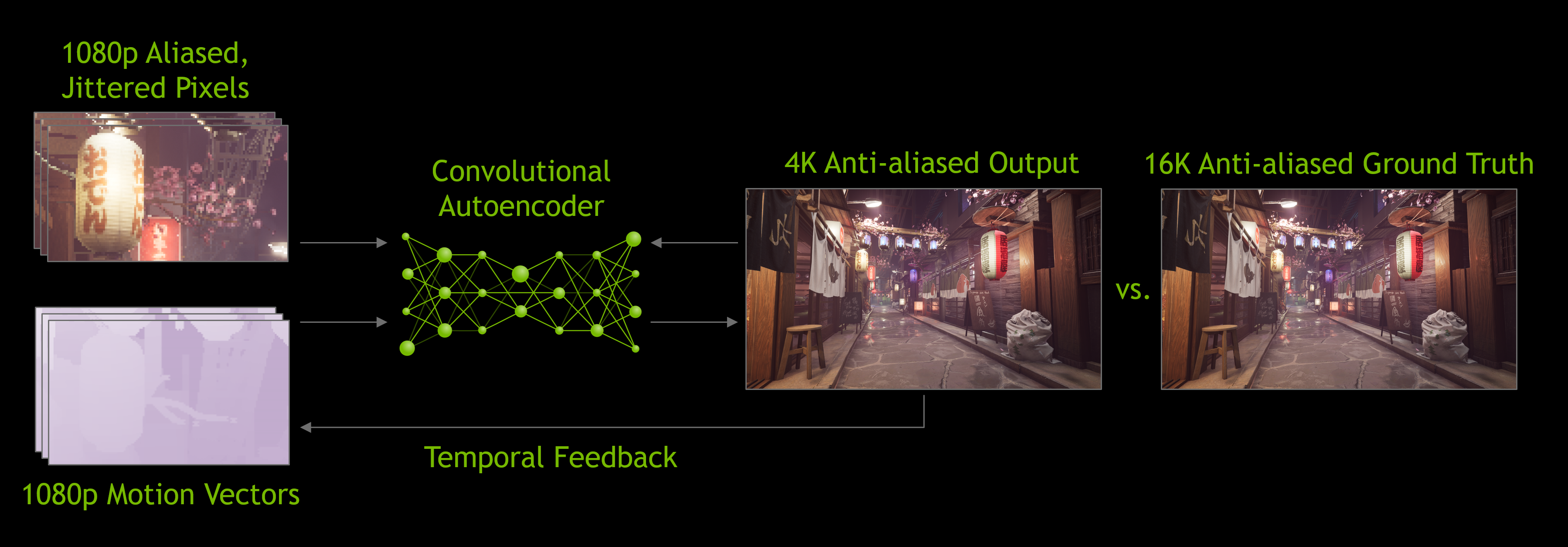
In contrast to DLSS1, the output of the NN is not color values, but sampling locations and weights, to look up the color values from the previous low-resolution frames.
A few years ago, I managed to build XRDP with RemoteFX enabled. This was the smoothest remote desktop I have ever experienced.
I couldn't replicate it a while later after an OS upgrade and I have since given up on it. Does anybody else have experience with this? Should I give it another try?
Have a look at https://github.com/rcarmo/ubuntu-xrdp. I _think_ it has RemoteFX enabled, but to be honest I haven’t delved into the internals for a while and last time I did I was trying to get audio working.
Yes, thanks Apple. Vulkan is rather awful to use, compared to D3D12 and especially compared to Metal.
Metal, in my opinion, strikes the best balance between performance and low-level control.
With Vulkan the intention is that you have multiple codepaths for every vendor for good performance. This is way too much effort for an API that is already of little relevance.
I think that with AZDO-style extensions to OpenGL/WebGL you would've gotten 95% of the performance benefit without adapting a whole new rendering API (and shading language). Unfortunately, AMD could never get a proper OpenGL driver going so they pushed for Mantle which ultimately turned into Vulkan.
Metal also is quite different between mobile and desktop, so it's not solving this portability issue completely. It has the benefit of standardizing more of the limits/capabilities in the feature tables as a part of the "spec". This is much better than querying everything about the physical device at run/init time and making decisions from there.
Where Metal is really different, in a good way, is that it has progressive complexity. You can use the basic commands and get pretty far, allowing the driver to manage lifetimes for you and not caring about multi-threading too hard. But then there are ways to get more control, gradually, which you can opt into later. This is very different from Vulkan's all-or-nothing approach.
For the Web, it seems to me that having the same property would work best.


https://caseantiques.com/item/lot-738-the-simpsons-animation...
Look at all that line detail. It creates subtle gradients in the final film, which don't readily transfer to vector graphics.
In this case, I think with some better pixel-based filtering before vectorization, they could've gotten a better result.
However, the much bigger problem is that the vast majority of animation uses paintings for backgrounds that aren't just solid lines and colors.