> Keeping it vacant only impact current income, lowering rent impacts future forecasts.
Does it though? Suppose you can't find a tenant right now because the market is soft but is predicted to improve in a few years. If you leave the unit vacant, you lose money right now. If you rent it out with e.g. a 3-year lease, you make more for the next 3 years than you would with a vacancy, and if the market price has increased by then you can increase the rent on the unit and either get it from the current occupant or the one you get to replace them in the high demand market when the higher rent causes the low-paying tenant to not renew the lease.
So taking a tenant now only improves prospects (you fill a current vacancy) with no negative impact on future returns. The only thing it does is imply that current rents are lower than before and future rents might be too, but a vacancy implies that even more strongly.
If my wife and I are at the airport, and the gate agent offers me (and only me) an upgrade on the flight, your logic says I should take it since that's strictly better than both of us flying economy.
"Feature touted to do <x> actually did <x> for me" is newsworthy.
We're out from WWDC and a ton of marketing claims and PR has been thrown around. Taking any company's claim for granted would be foolish, and it is truly welcomed that they did try the feature and found some basis to the claims. I wish we had more of those.
I think parent would wish for something close to what heroku represented (what would it be ?)
K8s is easier at smaller scales (I understand k3s as a packaged version ?), but you still need one or two people in your team to properly understands all of the concepts and inner workings of k8s, and be able to neck deep into if/when shit hits the fan.
For a small team that's a lot of commitment for something that is usually not their bread and butter and wish they could build once and only slightly tweak every year or so.
even with just k3s and a few plugins/operators, it still takes someone dedicated to babying it. I've been running a k3s cluster at home for years and I dread upgrading all the things running on it, and all the things needed to keep it running.
and more to that last point, we haven't talked about maintaining the actual nodes themselves yet.
if you don't use alpha or beta annotations you rarely have to worry about updates, kubernetes has a very strong "do not break it" policy on non beta/alpha annotations.
Not using beta ingress was probably a non-starter for a lot of people, since it was the only option for 4 years.
Then there was an upgrade process that required a fair amount coordination between when you changed your manifests, when you upgraded your cluster and when you upgraded your ingress controller.
PodSecurityPolicies also gained a lot of traction and didn’t really have an alternative before it was deprecated.
Also, custom operators don’t all subscribe to the don’t break non-beta resources in the same way core does.
That papertrail mattered less than how you make it sound.
France also sent people to the Germans during the occupation, and there was very little info needed. The gov wasn't caring much about due process or lengthy and accurate investigations anyway.
Is it easier and more convenient to round up people when you have a literal list of people, along with the attributes that someone might want to round them up based on? Of course.
Is it still possible to do it without said list? Yes, of course. It is just harder.
And more likely some or many will be missed, if those attributes aren’t super obvious and impossible to change.
It is indeed a bizarre discussion: nazis round up people with or without these lists, anyone could point the finger at a neighbor and they'd be gone tomorrow.
The question becomes if it mattered whether the people sent in were actually Jewish or depraved or whatever motive was invoked. To me it doesn't matter, it is was horrible either way.
I can't think of any such event where the issue came down to having a list or not.
We can see a similar thing happening with ICE raids: do they have clean and tidy lists? No, they're supposed to know what they're doing, but in practice they're just going after anything they want, anyone that crosses their path, and they don't stop at any specific criteria. We had testimony of arrest quotas, and random people shoved in to clear the numbers.
There will always be a convenient target when the point is cruelty.
To my eyes the chimpanze's "loaded gun" is the actual guns and the impunity to use them, and they're pulling the trigger because they can. Having accurate lists would be more of a painted targets instead of randomly shooting in the pack. Basically the kind of people shor would be different, but someone would still be shot.
I'd argue that raiding the data center is theatrical more than anything, and they're not flailing by lack of data, hundreds of arrest have been made at each major raids.
On the surface there is this talk about immigration status..We try to draw a somewhat reasonable narrative that makes sense, and I get the sentiment.
The witness comments consistently tell another story though:
> “The book and the movie do not line up,” Joyce told reporters on Thursday. “We’re being told one story, which is totally different than what’s occurring.”
> “It is clear the overall operation is anything but targeted,” said Sue Roche, ILAP’s executive director. “People are being racially profiled on the streets and in their cars. As is their playbook, ICE is doing everything they can to inflict maximum cruelty and chaos.”
My main point is that they are already fully effective.
What you call "running around in total chaos" is exactly what the organization was built for, its actions follow its structure and the only improvement they'd benefit for is more people more guns and less scrutiny.
I had many co-workers not owning a laptop outside of their work provided one.
There is a mix of a workplace permissive enough of light use (browser/mail) for personal purposes, and most services having an app that can be better than their web site (banks in particular).
Of course most people will have a laptop and just not use it for years, but there's definitely people just not buying one in the first place.
> a single negative impact to my actual life. In anyway. At all.
This is missing the broader perspective of identity becoming less reliable, and that results is millions of paper cuts in everyday life.
The reason you need to scan your face with your phone to access a government site or your bank is hugely because asking people personal questions or a password has become useless.
There is an argument that the old security models wouldn't have survived for long either way, but if we see it as an arms race, racing at a slower pace is still better than running like there's no tomorrow towards the bitter end.
Does your neighborhood have community meetings and operations ? (cleaning ? helping elderlies ? preparing for festivities ?)
Do you have a hobby ? Would you do volunteer work ?
Not knowing people is a solvable problem. Whether you like these people is another one, but that comes down to where you chose to live, not remote work or not.
Then pass Karen's Law and start fining the people making those calls if made without good reason to believe of imminent or reasonable danger to the child. It not only screws up society, but is a complete waste of resources.
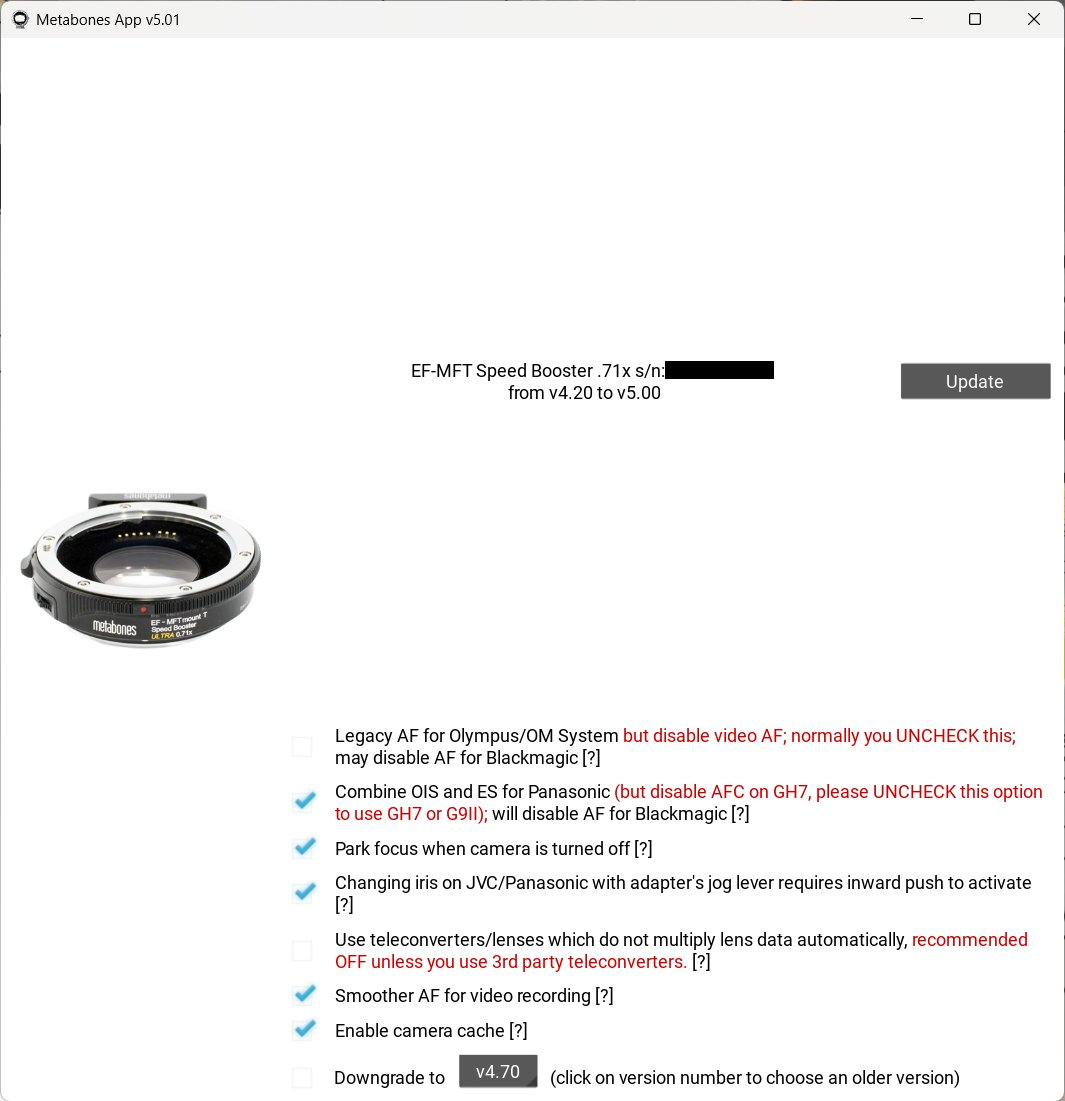
For those who haven't followed the camera world for a while, at this point a lens for a mirrorless camera will have a USB-C port to receive firmware updates.
Tamron lenses for instance will allow a wired control or a wireless dongle to communicate with an app/computer and change the lens behavior, switch what the physical buttons and rings do. Potentially you can manage stepping through settings for stop motion like effects, time lapses or stacking.
We're far from the days a lens was just metal and glass※. There are obvious downsides, but in practice it's actually a huge stepup IMHO. Every photographer is different and does different things, being able to fully adjust your gear is a godsend, especially as we need speed and reactivity.
※ there are still plenty, and plenty more will be designed and produced anew, but I don't think it's the major trend.
I would contend that if you were to pick a trend line in the last ten, twelve years it is actually the return of high quality, cutting edge manual focus lenses for stills photography, which was a negligible market by 2014.
Mirrorless has restored the utility of manual focus lenses in such a dramatic way that many of the significant advances in optical quality at every price point are happening in manual focus, and there is a real return to the understanding of the value of lens "character".
Time will tell how much of this is a stepping-stone to Chinese manufacturers moving to AF lenses (which is definitely a part of it) but many of the best new lens designs are coming from the likes of Cosina-Voigtländer and various cinema-adjacent stills brands.
LK Samyang, yeah, doing some great stuff. They also make some (all, maybe?) of the native lenses for the Cambo Actus, which is another mirrorless era winner.
For some reason, cinema lenses are still - for the most part - purely mechanical. For film and TV, most camera operators still focus manually - often via gears attached externally to the lens.
Coming from modern photography, manual focusing is inconvenient and difficult to learn. But there's something very old-school cool about cine lenses. They feel great.
Autofocus is very nice for photos, especially when it works.
Autofocus in moving pictures isn't so great. It might be nice when you're not filming, but while filming, a focus change should really be intentional; auto focus isn't that. Might depend on what you're filming though.
> a focus change should really be intentional; auto focus isn't that. Might depend on what you're filming though.
As a solo operator, autofocus is great. Maybe the right metric is the number of crew per camera. 2-3 crew per camera? Manual focus is fine. 2-3 cameras per crew member, like solo filming a podcast or a theatre show? I'd choose autofocus every time.
Well.. The automatic part comes from the camera directing the settings mostly.
The lens would be motorized focus/aperture.
For motion picture cinematography, I've seen remote controlled focus anyway. I don't see why you could not have a good motor built I to the lens and remote control it. If the external motor focus is quick and precise enough, then the internal motors should be as well.
I also think cine lenses have the budget to continue making high quality mechanical interfaces. Consumer lenses must have AF and so are incentivized to reuse that functionality if it would reduce the BoM.
Hm, I'm not sure about that. I suspect autofocus motors are much more expensive to manufacture than mechanical lens throws. They're almost certainly more expensive to design. I don't know about other manufacturers, but recent sony lenses contain 4 autofocus motors, and they can snap autofocus in tens-to-hundreds of milliseconds depending on the distance. Where do they even put those motors in the lens housing?
Its probably a scale thing. Photography lenses make up for the design, engineering and manufacturing costs with scale. Everyone who takes photos needs lenses. But far fewer films are made, and cine lenses are often rented. So they really can't be manufacturing that many units in total. I suspect they don't manufacture cine lenses in high enough volume to justify the engineering costs of fitting complex microcontrollers and motors into the lens housing. And if the production can afford to hire a focus puller anyway, autofocus just isn't that valuable.
A large focus throw and more importantly, focus consistency, is paramount for cinema lenses. When you rack focus, the lens needs to show the same field of view every time, no questions asked. The early red pro cinema lenses had a design flaw where the focus rings would come loose over time and ruin shots. Someone clearly forgot the threadlocker.
Because typically we use (usually wireless) whips to control lens elements. The 1st AC ideally is on a dedicated monitor with the setup in hand to pull as needed while the cam op handles the physical camera and focuses on framing and any movement.
If you’re going to go through all that trouble you may as well just use a lens or cam body with a quality, built in AF. Way cheaper and the tech has matured greatly. Plus even with lower to midgrade cameras it’s easy to find a capable system with a solid codec you can color match enough with the rest of the movie. Even my GH6 I travel with can shoot 5.7k pro res
I was talking about movie-grade setups, I was wondering why they need the sonar thing if they focus manually anyway. Maybe it's useful for post-production, as a depth field or something.
Oh sorry I misunderstood your point. That is so the AC can get an accurate measurement from the sensor/gate to the focus point, which they then mark on their follow focus. Often it’s a few marks because a shot will have different items of interest or the camera is moving. When you’re shooting on film this is particularly important, but a lot of people also use it for digital sensors so you’re not eyeballing it or depending on focus peaking (though plenty of quality focus pullers can absolutely eyeball it most of the time). Boils down to the shoot you’re on and the process they want, or the importance of the shot, such as something with huge explosions and a flipping car where are you want to reduce any possible margin for error.
I think people in cinema have (and want) more control over the take. For a photographer, autofocus is quality of life, for a cinematographer it can get in the way very fast in everything that's not following subjects.
When telling a story through film, changing what depth is in focus is a great way to move the viewer’s attention, without the need for cutting to a different angle or camera movement.
Sure. But most shots have a deep depth of field or just follow one person. Even when autofocus isn’t needed, you can just turn it off. It’s just kinda weird that they don’t include the feature at all.
> For those who haven't followed the camera world for a while, at this point a lens for a mirrorless camera will have a USB-C port to receive firmware updates.
Iam not sure if this is a general truth. I recently bought a canon rf 24-70 f/2.8 which is pretty SOTA and it does not have an USBC port.
First party lenses will be handled by either camera firmware or by the camera - for your lens (I'm in the Canon RF system heavily) you can do the "download to SD from canon.com" and the firmware update on the camera will recognize it as a lens firmware, not a camera firmware. And sometimes camera firmware will also bundle lens firmwares that get updated when you attach the lens (usually these are reserved for issues that have a potential to damage the lens or camera - like excessive hunting wearing the motor, etc., not 'nice refinements').
Why would this be a good idea to break away from the norm of what has been done before? The mechanism of updating the lens through the camera exists. Why reinvent the wheel? It only increases the BOM for the lens to include the USB and the electronics involved.
I suppose it depends on the system? I have updated Sigma, TAMRON, and XiaoYi lenses on my Panasonic and Olympus MFT bodies, as well as Panasonic and Olympus with each other: https://support.jp.omsystem.com/en/support/imsg/digicamera/d... (Sadly not an exhaustive list. I have firmware for several more lenses stashed away in my archive, but the upgrade mechanism is the same.)
You can update sigma lenses through Sony camera bodies but it requires running a program on your desktop with the camera plugged in and it’s a bit of a pain. Especially on macOS where it requires enabling kernel extensions.
Would have been nice if Sony just let you drop a file on the sd card to load an update.
Only for their old "Art" lenses, the modern "Contemporary" lenses can leverage the camera body update mechanism and only need a file on the SD card containing the firmware update.
"Contemporary" lenses aren’t more modern that "Art". The monikers were introduced at the same time, along with "Sports". Rather, "Art" is Sigma’s high-end line, similar to Canon’s "L". "Contemporary" on the other hand is a somewhat euphemistic term for "consumer" or "affordable".
> For those who haven't followed the camera world for a while, at this point a lens for a mirrorless camera will have a USB-C port to receive firmware updates.
Besides the slightly interesting stuff Tamron is doing, why on earth would I want firmware updates for a lens? Also, this seems like it would be much more readily accomplished by the camera itself… if you’re doing weird stop motion racking and whatnot, why would you rely on the camera and lens being separate? Seems like kind of a pain to me.
The lens is communicating with the camera body, and you might want to adjust for newer bodies supporting more things for instance.
I'm not aware of what exactly is changing, but I've already seen it happen with newer Sony bodies getting released, and an update going to Viltrox lenses to fully support thems.
On the camera and lens being separate...in an ideal world you could ask the camera to do absolutely everything. In practice that's a tough order for a single company.
The bright side is also that you can use a mildly older body while benefiting from a very flexible lens, or have different profiles for different lenses and not have the body care about which lens needs what.
I can't imagine Nikon be bothered to properly operate a software ecosystem TBH.
Because to control the autofocus motor and other features it makes sense to have a microcontroller in the lens. If you have a microcontroller in the lens you have software in the lens and if you have software in the lens you're going to need to update it.
You could argue that the camera should do firmware updates but the manufacturers for (semi) open mounts like the ones Tamron is making lenses for don't want to have to design a protocol to do updates for third party lenses through the body when the lens manufacturer can just slap a USB port on the lens and call it a day.
The port is also useful for customizing the lens functions. For third party lenses the camera can't be expected to manage those functions.
There have been plenty of motorized lenses in the past that relied on the micro-contoller inside the camera body for control. What does having the controller live on the lens permit that the pattern we've used for years doesn't afford?
You don’t _have_ to update lenses. The updates pretty much just fix edge case autofocus issues usually with specific cameras and settings. Before update mechanisms you just had to deal with it or buy a new lens.
> If you have a microcontroller in the lens you have software in the lens and if you have software in the lens you're going to need to update it.
No, no you shouldn’t. There’s no reason why a microcontroller should ever need its firmware updated. The only reason why you would need to update the firmware is to add features, which I guess is mildly interesting for the tamron, but like I said… you could handle all extra fancy focusing things in the camera body itself. Just give me a dumb lens that does exactly what the body tells it to do.
> Just give me a dumb lens that does exactly what the body tells it to do.
It's hard to convey, but for instance you can reverse the fo us ring rotation, which probably only resonates with people who had to deal with it daily.
Or you can adjust the ring travel.
Or make the focus ring work as an aperture ring instead. Or straight disable annoying buttons.
Up until now you'd have to go hunt the perfect lens where the maker was 100% on board with your preferences. Or adjust your whole shooting style to every gear you use.
Sure a camera body could handle every single settings of third party lenses. But given what we've seen these 2 last decades, I don't think there was any chance of that happening. Tamron is partly Sony owned and they still did it on their own.
Lenses are only tested on bodies which are available at the time of manufacture. They might focus hunt on newer bodies, because of tweaks to AF algorithms (for example, the speed at which instructions are transmitted). Sometimes in ways that can potentially cause damage long term.
> Besides the slightly interesting stuff Tamron is doing, why on earth would I want firmware updates for a lens?
Improved algorithms for focus hunting, diminishing chromatic aberration (most of it is in the glass but some positioning can tweak it).
I get it, there's not a lot that will happen there, but some of that stuff will be useful on an investment that can easily be several thousand (I don't get into the wildlife telephotos, but two of my lenses were $3,300 or so - RF 85/1.2 and RF 28-70/2).
> at this point a lens for a mirrorless camera will have a USB-C port
Ideally, camera bodies should support firmware updates via the body in a non-discriminatory way, but until then I wish manufacturers support firmware updates via USB-C.
Looking at you Samyang Lens Station. I think users have been sufficiently upset, and they're adding USB-C to newer lenses.


Keeping it vacant only impact current income, lowering rent impacts future forecasts.
reply