These are good points. To be honest, I cannot fully follow the line of argument as presented by anovikov.
It seems a tad strange to criticise Yandex for filtering content according to local law and recommending Google over it, when the latter does the very same thing. Speaking of "narratives", https://www.youtube.com/watch?v=KEvD1Wu9uQo
This will be a posting, which either receives no to little responses or will have 256 responses within the next couple of hours :)
I am sure, there'll be quite a few who'd argue that this is necessary complexity, but my take on this definitely is the latter - artificially inflated
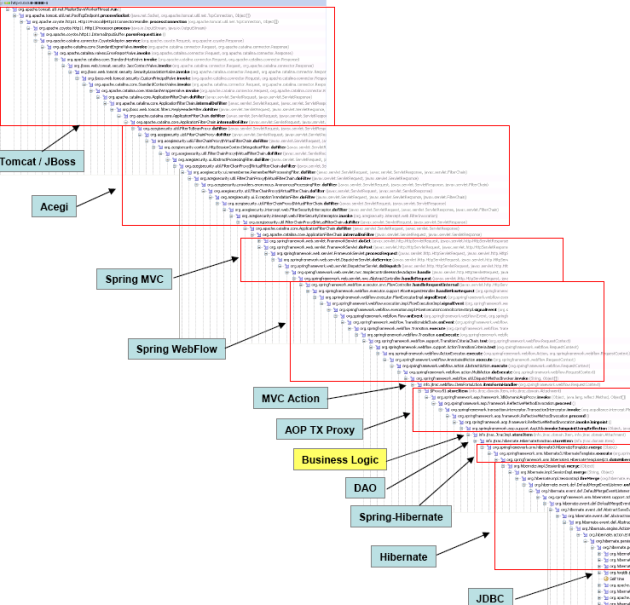
But it's not only the web. Same happened to Java in the 2000s and is currently happening to Android. Any mainstream Java job is more configuration of Spring containers with a bit of code glue sprinkled in-between than "proper programming". As for Android, just follow a couple of Android forums where plenty of people complain about such complexity and frameworks changing "by the minute"
A lot of programming seems to have turned into gluing a bunch of poorly programmed and documented systems together. I miss one of my previous jobs where I got to build a lot of stuff from scratch.
Well why reinvent the wheel with ie Spring in Java - you want well tested automatically scaling thread messaging bus for example, just configure existing stuff. Maybe its boring to some devs, but business like boringly stable tools, and they are the ones paying for our work.
Would you like that architects reinvent 'engineering wheels' with every house, bridge or tunnel and do all feom scratch just because its more fun for them? No you want well tested reliable approach, if they are bored a bit even better. Ie nuclear power plants who have some unique hybrid designs are endless source of maintenance delays and additional costs. Software devs just have much more freedom and little regulation, for now
Not necessarily reinvent the wheel, but not build the same glass buildings all across the world either. Your analogy is not that far off. Real world architecture is quite the same.
Spring is a strange example. It’s main selling point is you’re not reinventing the wheel and, instead, building on well tested and operational work already done.
"Webmasters" were told to use XHTML and they massively cried how that they just can't write correct code so they absolutely need sloppy parsers that would analyze the mess of unclosed tags and weirdly placed elements and try to understand the intent.
And the industry gave up. This is essentially the same story.
Thanks, from that I understand the brighter the color the more power it will use. So #010101 will use more than proper black but far less than proper white.
My pleasure, hopefully this answers your questions, but if not, I’ll check back to see if you ask a follow up question.
From the “Applications and Results” section towards the end of the paper:
“Figure 9 documents the energy consumption of the three images of Figure 8. Energy consumption is measured according to our energy model from Equation 1, using various grid sizes. The most prominent observation is the substantial energy savings achieved by colors chosen according to our continuous optimization approach. Across the different grid resolutions, we save on average 41 percentage of energy compared to using ColorBrewer colors.”
I'm not sure. Considering what I know about OLED, I'd assume that #010101 consumes considerably more energy than #000000 since it needs to emit light for that individual diode. The energy efficiency from there will mostly depend on the brightness/size of the display.
Yes, but it's efficiency scales with the overall brightness of the display. True OLED black will always consume the same amount of power, regardless of brightness.


It seems a tad strange to criticise Yandex for filtering content according to local law and recommending Google over it, when the latter does the very same thing. Speaking of "narratives", https://www.youtube.com/watch?v=KEvD1Wu9uQo