Do Linux users actually use Homebrew day to day? My impression of it was that it's mostly for MacOS users that want to keep doing things the same way instead of learning the Linux way (using the OS package manager).
I have for a while yeah. As mentioned it means the distro packages don't matter for a lot of developer tools / CLIs. Wanna use a stable Debian / Ubuntu LTS for years? Want to use rolling releases so your desktop is up to date? Homebrew's got you covered.
In bazzite/Fedora Silverblue, it's the expected way non-GUI packages are installed to the host system. The other way is toolbox/distrobox (rootless containers tightly integrated with the host).
Ohh yes, a minority of us do exist. I prefer it over appimages on my personal pc. Gets you almost rolling release software without needing to use a rolling release. I used to use distrobox with arch Linux on pop os base, but then just gave homebrew and nix a try to scratch the itch.
Nix is not there yet in terms of user friendliness. homebrew for linux is pretty awesome.
Only issue i have is that it creates a separate user and doesn’t support custom prefixes (their page says you are on your own if using custom prefixes). While their reasoning is sound, not having an easy way to know which programs will break if using custom prefix is a bummer for me at work.
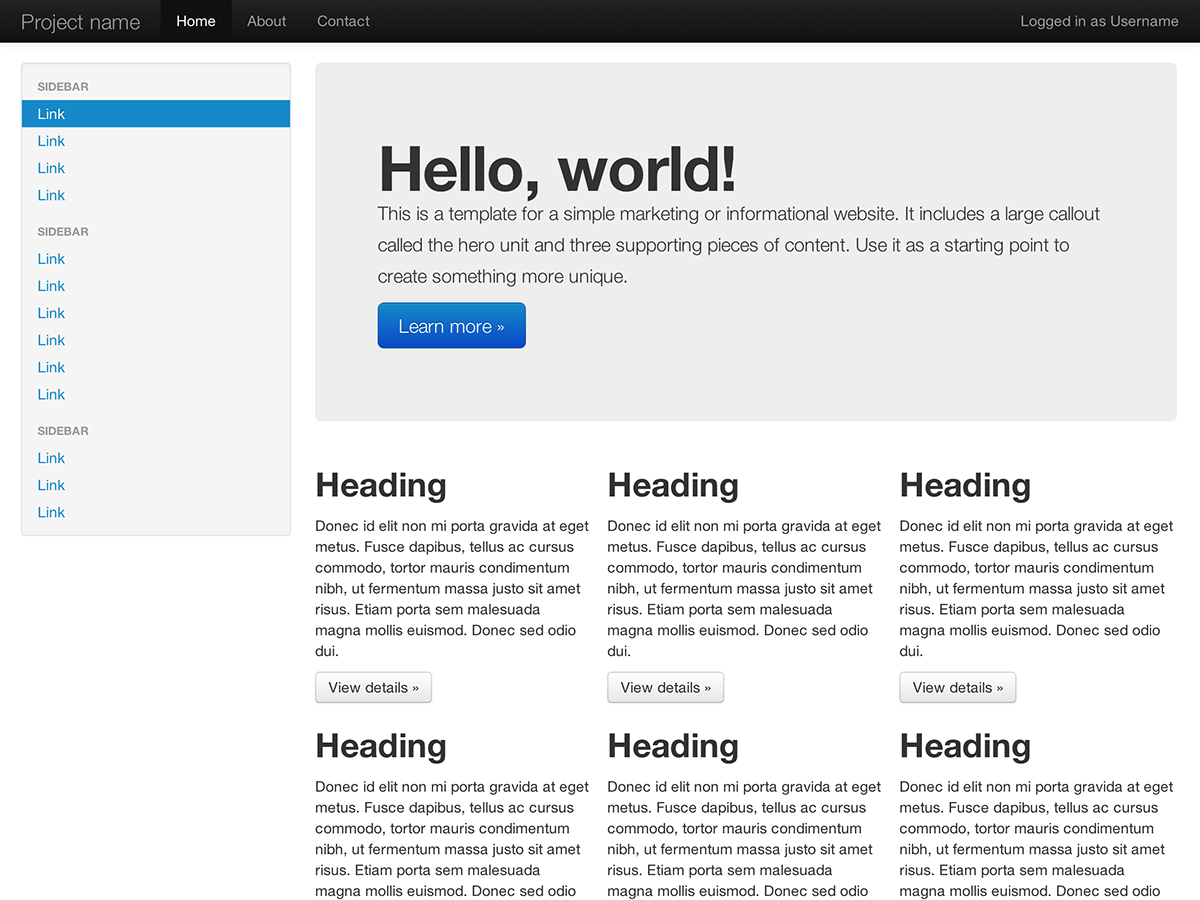
It uses shadcn so often, to the point where seeing shadcn components with default styling often means the site was built by AI. It's like Bootstrap 10 years ago - so many sites used it with default styling that it was instantly recognizable.
Highly pervasive, first step people do before starting new projects is setting up stuff like Tailwind, Shadcn; they also don't bother much with modifying how it looks since it looks decent out of the box causing similar looking websites everywhere; similar to how the Bootstrap craze was back from 2012-2015/6; where all websites just looked the same[0]
A lot of the sites that use shadcn's default styling are AI-generated. The people that use it in hand-written code usually customize the appearance at least a little bit.
Fewer people view their site (since their questions can be answered by LLMs) which means their paid services (Tailwind Plus and links to sponsors) get fewer views and thus fewer purchases.
There's many providers that have similar pricing, sometimes as their normal day-to-day pricing, and sometimes as sale pricing just for events like Black Friday. I've been happy with HostHatch, GreenCloudVPS ("Budget KVM" like), and RackNerd. RackNerd always have a sale running. GreenCloudVPS often have stock for their cheap ones (starting at $15/year). HostHatch has decent regular pricing (they're trying to compete with Hetzner), but their sale pricing is especially good.
You need to keep an eye on the configurator page, or monitor it some other way. AFAIK they don't have many servers in the USA, so their US VPSes are available sporadically when people cancel theirs.
You have to order through the OVHcloud US site to see the US locations. If you use their "global" / Canadian site, you'll only see the Canada location.
The majority of internet users are either unwilling or unable to pay for content, and so far advertising has been the best business model to allow these users to access content without paying. Do you have a better suggestion?
They are able, because in the end advertising is also paid by customers. The complications are:
- Paying for services is very visible, whereas the payment for advertising is so indirect that you do not feel like you are paying for it.
- The payments for advertising are not uniformly distributed, people with more disposable income most likely pay more of overall advertising. But subscriptions cannot make distinctions between income.
- People with disposable income are typically the most willing to pay for services. However, they are also the most interesting to advertisers. For this reason, payment in place of ads is often not an option at all, because it is not attractive to websites/services.
I think banning advertising would be good. But I think a first step towards that would be completely banning tracking. That would make advertisements less effective (and consequently less valuable) and would pose services to look for other streams of income. Plus it would solve the privacy issue of advertising.
It's a game. When a merchant signs up to an ad platform (or when the platform is in need of volume), they are given good ROI, and the merchant also plays along and treats it as "marketing expenditure". Eventually, the ROI dries up i.e the marketing has saturated and the merchant starts counting it as a cost and passes it onto the customer. I don't know if this is actually done, but it's also trivial for an ad platform to force merchants to continue ads by making them feel it's important: when they reduce their ad volume, just boost the ROI and visibility for their competitors (a competitor can be detected purely by shared ad space no need to do any separate tagging). Heck, this is probably what whatever optimization algorithm they are running will end up suggesting as it's a local minima in feature space.
And yes, instead of banning ads, which would be too wide a legal net to be feasible, banning tracking is better. However, even this is complicated. For example, N websites can have legitimate uses for N browser features. But it turns out any M of the N features can be used to uniquely identify you. Oops. What can you even do about that, legally speaking? Don't say permissions most people I know just click allow on all of them.
>The majority of internet users are either unwilling or unable to pay for content
Except for Spotify, News subscriptions, videogame subscriptions, video streaming services, duolingo, donations, gofundmes, piracy services!, clothing and food subscriptions! etc etc
People pay $10 for a new fortnite skin. You really pretending they won't pay for content?
People were willing to pay for stuff on the internet even when you could only do so by calling someone up and reading off your credit card number and just trusting a stranger.
Meanwhile, the norm until cable television for "free" things like news was that you either paid, or you went to the library to read it for free.
Sure, this entire business model has been cataclysmic for traditional media organizations and news outlets and peoples trust in institutions has plummeted in correlation, so, let’s just fucking scrap it and go back to payed media.
Manufacturing consent identified advertisement as one of its five filters and was published in 1988. It is and was extremely rare for a magazine or news paper to not be at least partially funded by advertisements.
I think that might be a rhetorical device bequeathed to you by the social media companies.
People of course do pay for things all the time. It’s just the social media folks found a way to make a lot more money than people would otherwise pay, through advertising. And in this situation, through illegal advertising.
The best thing we can all do is refuse to work for Meta. If good engineers did that, there would be no Meta. Problem solved. But it seems many engineers prefer it this way.
When it started, Mastodon had an existing userbase to communicate with on OStatus, in the existing GNU Social communities, so it could skip the "Who wants to talk to a ghost town?" era of a social media's growth.
Though this prompts us to wonder why GNU Social took off (modestly) but Diaspora didn't.
A different era. Mastodon had plenty of problems of closed networks to show (before it was Twitter, there was the failings of e.g. tumblr and Google+ to point to)