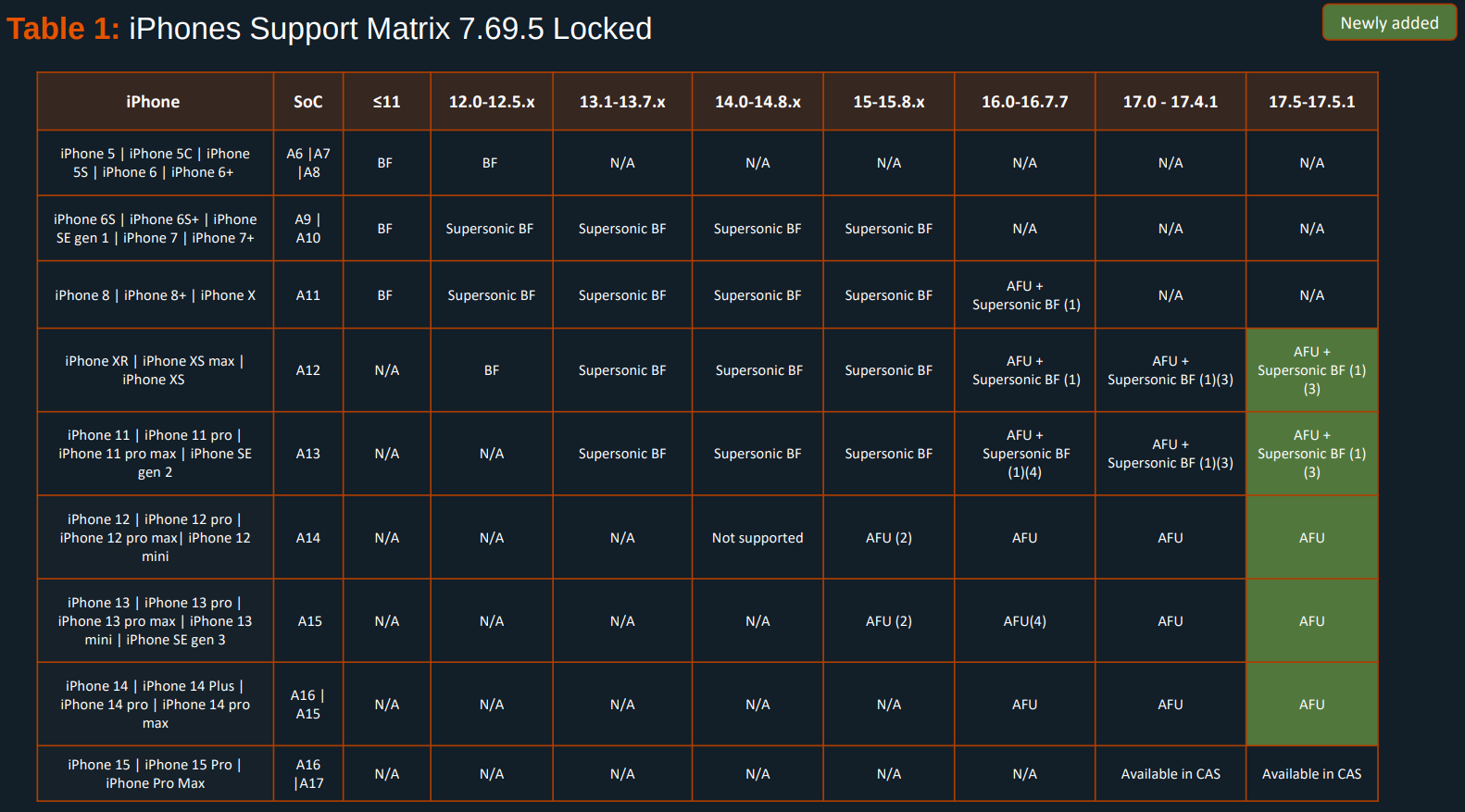
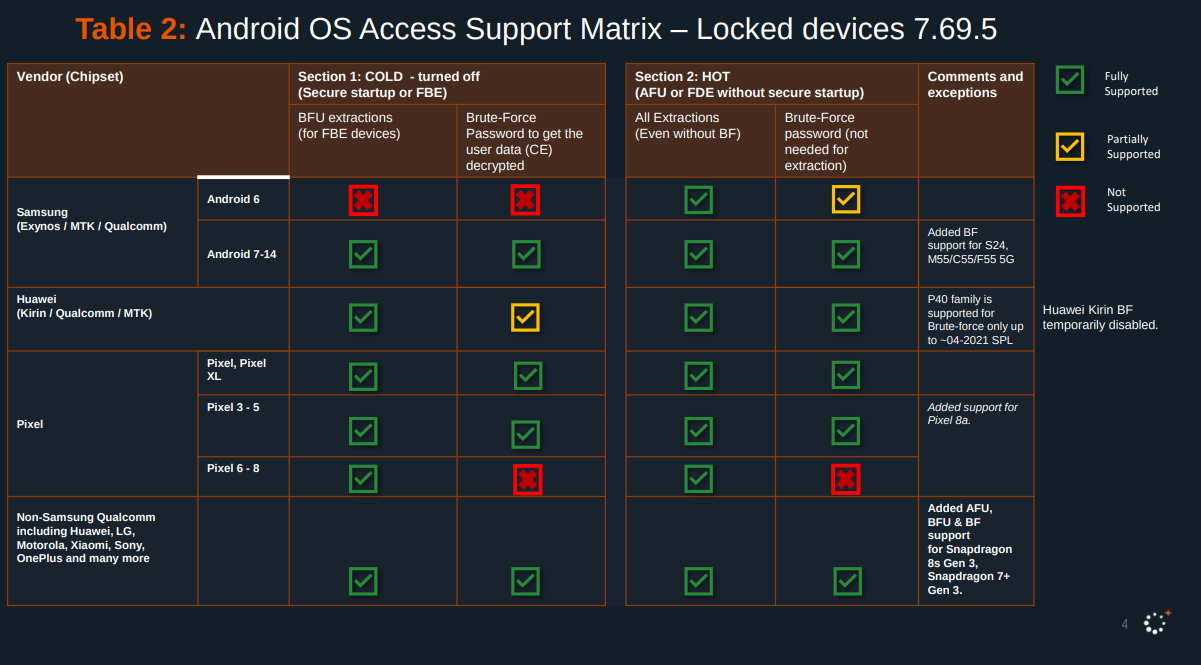
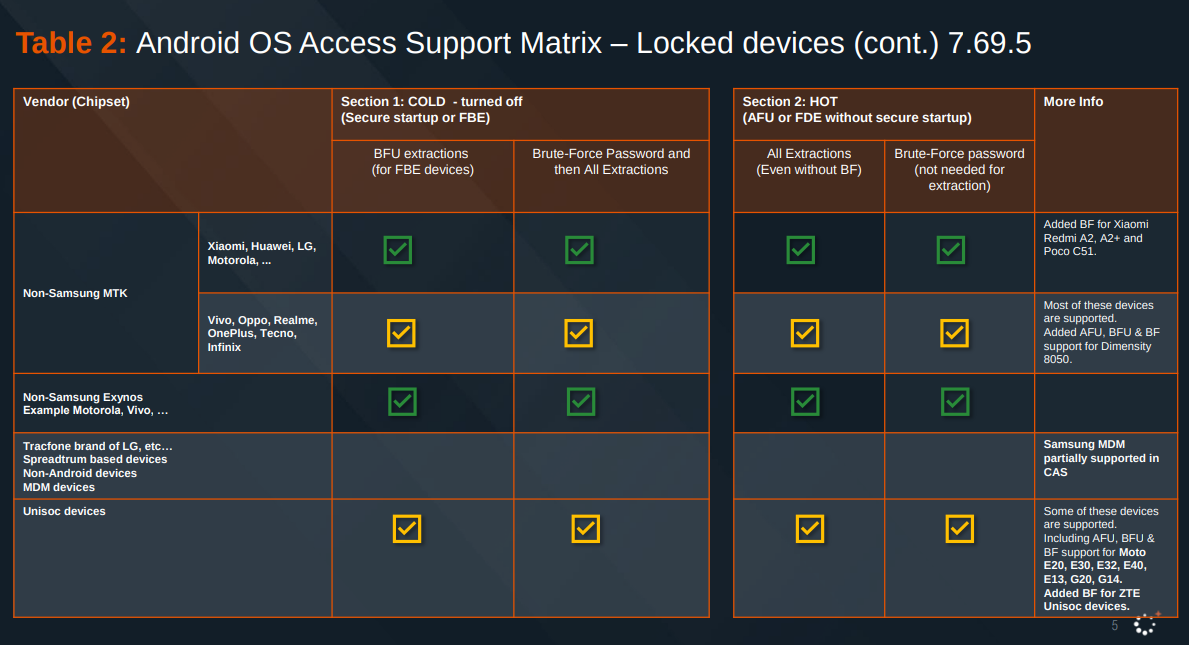
To what? Write 100% bug free software? I don't think that's actually achievable, and expecting so is just setting yourself up for appointment. Apple does a better job than most other vendors except maybe GrapheneOS. Mainstream Android vendors are far worse. Here's Cellebrite Premium's support matrix from July 2024, for locked devices. iPhones are vulnerable after first unlock (AFU), but Androids are even worse. They can be hacked even if they have been shut down/rebooted.
The problem with that is it runs on a desktop, which means very little in the way of protection against physical attacks. You might be safe from Mossad trying to hack you from half way across the world, but you're not safe from someone doing an evil maid attack, or from seizing it and bruteforcing the FDE password (assuming you didn't set a 20 random character password).
This is a newly-discovered vulnerability (CVE-2026-20700, addressed along with CVE-2025-14174 and CVE-2025-43529).
Note that the description "an attacker with memory write capability may be able to execute arbitrary code" implies that this CVE is a step in a complex exploit chain. In other words, it's not a "grab a locked iPhone and bypass the passcode" vulnerability.
I may well be missing something, but this reads to me as code execution on user action, not lock bypass.
Like, you couldn’t get a locked phone that hadn’t already been compromised to do anything because it would be locked so you’d have no way to run the code that triggers the compromise.
Am I not interpreting things correctly?
[edit: ah, I guess “An attacker with memory write capability” might cover attackers with physical access to the device and external hardware attached to its circuit board that can write to the memory directly?]


reply