You are not supposed to "identify" anything on UNIX-like operating systems; that is what the file(1) command is for, specifically, especially so since the entire concept of UNIX is that everything is a stream of bytes.
Attempting to manually manage files in this way defeats the purpose of the OS abstracting it away for the user; and the users of your executable should not have to care what your executable is written in because you grew up on a PC-bucket whose operating system stems from CP/M -> MS-DOS!
As someone who did grow up on Windows and still uses it regularly alongside Linux, I want to respond to this comment just to play the Devil's advocate (i.e. infuriate you).
> especially so since the entire concept of UNIX is that everything is a stream of bytes.
I consider this an archaic, anachronistic, ancient, outdated, primitive (they all mean the same thing; I just used a thesaurus to really drive home my point) file model. While it made sense for the limited computers of the early 1970s, it is extremely hobbling today and the fact that no one really complains about it is... quite astounding. If every file is merely a bag of bytes, then every native program shall have its own file-parsing/byte-parsing routine. What a waste of effort, writing and rewriting parsers over and over again.
The fact that one has to write a shell script that is interpreted, and itself calls not one, but three other binaries (cat, grep, awk) with arcane, not-easily-remembered flags just to extract out certain words in the last several lines of a file is... ridiculous. That you have to call 'file' instead of directly querying the OS or shell for file attributes is farcical. Consider PowerShell or Python as alternatives to shell scripting. In the former, the entire .NET library is available; in the latter, the default libraries may be imported as one sees fit, and additional libraries are available online.
> defeats the purpose of the OS abstracting it away for the user
The UNIX philosophy does a poor job of 'abstracting it away from the user'. For well-abstracted OSes, see any smartphone today (especially iPhones).
Furthermore, not every UNIX/Linux user interacts with their computer solely over the command line; I use KDE Plasma, for instance. In general, when I see a file on Linux with no extension, I expect it to be a binary; I am surprised when it is, in fact, a shell script.
This is a fantastic response, honestly. I'll add that your last point about how different users interact with their systems differently is especially relevant for the longevity of open operating systems. General users coming over to Linux who do not have extensive knowledge with computers beyond Windows will primarily be using graphical interfaces on their desktop, and making that process confusing for them by not accommodating that will quickly make them give up on the whole thing. If we wish to keep the software alive with a userbas then it's actually extremely important to allow and support things like this that are more intuitive.
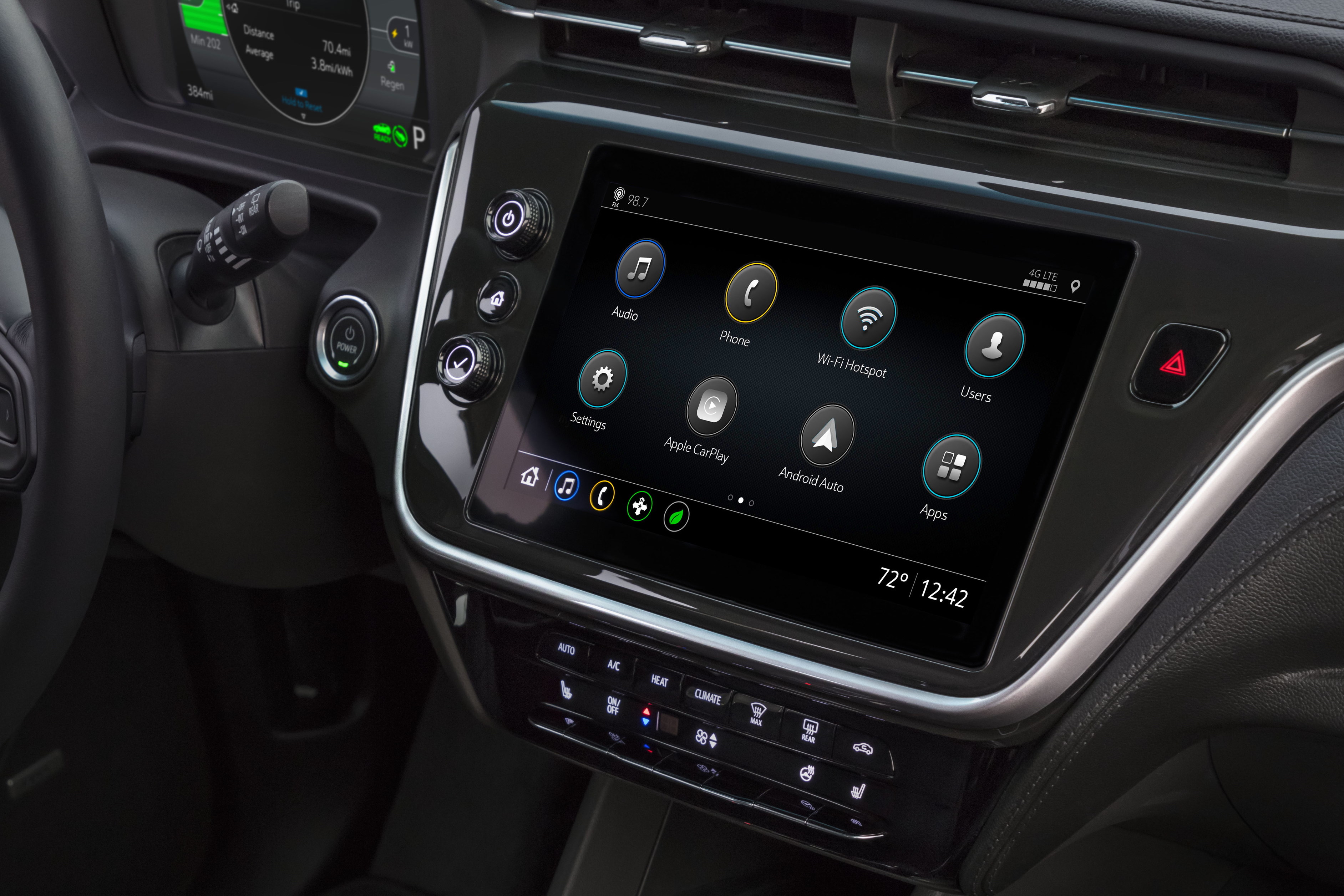
Modern cars seem to be moving towards all controls on a touch screen somewhere. I suppose this allows for more frequent updates, but in my experience it just leads to more bugs and more painful factory updates.
Not to mention using a touchscreen to adjust the temperature while driving is incredibly dangerous compared to a dial you can feel for without taking your eyes off the road.
My toyota Corolla has a touch screen for interacting with audio. It has the following delightful features:
- latency
- it has a boot procedure when you turn the car on. While this happens, the controls have quite substantial latency. However the first thing that happens is it begins playing audio.
- there is a knob for adjusting volume, but it's still part of the same system as the rest of it. There is still substantial latency to this control, especially immediately upon turning the car on. However even a little latency here is really annoying, because one naturally adjusts volume via trial and error.
- if you've paired the car with your phone via Bluetooth, it immediately sends a message to your phone to start playing whatever audio was played most recently at whatever the current volume is. I wrote a tasker routine to intercept this, but an android patch a while back helpfully broke this and I haven't bothered fixing it.
All of this combines for a user experience dramatically worse than an aux cord. It's kind of spectacular in its terribleness. And this is an otherwise great car.
This is another benefit of truly analog manual controls: Memory. Used to be your stereo volume knob was just at a certain level; when you turned it on it was at that level. Now they're all software controlled. At least some stereo equipment maintains this paradigm but I'm with you on the phone volume as it's dictated by your phone and the volume for one device could be drastically different than another.
>>> "However the first thing that happens is it begins playing audio."
Yeah. In the same boat and my wife like to play pranks when she uses the car. Turns the volume to max right before removing the key. When her phone is not found it defaults to radio. That "saved me" from having to drink my morning coffee in the office on more than one occasion + it's good training for the heart.
Edit: Forgot to mention that the volume knob is ignored until the system fully boots up and the audio starts as soon as you twist the key.
This is what I used to do to torment my mom when I was a kid. Except with the physical knobs she had in her car (in the 80s), I could crank the volume without having to turn on the car.
My VW Jetta has Apple Carplay and similar issues abound.
> it has a boot procedure when you turn the car on. While this happens, the controls have quite substantial latency.
I've got one better. Controls during bootup in my car are simply ignored, and the bootup duration for Carplay in particular is so bad that it makes the bluetooth delay seem acceptable.
> However the first thing that happens is it begins playing audio.
This is ironic because I wish mine would start playing. There's no setting for playback behavior either. The only setting, in fact, is the ability to reorder and add/remove third-party apps.
Oh, worse still, sometimes audio doesn't play even when you manually select something. The UI will register it as playing but the audio doesn't come through. When this happens, you have to disconnect and reconnect your phone, which is dangerous in motion. It's a joke. It makes me wonder what the deal is, and I have no idea who to report the bug to.
> All of this combines for a user experience dramatically worse than an aux cord. It's kind of spectacular in its terribleness. And this is an otherwise great car.
Yup. My beater in college that came with some random aftermarket radio was better. Carplay is pretty but beyond that it feels like an afterthought as an experience.
The wild variability in boot times for the entertainment center is what gets me. Sometimes, my bluetooth will start playing immediately, other times the car company's logo will grace the screen for a good 30 seconds before I can interact with it at all. There doesn't seem to be any relation to frequency of starting it up, time since the last drive, etc.
Running fsck. We're now in the era of low effort embedded systems. Just slap Linux on it and don't bother tuning for usability in non-desktop use cases.
Hah our Subaru does this where it defaults to playing the radio at some volume whenever you “boot up” the car. I’ve got no idea what station is selected as the boot up station but every time I turn on our car it plays static.
How about no sound? How about defaulting to silence? Nope…
I understand your critics against touchscreens and they are justified. Your car doesn’t have a good touchscreen interface from what you say and also from my experience when I drove the corollas from the car pool. However it’s not because many cars are bad that the technology is bad.
A touchscreen from an 20 years old Archos MP3 player is extremely bad while an iPad Pro M1 is very good.
I'm wondering if part of that is that the companies producing these awful interfaces don't see themselves as 'software' companies, so they put these things in but no one has the time or passion or interest to make it a better experience.
Not saying they'd definitely be good if only some one loved 'em, but judging from the car touch screens I've used I believe no one has tried yet.
I find that a round knob with a push-button click, when coupled with a non-touch screen, is far superior to swiping around on a touchscreen to browse a music collection.
I don't think it's really about the touchscreen. I think very few manufacturers, if any, are putting very much thought into this. Apple Carplay, for example, is just a jumbo, uber-simplified version of ipadOS/iOS. In my car it has a great, high resolution 10" touchscreen but a very lackluster experience. It's pretty damning if even Apple, a tech company at heart, is doing it poorly. It doesn't autoplay audio, store memory of what you were doing when last connected, or have any available preferences. "Car" is right there in the name but nowhere to be found in the experience based on everything drivers have expected from vehicles for the better part of a century.
> I suppose this allows for more frequent updates, but in my experience it just leads to more bugs and more painful factory updates.
What is allows for is: cost cutting. Not having to install a mask, a button, wire harness and QA everything is a massive manufacturing cost saving. It speeds up production and lowers the amount of components that need to be sourced, installed and later made available for replacement as part of a service.
This is the same situation as with Electron apps - the savings aren't for YOU the USER, the savings are for person MAKING the thing. They get all the benefit at the cost of your user experience.
> What is allows for is: cost cutting. Not having to install a mask, a button, wire harness and QA everything is a massive manufacturing cost saving. It speeds up production and lowers the amount of components that need to be sourced, installed and later made available for replacement as part of a service.
I tend to have the same opinion, but at the same time I'm not convinced:
- I bought 1 year ago a new car for 80k $ => that's not cheap and in my opinion putting 4 extra buttons (up/down) or 2 extra knobs to control the temperature of the two front seats wouldn't have been an incredible engineering challenge that would have added hundreds of $ to the cost (which was anyway high).
- we have ~100 buttons that all work reliably on our keyboards, which are connected to our PCs/notebooks with just a single cable => I admit that in a car there is the extra challenge of temperature variance (car parked in the Sahara or somewhere in Iceland), but I cannot think that that's an engineering wonder (worked fine during the last 100 years).
Therefore maybe the trend is driven by designers: make everything shiny & slick, risk of having the own work thrown into the trash when taking a step back to do usability tests vs. physical controls so let's just forget about that.
we have ~100 buttons that all work reliably on our keyboards, which are connected to our PCs/notebooks with just a single cable => I admit that in a car there is the extra challenge of temperature variance
I wanted to mention that. Sure, the way auto electronics were traditionally installed was expensive but a keyboard is $20 by itself, a midi music keyboard designed for wear and having buttons and knobs is ~$150. A modular system of instruments and controls that fits around the steering wheel and has a single
cable coming out could not be that expensive.
Changing to something like would require a lot of adjustment of electronics processes - different chips and voltages to allow the modularity and single cable, I would guess. But touch-screens also need this I would imagine.
The US backup camera fiasco was informative, because IIRC one of the domestic auto manufactures testified it was going to add $800 or some such to the price of a car (can't find a link about it). Which back then was still like 3x or so the cost of an aftermarket system. The law passed anyway, and for years its remained a high priced option, until there were lawsuits about the feds failing to enforce the law and require all cars to have them. There are various links on the web about how even the NHTSA estimated it would be ~$40 added to the price of a new car, something many found high considering the costs of the cameras and how many cars already had LCDs that could be repurposed.
Although I suspect the addition of backup cameras has given automakers excuses when it comes to rear visibility.
>> This is the same situation as with Electron apps - the savings aren't for YOU the USER, the savings are for person MAKING the thing. They get all the benefit at the cost of your user experience.
I hate Electron as much as the next average HN user, but isn't the benefit of Electron actually kinda for the user as well as the developer, in the sense that Electron is basically a one-stop shop for porting to other platforms?
For instance, Microsoft Teams is written in Electron. This means the application is pretty damn well identical whether users within my company are using Windows or Mac computers. There are advantages to that.
I'd say for myself, Unity is a great example of where, basically; if I went 'native', I would really only be supporting one platform, like I used to when I did game dev in the late 90's and early 00's. But Unity gives me the power to flip a switch, and then all my friends can play pretty much the same copy of my game on any platform of their choosing.
It also means if there are bugs on one platform, they usually show up on another as well; making QE and addressing bugs a little bit easier, making for a better user experience.
Not a fan of Electron, just saying that there are benefits to the user for using such a system.
>> This means the application is pretty damn well identical whether users within my company are using Windows or Mac computers. There are advantages to that.
Disadvantages too. Unlike a website, I want the software on my computer to take advantage of the native UI and other features unique to the OS. If Electron didn't exist MS would still build teams for multiple platforms. It would disadvantage small developers but the majority of users (who use well known software developed by large companies) lose out on the prior mentioned benefits thanks to Electrons existence.
Yep, it also gives a rather encompassing single failure point that will be very hard to replace and very expensive >10 years. Possibly more than the car is even worth at that point in time.
But it's not cheaper. And the car companies make money off aftermarket parts. QA just moves to software, so you're not saving anything there either. Plus so far, screens are less reliable than analog controls, so instead of replacing a cheap knob, you're replacing a top quality screen with special manufacturing requirements due to the environment of the car cabin.
You can't create a market opportunity for something without it being a differentiating feature.
2022 Honda Civic but with physical buttons probably doesn't move the needle because car buyers are price sensitive and because 2022 Honda Civic with screen is still better than alternatives.
I had a 2017 Honda Civic Hatchback. First year of the new model design, it had a touch sensitive volume control... After that, I think it was the 2019 and up all Honda's came with a volume knob AS A DIFFERENTIATOR because the UX was so bad without it.
Right but that's a different market force! Customer feedback is really effective at redressing provably bad UX but it's a lot harder for that same change to happen in response to a competing manufacturer because in aggregate such a small thing isn't enough to get someone to switch away from Honda entirely.
Speaking of car stereos, I've always thought they should be rack mount and then they went away completely.
I wonder if someday we'll have an open-source car, sort of like the framework laptop. I think it would be amazing. Think of the robust market that has cropped up around custom PCs and custom bicycles.
The touch screens are the only thing keeping me on dino juice cars. I want to go electric, but they all have these awful touchscreens! I don’t want to navigate a menu to change the temperature or turn on a seat warmer.
I’m just not buying an EV until there’s one that doesn’t rely on a giant touch screen for everything or I can’t buy an ICE vehicle anymore.
This! Was fiddling with a Tesla touch screen to do something basic. During those few seconds, autopilot decided to steer me off the road - with no shoulder - at 80 MPH (it was during a sunset). Fortunately, I caught it in time.
After the panic subsided, I decided to learn the voice commands. It seems that each device, now, has its own language, which we have to learn in order to function. A modern tower of Babel.
Speaking of Teslas, the SpaceX spacecraft also use touch screens heavily in the cockpit (maybe it's just something the company prefers) and only have a very small button panel. This is in comparison to the large array of controls normally seen on most aircraft and spacecraft. Obviously they state that the technology is well tested and that the astronauts train a lot with them, but in my mind you simply won't have the muscle memory and response you can get with a tactile interface.
Astronauts are passengers though. There is very little they can do to control their spacecraft during launch, as the flight path is complex and cannot really be flown manually. Rockets have always been this way, it's just that before they had no choice but to put everything on toggle switches.
We can hope, but there's reason to be pessimistic:
> With traffic fatalities spiking over the past few years and with no real plan for how to make screens less distracting, we seem to have entered into the type of brutal acquiescence that’s common in the tech era; car manufacturers will keep putting bigger and more complicated screens in cars without much thought to safety or even functionality, and we, the consumers, will continue to buy them.
> ...
> The incentives of carmakers are pretty clear: Touch screens are cheaper than designing and installing a mechanical panel. And given that most cars today are reliable, come with lengthy warranties and an array of mostly uniform features, a big screen becomes a way for a car brand to distinguish itself from its competitors, especially on the showroom floor before potential buyers have a chance to really immerse themselves in just how annoying the screen will be.
One of the weaknesses of the market is that it doesn't necessarily give consumers what would work best for them, it just lets them pick from what they're given. Barring regulatory action, I don't see device-makers moving away touchscreen maximization.
I'm in the pre-buy stage, it looks like my record of non-car-ownership will end at 23 years. (My last car was stolen from a SOMA lot in 1999.)
It does look like I'm buying used and IC, because I will not have a touch screen. I've driven basically every model of car you can rent, and some of them are less offensive than others, but they're all ass. Backup assist is vaguely nice, but I learned to parallel park before they existed, so I don't really care. And everything else about them is actively worse.
The UI is such a weird thing to cheap out on. As far as I'm concerned, keep your butt warmers and solenoid-driven seat adjustment, I want physical knobs I don't have to look at to use.
>> That's not a solution - you have to look at market of brand new cars, as whateber is avaliable now will replace all the used cars.
> Of course it is a solution. I end up with a car that doesn't have a touch screen.
The point is that solution is only a band-aid. Cars wear out. New cars turn into used cars, which turn into "classic cars", which then turn into museum pieces. Especially with the later two steps, supply drops and maintenance becomes harder.
> Why do you feel the need to play conversation-cop?
Because we're discussing a complaint about modern cars, and "always buy used ones that predate the change, and plan to die before those become unavailable" doesn't really address the complaint. It's a rather idiosyncratic and radical way of avoiding it, and bends the conversation to discussing that personal idiosyncrasy.
I think that's true only as long as the only electric cars you have driven are Teslas. The BMW i3 has pretty much resisted this tendency. Ok, it's already a pretty old design at this point and getting phased out, but it has lots of physical buttons (even for the seat warmer!). And I don't think electric cars that are variants of existing petrol cars (which are more and more common) will eliminate the physical controls just because they put an electric engine into the car. Or, otherwise said: if you buy an electric car from a tech company (or somebody trying too hard to emulate them), you get a touchscreen. If you buy an electric car from a car company, you get physical controls...
I regularly drive a variety of electric cars (renault, smart, bmw, ford, VW) and besides the Smart For* series, which is cost-down so much that it doesn't even have a touchscreen, all of the cars have at least one feature available exclusively through the touchscreen. One of the most infuriating is Reanult's ZOË, which has really good physical controls for absolutely everything, except volume. That's the one not-driving-related thing I need to be able to adjust while moving! Even the 2008 Scenic dinosaur-burner that I stupidly bought during the pandemic has better controls than that...
The Model 3 and the Model Y has one two. I would expect the Model X to have one as well. I’m not sure about the old roadster but the lotus interior was not high tech.
The Lotus interior was one of the most glorious interiors of all time. Simple, light and somehow it was so ergonomic, you can road trip in it and not get sore and tired. A true driver-centric design.
Made me check that one out, it's actually not an insane price, it competes with most new normal-person petrol cars... I mean I still wouldn't buy one new, and that's still a bit of a dodgy range, but maybe in ten years there will finally be an affordable 2nd hand market and some infra to make it reliable. In the mean time I will continue to run my petrol car into the ground like a good holistic environmentalist.
It's a good point, a 2nd hand market assumes the availability of a cost effective battery replacement or serious maintenance scheme... it's not exactly on the same scale as a cam belt change which is the common todo upon acquiring a 2nd hand petrol car.
Also worth acknowledging that the battery makes up a huge chunk of the car both physically and in terms of cost, and yet is a consumable, so I guess this lowers the resale value of EVs significantly? I wonder if it's even worth any of the remaining savings on the rest of the car after fitting a new battery. Maybe the next stage is scaling up lithium-ion recycling to drive down battery replacement and general battery cost to a point that "everyone else" can join in the EV game.
It would be a big step backwards for society if a new wealth gap is created when oil becomes too expensive to continue running cheap ICE cars and only moderately wealthy people can afford cars priced exclusively at "new" values without a 2nd hand market.
> It would be a big step backwards for society if a new wealth gap is created when oil becomes too expensive to continue running cheap ICE cars and only moderately wealthy people can afford cars priced exclusively at "new" values without a 2nd hand market.
That's coming whether you want to or not.
Once we start pricing in the externalities of climate change into road vehicles (which is beginning to happen, slowly), cars will become increasingly unaffordable to those in the bottom quartiles of income.
My chevy bolt is a nice mix I find. It has physical buttons for: climate controls, cruise control, media volume, media channel, lane keep assist, sport mode, gear selection, park brake. There are also voice commands, which I use for selecting navigation destinations.
Touchscreen for other things: android auto, apple car play (which provide maps) and more complicated user settings (such as whether you want the lights to stay on after you turn off the car for a while)
I fully agree, the 2019-2021 Bolt [1] has been my gold standard for the right combo of touch and tactile. Climate and radio preset buttons fully separate and easy to see/touch.
It's a shame they went more "slick" with the 2022 refresh, still tactile, but just more flush and less accessible without a glance. [2]
Wow, I'm jealous of the control panel in your first link. In contrast, my 2014 Chevy Volt-with-a-"V" has an absolutely aweful interface. It's a combination of small, laggy touchscreen and a bunch of also-laggy, haphazardly-arranged touch-sensitive buttons:
They have touch screens, but it's minimal, pretty much only usable in the GPS view.
They do have a rotary dial and push button that controls the display, so no touching it. Makes it a lot simpler when your UI designers are restricted to left/right movement and button push. Can't hide things all over the place and under deeply nested menus.
The 3 2021 Mazda models I test drove had no touch screens at all, I believe they included an option between the two for a couple years but have now phased out the touch screen.
The new Mazdas have no touchscreen and in my opinion it's worse.
Apple CarPlay and Android Auto are designed to be touched. Navigating either without a touchscreen is a horrible experience and requires significantly more steps than just touching the item you want on the screen.
I found no serious issues using Android Auto with my Mazda, what kind of things are you doing during your drive that are so impossible to do with the rotary controller?
The only thing I can remember might be the address entry, but that can easily be done with the keyboard on the phone itself (click "phone" icon in the on-screen Auto keyboard to handoff).
Funny you say that, because a 2018 Mazda3 is what I currently drive. It has a screen, a small one, and every common cabin control is still a physical button. The only exception is the radio, which is software, but can be controlled with a knob. But I just leave the radio on the same station always so it's not a problem for me.
Because voice commands have insane latency, require you to memorize a certain syntax, and hope the computer processing your audio understands you.
Like if I want to tell my alexa to turn the temperature up on the thermastat I have to remember this exact phrase: Alexa, tell the ecobee to turn the temperature [up, down], [ecobee name]. Anything else and alexa tells me "ecobee doesn't support that". And alexa/siri/google are all top of the line, offline processing inside a car's CPU is measurably worse, and syntax is even more esoteric.
Ever try to use voice commands to tell your car to give you GPS directions to the nearest walmart? Basically impossible unless you have the street address memorized, and even then it's a 10 minute ordeal with a lot of stops and starts because the processor wasn't listening as soon as you started speaking to it so it only caught the end of an address, or it misheard a number or street name, etc.
Voice control is far from being an acceptable alternative to physical dials and switches.
Is this a sincere question? If so: "underground" was "above ground" (or sea floor in this case) at the time. Additional layers formed and became the new "ground". Tectonic shifts moved places up or down (or on top of eachother), canals were formed or drained, water evaporated or froze, and so on.
What I think is a lot more weird is that archaeology works: i.e. you can dig in old European cities and find the remains of older cities underneath. The short answer is that stuff like dust, decaying plant matter, erosion from nearby mountains and debris from the buildings themselves can effectively create this new layer on top, but it still feels counter-intuitive because we're not used to thinking in these timeframes: https://www.straightdope.com/21341986/how-come-archaeologica...
Geography and sea levels have changed over the course of Earth's history. Perhaps you've heard of things like Pangaea, or found fossils while digging in the dirt as a child? Many areas now inhabited were below oceans at points in the past billions of years.
In the US, all cars will have screens now of one sort or another. Laws were passed requiring the installation of backup cameras in all cars. So, you will never see a new car that doesn't come with a screen of some sort. And if it's going to be required to have a screen, they're not going to make it a single use only for backup cameras.
I don't necessarily disagree with you in general, I do think we're going to continue to see touch screens dominate, but I thought I'd point out a significant outlier to anyone who like the OP doesn't like touch screens: The Mazda 3.
On the latest Mazda 3 (2019+) it does seemingly only use the screen for info and back up camera. There's a big wheel in between the seats to move about the menus. I test drove one recently and it is very nice and intuitive.
Between 2019 and 2022 Mazda improved the truly atrocious latency linked to screen operations. All operations are physical, but you still need menus to find what you want. The latency was quite impressive.
The 2022 has less latency and seemingly different menu trees to go with the ultrawide ( but narrow height) screen.
HVAC is screen-independent. So is volume, thankfully.
I don’t mind a small screen that isn’t involved in common cabin features.
I have a 2018 Mazda3 and I like the backup camera. But I can control the climate control and temperature with physical buttons. The seat warmers have buttons. I can control the volume with a knob or on the steering wheel.
The radio, unfortunately, is software. Seems like that much is unavoidable. But the small screen that is there is secondary to everything else I want to control while driving and I don’t ever need to use while driving. I’m typically using Apple CarPlay (or previously Android Auto) so if I do need to do something, I can use voice controls and at least keep my eyes on the road.
I don’t mind small screens, as you said, they’re not going away. What I don’t want is a giant screen that controls everything.
My backup camera screen is embedded in my reear view mirror. You wouldn't know when it's not on. Sure, it's small, but sufficient, considering it's not a replacement for mirrors and area awareness.
I really wonder if the possibility of updates alone can make software worse. Because you don't have to "get it right" on the first try. And the updates always contain something more than bug and security fixes, which often help keeping the quality of the experience low, despite fixed bugs.
All the smart TVs I ever had lasted a long long time physically, but after a couple years they invariably started being noticeable slower than when I bought. The same happened to a guitar effects unit I had: changing patches became somewhat slower after update. And the battery of a wireless guitar transmitter I had now only lasts half the time it used to after the update. I honestly can say I dread updating almost any software today.
> I really wonder if the possibility of updates alone can make software worse.
Absolutely does. You see this in console video games. As soon as online updates became possible, game-breaking bugs at launch became practically the norm, instead of incredibly rare (minor bugs were common enough before ["I AM ERROR"], sure, but game-breaking ones, while not unheard of, were rare). Charging $60 for a late-alpha-quality product.
Many modern AAA titles have day-one patches, and with some games pivoting to a 'Live Services' model, additional content is often put on an arbitrary 'roadmap'.
If it was all executed well, it would be fine. The problem is, it isn't.
A public beta used to actually be a mostly-finished product, but is often used now as a 'preorder for early access' period. The last one I participated in was for Elder Scrolls Online, and it was kind of funny with how broken things would be. It wasn't as funny when the game launched with a few of those bugs still in place.
I agree with what you are saying, except that "I AM ERROR" isn't actually a bug. The character is intentionally named that in Zelda II, even in the original Japanese.
Yes. It'll have more bugs to begin with because the software team has no hard deadline to meet. Then it'll accumulate more bugs over time as "features" are added (while existing bugs are ignored). Then after 2-4 years nobody will be working on it any more and within 6-8 years it may no longer function at all or it may have well known never-to-be-patched security holes.
I try to avoid buying tech that can be updated, and tech that can connect to the internet in general.
In this specific case I think it was just incompetence, but at the same time, one of the selling points of the device was “lasting longer” because it was able to receive updates.
I purposely NEVER connect smart TVs to the internet for this reason. I'd like to get a "dumb" TV but the ones in the sizes I'd like are prohibitively expensive.
Its not just touch screens vs physical controls. Far to many of the recent cars with buttons are designed by people who apparently never drove the automobile in question. For example, AC fan controls were in the past simple sliders, or knobs, you could crank it to max when one enters a hot car, then put it at the 25% (or whatever speed) without taking your eyes off the road, in a matter of a fraction of a second placing, what was usually a unique control, in a particular position.
These days the digitization of everything means that modern cars with physical controls usually have up/down buttons to change the fan speed or temp. So like the Ford Flex I rented recently, you can't tell from touching the physical control whether the fan is at max speed, so the sequence is, look on the console for the right button (because there are were a half dozen or so identical buttons next to each other), hold it down, while listening to the fan speed until it sounds like its stopped getting faster. Then when you want to slow down, one has to look/feel for the button, hold it for a second or two until it seems to be roughly at the right speed, try not to over/unershoot because its laggy/etc.
Some of this is the result of climate controls designed to hold a given temp rather than setting the fan speed directly, where the assumption is the fan will run at max until it reaches it set point. But that is annoying in a whole other set of cases, including the one where the car isn't doing a good job of circulating the air causing a hotspot on the sunny side/etc. On my wife's car I find myself pushing the climate controls to max cool when I get in because its trying to run in "silent" mode, or waiting for the AC to come up to full pressure and I want it to cool down faster, then I have to look at the controls to reset it back to something reasonable when it finally starts to reach a comfortable temp.
I have grown to heavily dislike the whole smartify everything.
Haptic feedback is a core part of how humans process the world, and to remove it in favor of more frequent updates seems like a naive decision at best.
Flatness in phones works because we can use our full attention - which is also why car accidents happen when people use it while driving.
> Flatness in phones works because we can use our full attention
I very much agree with you, and would like to add that flatness in phones is a feature because today phones are pocket computers, and computers should be able to provide any arbitrary UI to function as such. Cars on the other hand are not a computer nor are they intended to function as one.
The fact that modern cars expose part of their on-board computer to the driver is no excuse to treat any capability that may be handled by said computer as something exclusively accessible via a touchscreen UI, especially when its something that is expected to be interacted with while driving (audio playback control, climate control, windscreen wipers, etc.). A touchscreen is fine for features that should not be done while driving and did not exist or were not easily accessible prior to the ubiquity of touchscreens in cars. For all intents and purposes those are computer features. However, subjecting anything that was previously available via mechanical interaction to it is an unacceptable regression.
I did a car stereo design question during a job interview once. "Design your ideal car stereo" was the prompt. I said that all I wanted was a bluetooth button and a volume knob. They pressed me for details, and I said the volume knob needed to have a minimum and maximum threshold. I guess that worked, because I got the job.
I ended up giving this exercise to a lot of candidates. About 30% said they would project the UI onto the windshield.
I actually test drove a car last year that projected the speedometer onto the windshield in an attempt to make it look like it was overlaying the road. It was terrible! Before even leaving the parking lot I clarified with the sales rep that this "feature" was optional, because there was no way I was buying a car with it.
I also imagine this trend is bad from the ergonomics / RSI perspective. For generations, we've been using various kinds of per-appliance controls, with various shapes, sizes and stiffnesses. Since the past 10 years almost all of them have been replaced by a flat piece of glass. People are increasingly doing only a couple of motions with their hands throughout the day without any variety (tap/drag without any tactile feedback).
Agree! The fine sensitive movements of fingers (or better, lack of movement) that are required by touch screens can become very annoying. No possibility to rest your finger on a button. Accidentally touching somewhere else in the UI. Et cetera. These kinds of things are small, but add up pretty quickly in a world getting filled with capacitive touch screens.
I recall a Car Talk episode many years ago where the discussion about BMW’s big knob for multiple functions was filled with negative statements. Tactile feedback and navigation were issues.
I have a 20y old BMW with the idrive knob. I find it excellent. This is because the knob contains a motor to simulate various detent and other virtual stops. So you actually have a really fine tactile feedback. You can navigate menus without looking the screen.
It can act as a spring, a rotary encoder, a joystick, small detent, big detent, etc.
I don't consider more frequent updates to be a good thing, either. Yes, of course, I want things to be fixed if they're broken. But when automakers take the route of smartphone apps, where they're updating once a month or more, changing UI, moving things around, adding unnecessary features, it's really not what I want in a car. I don't want touch screen control at all, but if I must have it, I REALLY want the UI to stay the same and the controls to stay in the same place. I don't want some random over the air update to be able to break what little muscle memory I might have built up to use the touch screen interface effectively.
Totally agree. Despite the move to touchscreens in cars over the years - they're acually terrible for usability and safety. The lack of tactile feedback and the fact that buttons can move position and appearance from app-to-app means that they require much more cognitive load than physical buttons.
Putting a trimmed-down Android tablet into a car is cheaper for manufacturers, but it's bad for usability.
There's been some research done that finds touchscreens are more distracting than drink or drug driving:
Yeah I hate this. Part of the reason I do not like the interior of all Tesla vehicles. I test drove one and asked the salesmen what happens if the screen breaks - he told me that it actually happened to his Tesla and that because of parts shortages it took months and months to get it fixed. When this happens all you can do is drive the car and open and close the windows essentially - no sunroof, no AC, nothing.
It's more the case that Star Trek's lack of budget has driven the modern world in that direction, because that was clearly "the future."
Apparently they wanted the Apollo style space-age interfaces with all the knobs and switches. Just, they didn't have the budget, and paint was cheaper.
> According to Michael Okuda, original Star Trek art director Matt Jefferies had practically no budget. "He had to invent an inexpensive, but believable solution," he told Ars. "The spacecraft of the day, such as the Gemini capsules, were jammed full of toggle switches and gauges. If he had had the money to buy those things, the Enterprise would have looked a lot like that."
> What could be simpler to make than a flat surface with no knobs, buttons, switches, or other details? Okuda designed a user interface dominated large type and sweeping, curved rectangles. The style was first employed in Star Trek IV: The Voyage Home for the Enterprise-A, and came to be referred to as "okudagrams." The graphics could be created on transparent colored sheets very cheaply, though as ST:TNG progressed, control panels increasingly used video panels or added post-production animations.
Well, TNG-era and afterwards at least. The original series was all knobs and buttons.
(Aside, in the novels they came up with a reason for this: During the Earth-Romulan war they had to go partially low-tech to avoid the Romulan telecapture technology, a technology they'd just developed to remotely hack into and control enemy starships. Apparently the design kept for ~100 years up through TOS when they finally learned more about the Romulans.)
Cadillac driver here (2021 model). I believe it's one of the very few new vehicles that have a physical button for every feature. Granted there is a lot of buttons, it's very nice you don't even have to use the touchscreen ever if you don't want. I theorize this could be due to the age demographic of majority of their buyers, that they have retained all physical buttons.
IMO the UI preferences of people (yeah, often older people) who are bad with technology are often the best for most folks—the rest of us have just learned to work through the pain of other interfaces, rather than demanding better. Most of the stuff they don't like slows down or confuses me, too, it's just not a show-stopper because I know how to get past it.
We have a PHEV from Chevy (the Volt) and it has the best dashboard ever. Knobs for the stuff you want (A/C, Volume, Skip, etc.) And touchscreen for the stuff you don't (GPS, Apple/Android Auto, etc.)
> using a touchscreen to adjust the temperature while driving
I've read this argument again and again but I wonder: How often do you people change the temperature in your car? Mine is set to 21°C since two years, never felt the need to change it.
Multiple times a year, mostly in late spring and autumn, and that's infrequent compared to some people I know.
People use cars differently. Your experience may not be universal just because it is consistent. Besides individual variation people also differ in whether and how many passengers they regularly transport and how many drivers share the car (e.g. my wife and I share one car and often drive together).
License agreement screens to use a vehicle you have purchased. I despair that our profession has brought this to fruition. Plus, 'features' locked behind pay walls. Crazy town.
This is where I think regulation works, to a degree. Most states in the US already ban using handheld devices in a non-hands free capacity (which excludes almost every usage except for navigation and voice-activated messaging and calling), and this should also apply to auto manufacturers with regards to touchscreens in cars. The liability would rest with the manufacturers, since they are the ones installing the touch screens and requiring drivers use them.
Screens are not the real issue. The real issue is whether you have to look at it to set it.
There are annoying devices which have a very small number of tactile buttons, and overload them with multiple functions. Monitors, watches, and clocks tend to be especially bad, because the user interface is not used much. So you get some tiny unlabeled buttons, and have to consult the manual to find out when you need a short press, a long press, a press and hold, a two button press, or a paper clip.
Another class of annoying devices is point of sale systems. Some say they're ready for your card but really aren't - the store's system and the credit card terminal are not sufficiently aware of each other's state. Some have a RFID sensor, but it's not clear where the sensor is. Or when it's listening. Some are just really slow. Probably because they're doing too much in a busy "cloud".
However, POS systems do work better today. I haven't had a transaction totally fail to be completed in several years.
I'm thinking some manufacturers might be catching on to the downsides of touchscreen controls. I did a test drive of the previous generation Honda Civic, and it had touchscreen climate controls. I wound up getting a 2022 Honda Civic which has physical dials for all climate controls.
Though, as an aside, dials for temperature and fan speed are fine, but they also use a dial for changing which vents the air comes out of, which makes no sense. Also, the dials rotate infinitely, even though the ranges are finite. It means I still have to look to see what the setting is at, instead of being able to tell by feel.
> Though, as an aside, dials for temperature and fan speed are fine, but they also use a dial for changing which vents the air comes out of, which makes no sense. Also, the dials rotate infinitely, even though the ranges are finite. It means I still have to look to see what the setting is at, instead of being able to tell by feel.
Yikes. I know I'm just a nobody on the internet, but if I worked at Honda in any position of power, I would do everything in my power to get the people responsible for rubber-stamping this fired.
>Modern cars seem to be moving towards all controls on a touch screen somewhere
They aren't. Your car may be a poorly designed exception.
The things you need to use need to do while driving can usually be done with controls on the steering wheel.
If you need visual feedback while using your steering wheel controls you can glance at the dashboard screen.
>using a touchscreen to adjust the temperature while driving is incredibly dangerous compared to a dial you can feel for without taking your eyes off the road
Your car is poorly designed. You can adjust the temp on MANY new cars without the touch screen with simple up down buttons and very clear temperature with its own always on display.
I wonder if there's a list somewhere of "dumb things you need to check when looking into a new car"? Most of these issues are things that are hard to notice ahead of time or during a test drive so it's kind of extra worrying to me.
Agreed. I feel people should start replacing touchscreens with physical buttons/dials with small LED screens on them --- their functions and behaviours can be programmed to change on demand while retaining tactile feedbacks.
>Not to mention using a touchscreen to adjust the temperature while driving is incredibly dangerous compared to a dial you can feel for without taking your eyes off the road.
I understand this concern and opinion. I just wish that people who had this opinion realized that their car has a very modern voice interface that can reliably understand commands for temperature changes.
I know, I know, it's not the buttons you're used to, and these systems used to be very bad. But give it a shot sometime. I was impressed with Tesla's implementation, and I imagine the rest of the industry has caught up too. The best part is, it's the safest method of all, because it doesn't require taking either your hands or your eyes off the road. So if safety is your jam (and it ought to be!), this is really the best solution.
> voice interface that can reliably understand commands for temperature changes.
Unless...
- The radio is playing.
- The windows are open.
- You're driving in heavy wind/rain/hail pelting the car or other driving conditions making an awful racket.
- You don't drive a super expensive car, but one designed by marketing, bean counters, and summer interns.
- Other people in the car are talking/conversing.
- Other people in the car are sleeping (long road trips aren't uncommon for many).
- You have an accent.
- You don't speak a language supported by the car maker.
- You have a speech impediment.
- You have a physical disability preventing clear or any speech.
- A software update breaks the system.
So what exactly is the benefit of moving to touch screens / voice control? I'm pretty sure physical buttons and dials don't suffer from any of those problems except for maybe physical disabilities, but at least with physical buttons/switches/dials, you or a third party could modify and/or tie into them to suit the specific needs of the disabled driver. Good luck getting the auto makers to let you modify their software for a similar purpose. I just don't see the point in moving from something that works well in the vast majority of scenarios to something that works measurably less well, with virtual no real benefit. Fine if voice control is in addition to physical, tactile interfaces, but the trend toward replacement doesn't fill me joy.
>So what exactly is the benefit of moving to touch screens / voice control?
When it works -- and it works in most of the situations you mentioned (spoiler alert: I work in this space) because it's designed to -- it's safer than using any physical controls at all.
I get that adoption of the half-ass solutions is frustrating. But if we are truly targeting a future where being able to manipulate car features is to be as safe as possible, voice is the best way to do that, at least until we have a solution to beam thoughts directly to the car's computer.
In my opinion all voice interfaces I have used (with the exception of very especialized software like Dragon Naturally Speaking) seem to have terrible locale settings for anything other than American English.
So sure if you are willing to talk to your car like you're a CNN news anchor, then yes voice interfaces are great and far safer than touch screens.
I don't think it's as prevalent as you think. My partner's car interface is almost all touch, including the temperature controls, but there's no voice interface. Luckily, my vehicle has no touch interfaces at all and everything is much more reliable than their's, not even including the time when half their screen stopped responding to touch.
I haven't used Tesla's implementation, but I've suffered through Android Auto's voice controls. I've never had to retry a physical button four times because it needs a hearing aid.
I’ve never used a voice recognition app that can tell what I’m saying and I’m a native English speaker. I’m not about to start speaking differently to make an app happy
> I understand this concern and opinion. I just wish that people who had this opinion realized that their car has a very modern voice interface that can reliably understand commands for temperature changes.
Very new, expensive cars, sure.
Meanwhile, most cars are shifting at least some controls to touch, because they have to have a big screen anyway (backup camera requirements).
I hope they do that with non-cloud voice recognition
My family tried an Echo Auto for voice control in one of our cars last year, but we ended up disconnecting it.
We drive through hills and mountains often, and it was common for voice commands to be ignored or to have seconds in latency because of spotty mobile network.
It worked OK in cities, as long as you were not on an underground parking lot, which was a common occurrence.
More bugs definitely, but car manufacturers put so much effort into QA for the essential features that they really just short on never are released broken.
Changing the temperature while driving on a good touch interface is trivial and incredibly far from incredibly dangerous. Besides with CC systems nowadays people look at the set temperature just as often. More advanced features like toggling internal air circulation do require a peek, but so do the buttons on most classical cars where you have multiple buttons in a row with unlit icons.
I still prefer buttons for the tactile feel and feedback, but the downsides you listed are pretty much made up.
The great benefit of a touch screen is unlimited update capabilities. It seems absurd to me that there are still cars rolling off the factory line that have unupdatable software in 2022. Your car is basically outdated and replaceable by something better within a year. That’s great for the manufacturers, but not for the customer. Compare that to a 3+ year old Tesla which works almost as good as a brand new one despite big upgrades to their internals, largely thanks to regular updates.
A 3+ year old car still working as intended is an extremely low bar for a car.
A car from the 70s, with proper care, would still work today just as well as it did when it was brand new.
In my view, a car should only require software updates in very rare circumstances. It should come with hardware and corresponding software that is fit for purpose and works. Most definitely I do not ever want any over-the-air updates. Requiring updates is a sign that the software was not properly engineered in the first place. I do not want that in my car.
If, for example, we are talking about upgrading the entertainment system, then it should just be made modular, like it used to be. Want to get an improved entertainment system with a better screen / better navigation system etc.? Take the old one out and install a new one. But the old one must keep working as well as on day one 20 years in the future, without any required software updates, even if the manufacturer goes bankrupt.
I still prefer buttons for the tactile feel and feedback, but the downsides you listed are pretty much made up.
Or, maybe your personal experience doesn’t translate to everyone, and touch controls are indeed dangerously distracting for most people. What we need here is evidence (user studies) and not anecdote, but anecdotally I can say operating a touch screen without looking at it directly is not something I’m capable of doing, even for things I use often.
> Changing the temperature while driving on a good touch interface is trivial and incredibly far from incredibly dangerous
Looking away for even ~3s at motorway speeds is 100m driven without looking at whats in front of you, I'd say that's fairly dangerous
> The great benefit of a touch screen is unlimited update capabilities
It also introduces a single point of failure for any features on it, at least with physical buttons you stand more chance of operating other parts of the car if one breaks.
I also find that many of these touchscreens are designed with California in mind. Sure, touchscreens are great when it's sunny and 22C. But when it's -25 and the car feels like a freezer, the touchscreen is sluggish and won't accepted gloved inputs, I start swearing and think about selling the car.
> The great benefit of a touch screen is unlimited update capabilities
You say this like it's a good thing. It's bad enough when apps get non-optional "updates" that make the experience worse. I don't want my car interface to go to shit because a designed wanted to add more padding to everything.
More realistically though, this means cars will stop getting updates after a few years but the remote access system will still be there providing a juicy attack surface for hackers.
Changing the temperature on a touch screen will always suck even the UI is completely modeless (imagine that!) On my car I can just press my hand against the console without looking and feel around for the controls. You can not do this with a touch screen no matter how good the interface is.
I find this to be a good motivator to make better interactions with co-workers & friends. Since giving up FB/Instagram I've found conversations with friends to be much more engaging and fulfilling