This was in the plans when i was just starting out until i realized how much longer it was gonna take just to finish the web app. Can't say anytime soon but i'd love to make this happen
Why do admins get a say in who their users follow in the first place? As long as the content isn't illegal or challenges the stability of the instance this should be up to the users alone.
This issue alone made me set up my own instance, but many users don't have that option.
I think the architecture of mastadon unintentionally encourages this.
When you follow someone on a peered instance, the instance you use must store and forward their posts to you. So if an instance contains mostly content you find disagreeable you may not want to have those on your server.
Also if you go to the "global" timeline, you will see posts from all instances which are peered with your instance. So the operators of your instance might not want to "pollute" that timeline with content from instances they find disagreeable.
I prefer the alternative architecture used by the nostr protocol. There, your account is not tied to a relay, but to a public key which is used to verify everything you post. You can send your posts to multiple relays which can then be read by anyone who chooses to pull from there.
This allows relays to freely block/curate content in the way they like without restricting the freedom of their users to pull content from other sources.
Currently, the network is in its infancy, and is mostly populated by bitcoiners, since this is the community where the protocol grew out of. But there is no reason why it can't eventually grow far beyond that, for those with no interest in that topic.
Beyond what the architecture encourages, the devs themselves have very much encouraged a narcissistic, block happy culture across the protocol.
It's very disappointing to see something that should have encouraged people from disparate backgrounds and views to come together and discuss topics without "engagement" driven controversy baiting, just being used as "Twitter, but you get to make your personal Pyongyang".
> Why do admins get a say in who their users follow in the first place?
Why does anyone?
Reddit mods, Fediverse maintainers, corporate social media. This whole "curate and censor" bamboozle is antithetical to the internet I grew up on. The most upsetting part is that so many folks today are happy about this status quo and delight in the fact that their opposition gets canceled or de-platformed. All it takes is one political pendulum swing for the cheerleaders to become the oppressed.
Social media needs to be P2P. Not centralized, not federated, and not controlled.
End users should have complete autonomy over who they follow, who they (de-)boost, and how their filter/attention algorithm works.
Users should have the capability to share their { follow, block, boost, mute } lists with others, but it should be optional and not something mandated from the top by a third party.
Moderation has been part of the internet since the 1980s. And ever since the rise of spam and trolls in the mid-1990s, the old guard has reacted very strongly against that.
Most people just don't want to be forced to wade through that shit. Keep it in your own corner if you really want it, but don't bother others with it.
> Social media needs to be P2P.
I do agree with that. It would be great if everybody had their own social media hub to use in whatever way they prefer. I think that might be the idea behind Hubzilla. But even then, people will want to discover valuable content, and they don't want to run into trolls, spam and nazis, so there's still going to be some curation. It's unavoidable if you don't want your internet experience to turn to shit.
I remember the days of the usenet death penalty. It was generally reserved for networks that were enabling spammers and only applied after attempts to rectify the situation had failed.
What are you talking about? Where was this internet where the admins of the service (whether it's BBS board, usenet group or phpBB forum, or whatever) didn't set what conversations are you supposed to talk about?
Usenet and IRC (with its hundreds of servers) were a wild west.
Some forums let you pay to regain entry, others would downvote but not outright ban (like Slashdot).
Banning was practically impossible given dynamic IP addresses and dial-up.
The internet was much smaller, its users more technical, and its software much more bug-filled. It was entirely possible that banning someone would lead to them exploiting your server and taking it offline. I witnessed that happen several times.
People focused on mostly getting along. Nobody was sensitive about the bullshit we whine about today.
It's also interesting that the zeitgeist at the time favored conservatives, so liberals were the then-staunch supporters of free speech. (Remember the Church of Satan?) That's completely reversed now.
The internet of today is so incredibly different to the internet of the 90's and early 2000's. Despite all we've gained, we've actually lost a lot too.
Usenet was a wild west outside of the big 7 which was full of moderated groups and policies, but there definitely Is No Cabel [1] keeping an eye on things. Even many alt.* groups had people trying with various degrees of success to keep things on topic and moderated.
The Fediverse is the same way: You can have the wild west, but much of it is kept separate with active defederation so you may need to find smaller instances, run your own or simply have a second account. That doesn't mean it's not there.
I remember when the first spam message showed up on usenet. People weren't happy, complained with the admin of the spammer's system, and the spammer lost his account. That's why spammers started to create their own spam systems and everybody else started to block those systems.
The internet was open and unmoderated when nobody was abusing it. Once people start abusing it, it will be moderated. It's unavoidable.
> It's also interesting that the zeitgeist at the time favored conservatives
I don't think that's true. The 1990s saw the rise of conservative talk radio and of Fox News, but they weren't as dominant as they became later, and the 1990s were a pretty liberal time in much of the western world.
> liberals were the then-staunch supporters of free speech.
Still are. But even then, they didn't tolerate intolerance. It's just that at the time, intolerance was universally seen as bad, and not central to a rising ideology as it is now.
You may want to check out Comment Castles [0] (disclaimer, I'm the creator). There are 50k comments, but I have never moderated anything. Actually, there are no moderation or admin tools built into the project.
> Social media needs to be P2P. Not centralized, not federated
I'm not sure I see a meaningful difference between P2P and federation. If every user in a federated system is running their own instance, how is that different from a P2P system?
> Why do admins get a say in who their users follow in the first place?
Because it's their server and they have opinions of what their server is about and what's acceptable there. But more importantly: because their users don't want to have to individually block every troll and nazi out there. There are entire instances dedicated to just shitting all over everybody else, and most people on other instances don't want to have to wade through that shit.
Users can choose their server based on its policies. Maybe admins should be more up-front about their server's policies. But some degree of moderation is simply unavoidable on the internet today, because we've seen time and time again that everything turns to crap if you don't moderate. HN moderates too.
Spin up your own instance if you don't like that. You are using someone else's platform to follow, so you go by their rules whether you like it or not.
Well then, start your own? Or perhaps ask around in your online social circles to see if someone is running such an instance? Or stick around wherever you currently are (I assume that it's in line with your preferences).
The strength of federation is that every instance operator can set the rules that best suit themselves and the audience they cater to. You can leverage this ability just as much as everyone else can.
It's pretty hard to think up a better scheme than this for ensuring that everyone has the sort of space they are OK with.
To make matters worse for people that shares your stance, many Fediverse users in this movement are of the opinion that your instance should be blocked as well if you dont't block Meta.
There's always about 100x more people talking about the puritan servers that block the friends of the friends of the wicked servers than there are actual puritans.
So you're saying most Mastadon servers won't block servers that allow "TERF"s (a term which includes the very mainstream view that transwomen shouldnt be allowed in woman's sports)?
That opinion is the minimum required for the label. Any prohibition of transwomen from a woman's space is enough, though most "TERF"s will prohibit all pre-op transwomen from all woman's spaces.
Many Mastodon instances do block instances which allow transphobes, yes. However, it's very rarely _transitive_, is the point; few Mastodon instances will block instances which do not block instances which allow transphobes.
I'm not familiar with that term and the subject, what's the issue with checking someone fit in the corresponding physical category? Sport is all about the physical body and performance, not about personality. Physical categories could be abandoned, but if they are maintained there then it's seems logical to check, maybe with a more scientific test like testosterone level being into a range. Regardless of gender people would then compete in their (testosterone?) class, like weight classes exists in some sports.
Yeah, I take issue with forcing anyone including 13 years old to undergo genital checks. It is literally in the sexual harassments category and massively humiliating.
Also, if there is manufactured controversy, it is this one. It is not like there would be hundreds of trans women destroying female sport. This issue exists purely to outrage people and to be cruel to few that exist.
weird take imo, I played multiple sports in highschool and every year I had to go have a doctor (always female, but I'm supposed to be ok with this I guess, but I wasn't) handle my genitals or I wouldn't be allowed to compete.
Because their tenants are free loaders? If you're paying for the service, I'd expect a greater degree of autonomy. Unless the service you're paying for is for somebody else to make moderation and federation decisions for you.
Housing is a scarce commodity, so we have rules about how it’s allocated. Mastodon servers have no such scarcity - if you don’t like the rules on a server, set up your own.
Mastodon instance operators are electing not to federate with other instances that federate with third party instances they dislike. They're holding other parties and parts of the ecosystem hostage over their own ideologies.
A good analogy is that some instance operators are acting like the Reddit moderators that ban users with post histories in communities they dislike.
This is why p2p is superior to federation. Unless there's a law being broken, nobody should have control over what you see or who you talk to. Your attention and interests belong to you.
Nobody forces you to use those instances with policies on defederation you don't like. You can run a single person instance if you so choose (I do) and ignore most of the drama.
Meanwhile people are also free to choose to give some degree of control to instance admins because a lot of people want a nice walled garden but don't want to be forced to tend to the walls.
> Nobody forces you to use those instances with policies on defederation you don't like.
If you don't want to be all alone, you shouldn't have to opt in to becoming a part of the hivemind. You can be contrarian or a minority or whatever without presenting a threat to the larger group. You don't have to agree in order to coexist meaningfully and peacefully.
Companies censor because it benefits the bottom line. Reddit moderators and the Fediverse have no excuse except perhaps that being lazy and aggressive with bans is the easiest policy to implement. Surely I hope that's the rationale and that it's not simply one of enjoying power over others.
Where are the censorship police in public parks and libraries, asking people to leave? These spaces are perfectly fine and nobody is being harmed in them. There's no reason our internet deserves special padded walls, memory holes, and horse blinders.
Remember that just twenty years ago, democrats and liberals were the protectors of free speech. The pendulum swung to the right (and it'll probably swing back left again).
Keep communication lanes open and be civil. If you want to block someone, do it yourself and don't make a big public deal over it. It's not good to win points by building platform- and infrastructure-level censorship tools. That's why this is so upsetting. Tools that "protect everyone" today might be turned against everyone tomorrow.
The more chances for people that disagree and don't see eye to interact non-confrontationally, the better. Banning and score keeping are not the way.
> If you don't want to be all alone, you shouldn't have to opt in to becoming a part of the hivemind.
You don't need to be all alone, you just need to be mindful that maximising freedom for all includes the freedom for others to choose not to want to associate with you if you insist on being disruptive, and what different groups find disruptive varies, and you can not expect everyone to voluntarily subject themselves to disruption, and in many cases harassment and threats.
You don't need to opt in to a "hivemind". You just need to find a community that does not consider your speech offensive, or create your own. The Fediverse has communities that span the political and social spectrums, from the furthest left to actual Nazis, many of which certainly very much refuse to engage with each other but all of which still are able to exist and exercise their speech to those willing to listen.
> and the Fediverse
"The Fediverse" does not censor. Individual instances and sometimes groups of instances censor. Nobody stops you from hosting your own discussions and federating with those who are willing to consent to engage with you and saying whatever you want.
What you have no right to expect of others is for them to yield and put you in charge of what they're forced to listen to.
> Where are the censorship police in public parks and libraries, asking people to leave? These spaces are perfectly fine and nobody is being harmed in them. There's no reason our internet deserves special padded walls, memory holes, and horse blinders.
Try to strip off completely in most parks, or shout in the library, or going up to random people and harassing them with speech they find threatening or offensive, and you'll see that every space have community norms that are enforced, and will censor you if you act in ways incompatible with what we've decided is appropriate for that space even if you're entirely free to act the exact same way elsewhere.
Protecting the freedom of all also means enabling the creation of spaces with restrictions.
> Remember that just twenty years ago, democrats and liberals were the protectors of free speech. The pendulum swung to the right (and it'll probably swing back left again). That's why this platform- and infrastructure-level censorship is so upsetting. Tools that "protect" today might be turned against you tomorrow.
This maximalist view of wanting us all to carry speech we don't want to has nothing to do with free speech, but about a desire to force us to listen, and it has a deeply authoritarian undertone to it.
I'm all for broad and strong protections for people to say what they want, but not to be forced to let them do so in my own space.
Because the whole shitstorm is rooted in Musk managing Twitter as he sees fit, and those who left claimed to akshuarry exercise and defend free speech and tolerance?
I just want to remind you that Mastodon has existed for about a decade, way longer than any of the Twitter stuff has been going on. Culturally it is the same as it always has been. Why would I as a server administrator have to change because new people are interested in our platform? If you join my server and don't like the experience, feel free to move to a different server or to start your own.
You're assuming those who have left share a uniform ideology. Many who left wanted far stricter moderation than Musk. Some wanted less. Some wanted more tolerance, some wanted less. There's also a vast difference in moderation of a single centralised system and a network of thousands of instances - you can be opposed to the moderation policies of a centralised network and still think it's fine for those policies to exist somewhere as long as you don't need to deal with them.
Mastodon works by copying all data their users see from other servers to the server's own local PostgreSQL database.
Admins have access (through the owner or directly) to that database, which means they can already censor content if they so choose, through manipulating the database. As such, making it an explicit option is needed because it destroys any illusion that censorship cannot occur, because it can occur by the system's design, even if the option isn't present in the software.
Precisely part of the problem is that most instances are in Europe, which means that much of the speech you can find online is illegal, and if you aren't Facebook you don't have the muscle to fight a politician or a judge who wants to make an example out of you.
> Mit Freiheitsstrafe bis zu fünf Jahren oder mit Geldstrafe wird bestraft, wer eine unter der Herrschaft des Nationalsozialismus begangene Handlung [...] öffentlich oder in einer Versammlung billigt, leugnet oder verharmlost.
October, 2018: "In Europe, Speech Is an Alienable Right: [the European Court of Human Rights] upheld an Austrian woman’s conviction for disparaging the Prophet Muhammad."
Without the need to agree or disagree with the ruling itself (which I cannot read about, as the article is behind a paywall, and I expect that the ruling is more nuanced than what the clickbait title suggests), the fact that a person was condemned for saying something for some reason (provocation to hate I would assume) does not mean that a mastodon server would be liable for relaying the information. Actually, politicians get condemned on a regular basis for diffamation or hate speech, but I never heard of any TV channel or newspaper being sued for having reported on the discourse of said politicians.
I have to say that I expected a bit more, as you mentioned "most content on the internet".
It works on text "runs", so there will only ever be two choices. In the case you describe there's no way to choose only bold, or only link... you would need to revert to standard rich text dancing for that.
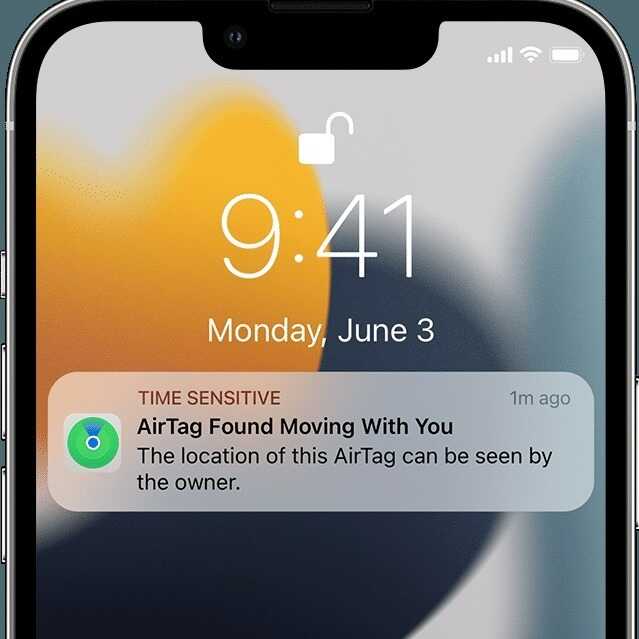
Can somebody explain how the stalking actually works? As I understand, the wireless technology is short-range? How does the stalker know where the tag is if they're not next to it?
You know how in modern iPhones they don't let you disable bluetooth from the pull-down menu anymore? Instead it just says "disconnecting devices until tomorrow". That's because Apple really doesn't want you to ever turn bluetooth off. And that is because all iPhones are part of their location botnet. So if you ever pass by someone else's airtag, your phone will send a message to Apple that it has seen that airtag at your current coordinates.
But the current bluetooth and wi-fi buttons don't turn them off at all. They just disconnect your devices while still broadcasting. They're still using power, updating airtag locations, and serving as a beacon that physical retailers use to identify you and track how you move through the store.
iPhones (and by that I mean any iPhone, not just the owners) pick up the signal from the tag and send its location to cloud.
So basically iPhones are now pretty much the biggest surveillance network in the world, constantly reporting on location of tags (and other iPhones) to Apple servers.
For others' benefit, Vernor Vinge's A Deepness in the Sky depicts a human interstellar civilization thousands of years in the future, in which superluminal travel is impossible (for the humans), so travelers use hibernation to pass the decades while their ships travel between star systems. Merchants often revisit systems after a century or two, so see great changes in each visit.
The merchants repeatedly find that once smart dust (tiny swarms of nanomachines) are developed, governments inevitably use them for ubiquitous surveillance, which inevitably causes societal collapse. <https://blog.regehr.org/archives/255>
That is an incredibly bad faith interpretation of what’s going on. I don’t have to cite statistics to know that users aren’t “opting in to surveillance” - that’s the clickbait version lacking any nuance. In reality, Apple has built up enough trust and good will with their customers that they not only gladly enable a feature that makes it possible to retrieve lost or stolen items, but they even pay for these aforementioned AirTags.
Whether or not that’s wise is another matter, but come on - don’t blame the victim.
It's not really coupled. It's more of a quid pro quo relationship.
There are two separate "find lost things" systems.
1. There is a system for finding online things. This is available on devices that have internet connections, and can only be used to find the device when it is online. The device uses its internet connection to report to a central server, which can then tell the owner where to find the device.
2. There is a system for finding things that aren't online. Devices that do not have an internet connection can use this system to let nearby devices know they are there. If those nearby devices have an internet connection, they can relay that sighting along with their location to a central server, which can then tell the owner where to find the missing devices. The relay to the server is protected by some clever public key cryptography so that the server doesn't find out whose device spotted the missing device or where it was.
An iPhone is capable of using both of those systems. There's a toggle for each of them in the settings.
If you want to be able to find your missing iPhone when it is offline you need to use the second system. If you only need to find it when it has an internet connection, you just need to use the first system.
It seems pretty fair. If you want to use other people's phones to find yours when it is offline, you have to let them use your phone to find their offline devices.
There is no opting out of your own iDevices from reporting others’ trackers, right? I do not want to disable Bluetooth on my iPhone in order to opt out of participating a global panopticon.
You can opt out, but then you do not get to use others' iPhones to find your AirTags. If you want to benefit from the network, you have to contribute, but you don't have to participate at all.
You have some answers but what makes it extremely juicy is that if effectively is the same as a tracker when the person who stalks you knows you have an iphone.
If they throw it under your car for instance, your phone will always show where your driving and you most likely will never hear any chirps coming from it.
Except you will soon get an alert that an unknown AirTag is following you.[0]
Even if you don't have an iPhone, as soon as someone who does have one steps into your car and you drive them somewhere, they will get the alert and you will find out.
tl;dr Apple devices broadcast IDs and then other Apple devices phone home with those IDs and GPS locations so the owners can find their lost devices even if they don't have internet connectivity.
Ah, so Apple is linking the feature of finding _my_ phone with reporting on lots of others? That explains why people turn it on, but I find that creepy.
The technology is also built so that the location is encrypted for the device owner - so Apple doesn't have a database of the location of every Apple Find My enabled device in the world, which for me makes it not creepy - my devices can find my devices.
It's really useful for locating lost headphones, laptops, etc. -- whether stolen, left on public transport/taxi, or left at a friend's house.
Is there any independent analysis of this end to end encryption of location data, that confirms that Apple can not really access the location even if they want to?
I agree. While a quieter cabin may sound nice (pun intended), I found it noticeably harder to sleep on an A380 than on louder planes.
For me it's not even that you hear more of the other passengers (my experience is mostly in business and first class, which are less dense and rarely have babies). But the monotonous noise from the aircraft engines really helps me sleep.